
Customer Management CRM (Customer Profiles, Communication History & Billing)
OctopusPro includes a built-in Customer Relationship Management (CRM) system that helps you store, organize, and act on customer information in one place. From a single customer profile, you can quickly view contact details, service addresses, bookings/quotes/invoices history, communications (email/SMS/calls/discussions), account statements, billing cycles, payment methods, properties/dependents, attachments, and more.
This gives your team a single source of truth—so everyone can see the same context before following up, scheduling work, sending invoices, or handling support.

Table of contents
- What this CRM is used for
- Key benefits
- Customer list (directory) overview
- Search, filter & customer directory
- View customer details & profile tabs
- Contact customers & communication history
- Customer activity timeline (audit trail)
- Customer ratings & reviews
- Customer account statements
- Customizable invoice due dates
- Manage billing cycles for customers
- Edit customer details
- Customize customer profiles using custom fields
- Customer properties, assets & dependents
- Merge duplicate customers
- Import existing customers (CSV)
- Delete & restore customers
- Best-practice tips
- Related guides
What this CRM is used for
Use OctopusPro’s CRM to:
- Keep complete customer profiles (individual or business customers) with multiple phone numbers/emails and service addresses.
- Track every customer interaction (email, SMS, calls, discussions) in a centralized communication history.
- See the full timeline of bookings, quotes/estimates, inquiries/leads, invoices, payments, and status changes.
- Manage billing with stored payment methods, invoice due dates, billing cycles, and account statements.
- Organize customers using labels/tags, custom fields, and properties/dependents (vehicles, children, pets, sites, assets, etc.).
- Improve data quality by importing customers, cleaning duplicates, and restoring deleted records when needed.
Key benefits
- Faster scheduling & service: staff can see addresses, notes, and history instantly.
- Better customer experience: respond with full context and consistent messaging.
- Better cashflow: send reminders, statements, and consolidated billing details with less confusion.
- Stronger record-keeping: maintain an audit trail that supports disputes, compliance, and handovers.
- Scales with your business: manage thousands of customers and high-volume communications.

Customer list (directory) overview
Go to Customers → All Customers to access your customer directory. This page is your central hub for creating, importing, exporting, searching, and managing customer records.
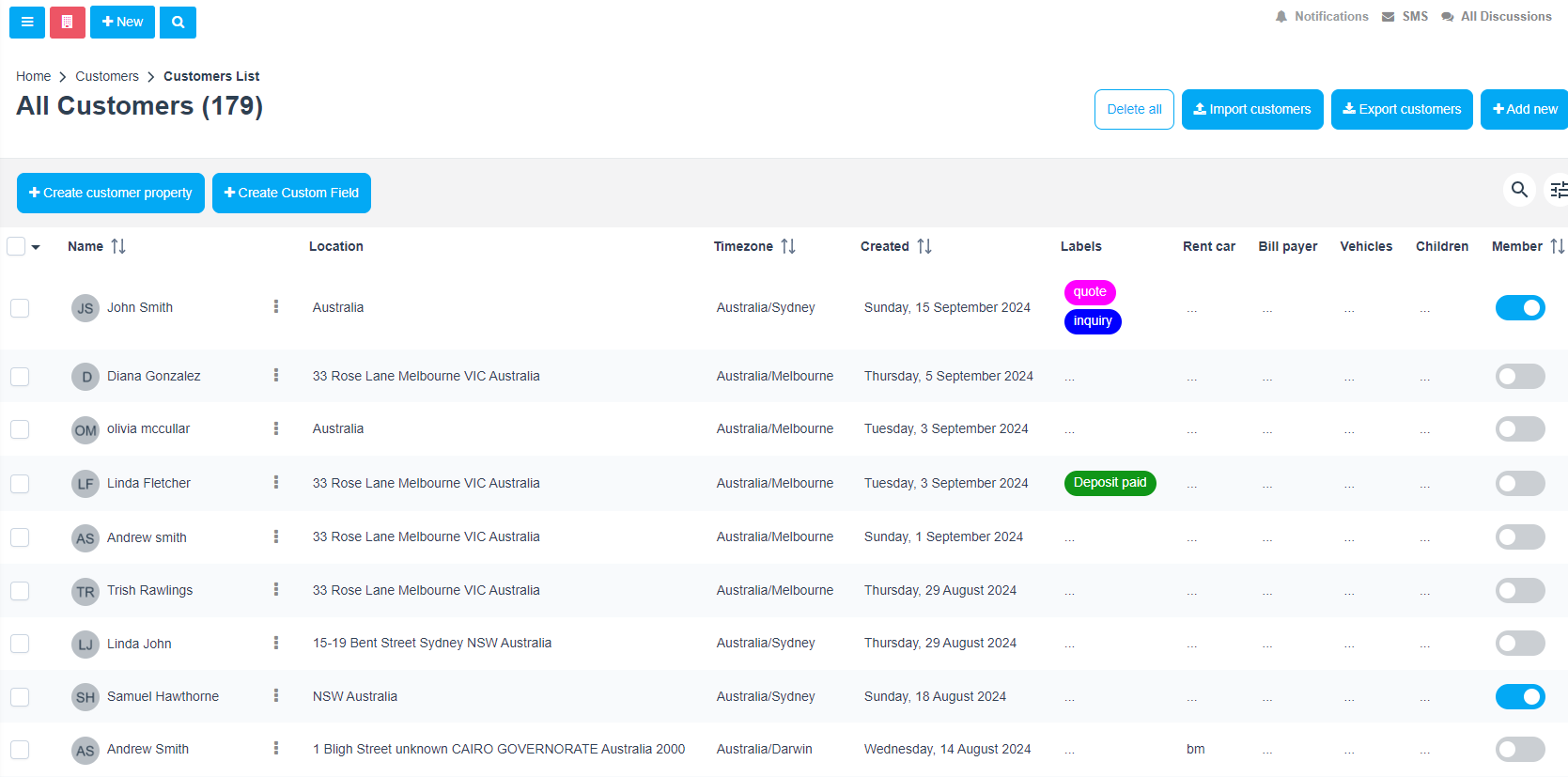
Common actions from the Customers list include:
- Add new customer (manual entry).
- Import customers via CSV.
- Export customers for backup or reporting.
- Create Custom Fields (for customer profile customization).
- Create customer properties/dependents (assets such as vehicles, children, pets, properties, etc.).
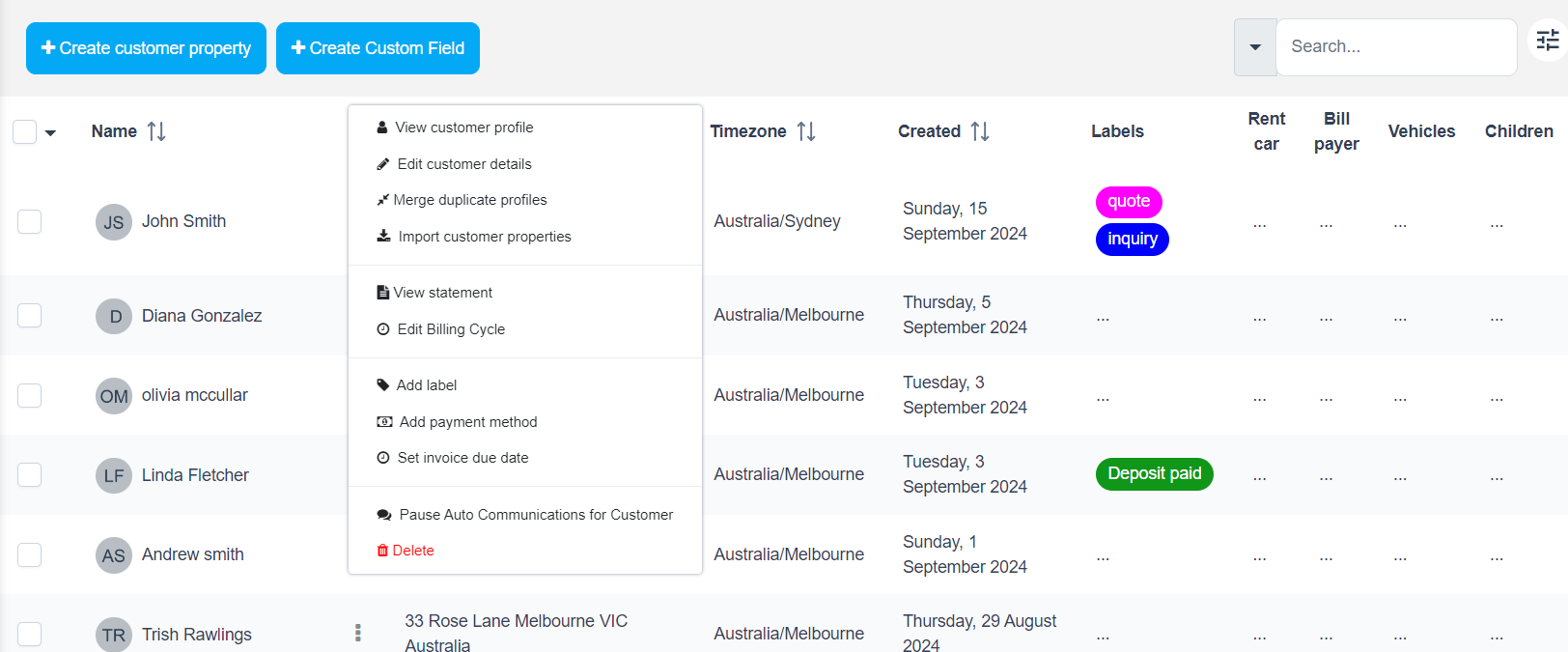
- Quick actions menu per customer (view profile, edit, merge duplicates, view statement, add label, add payment method, set invoice due date, pause auto communications, delete).
Search, filter & customer directory
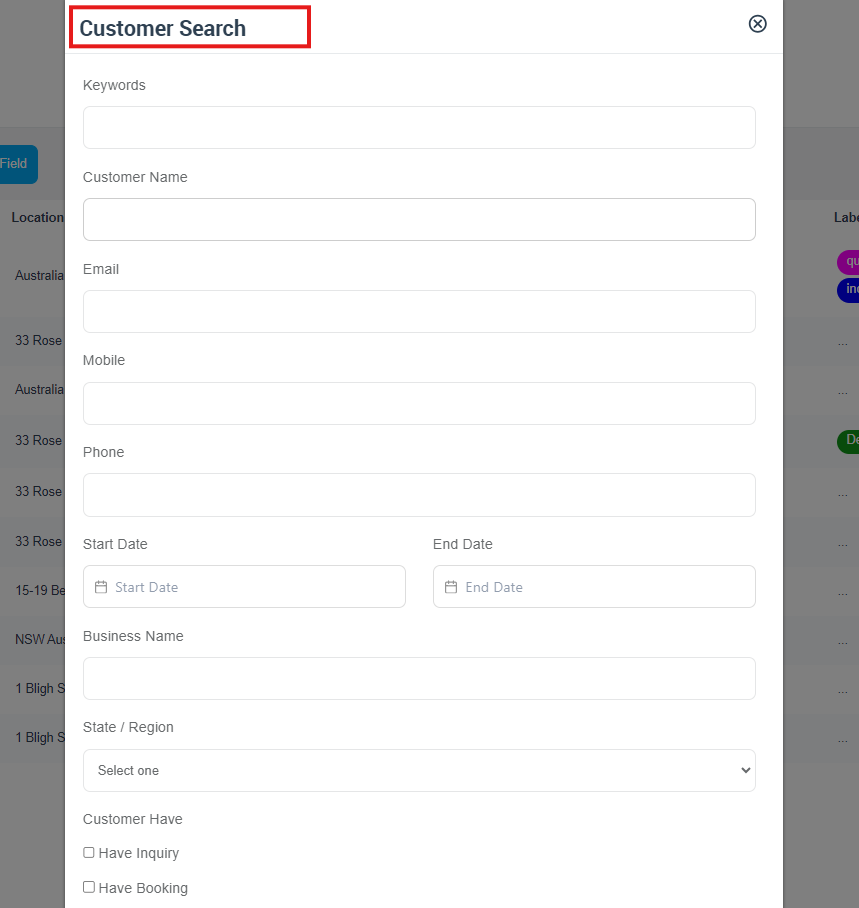
OctopusPro supports fast searching to find customers by key identifiers (such as name, email, mobile/phone) and additional filters.
Example: Customer Directory search panel
Tip: Use search + labels + custom fields together to quickly build lists such as:
- “Commercial clients in a specific suburb”
- “Customers with overdue invoices”
- “VIP customers / membership customers”
- “Customers with a specific property type or asset”
View customer details & profile tabs
To open a customer profile:
- Go to Customers → All Customers.
- Hover the customer name (or use the row menu) and select View customer profile (or click the customer name).
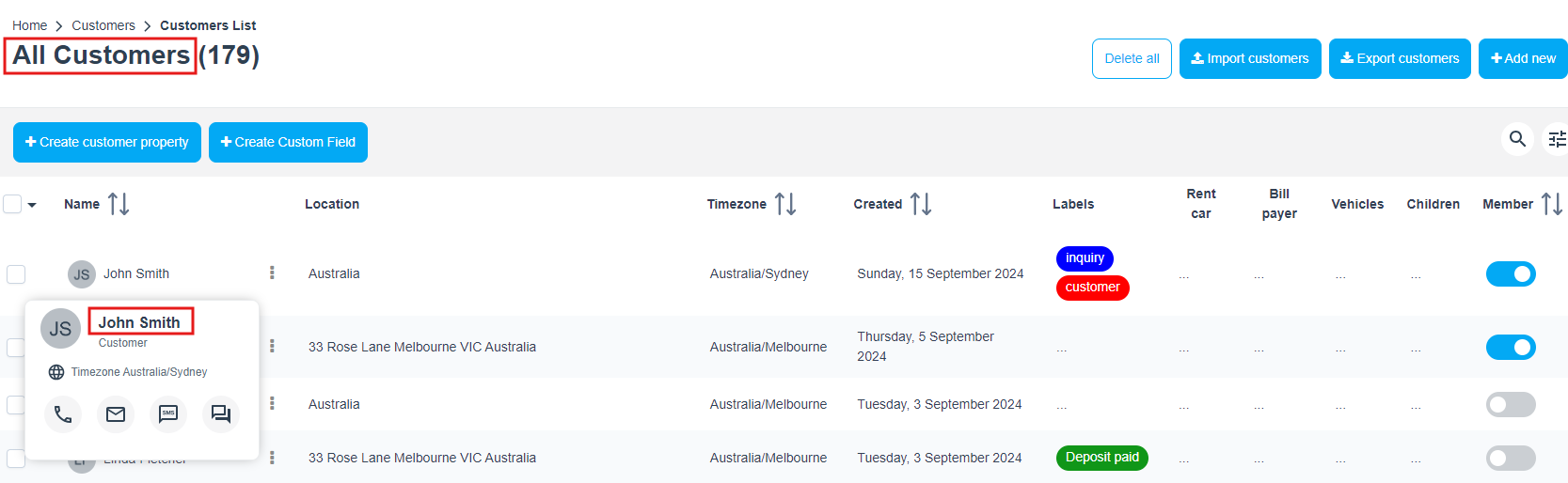
Inside the customer profile, you’ll typically see tabs such as Communication, Activity, Attachments, Billing Cycles, and asset/dependent tabs (e.g., Vehicles, Children), plus history/audit records depending on your setup.
Related guide: View customer details
Contact customers & communication history
OctopusPro helps your team contact customers and keep a full communication record—so anyone can see what was sent, when it was sent, and by whom.

Common channels include: Email, SMS, Calls (regular or VoIP if enabled), WhatsApp (optional), and Discussions/Chat (internal or customer-visible).
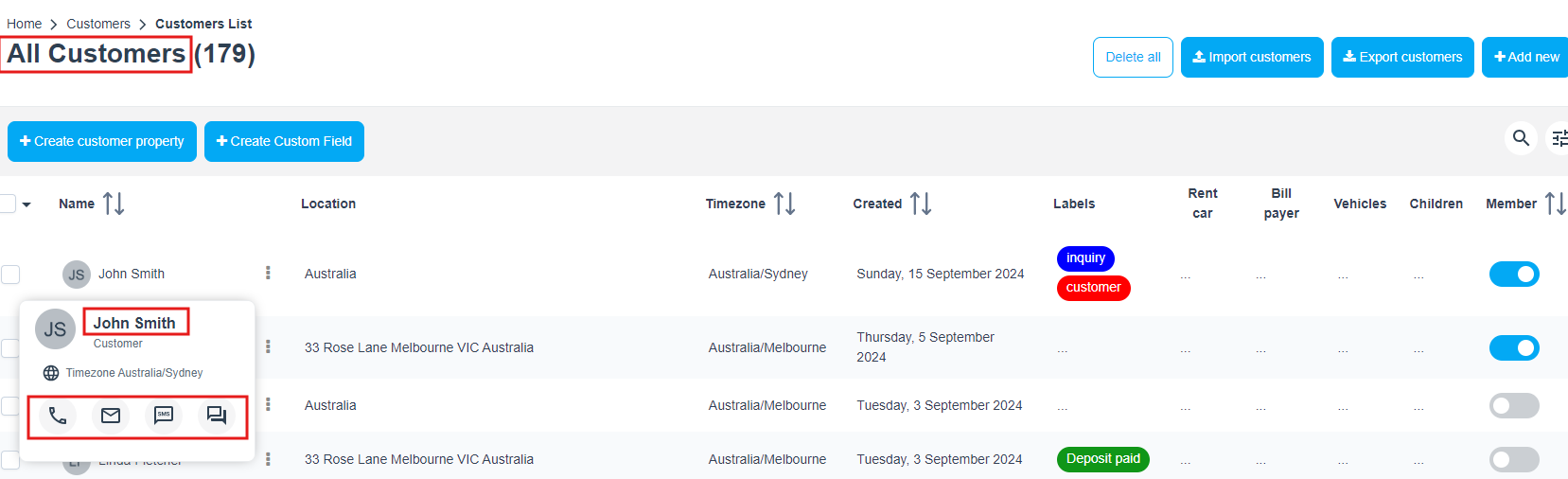
From the Customers list: hover over the customer to access quick contact icons.
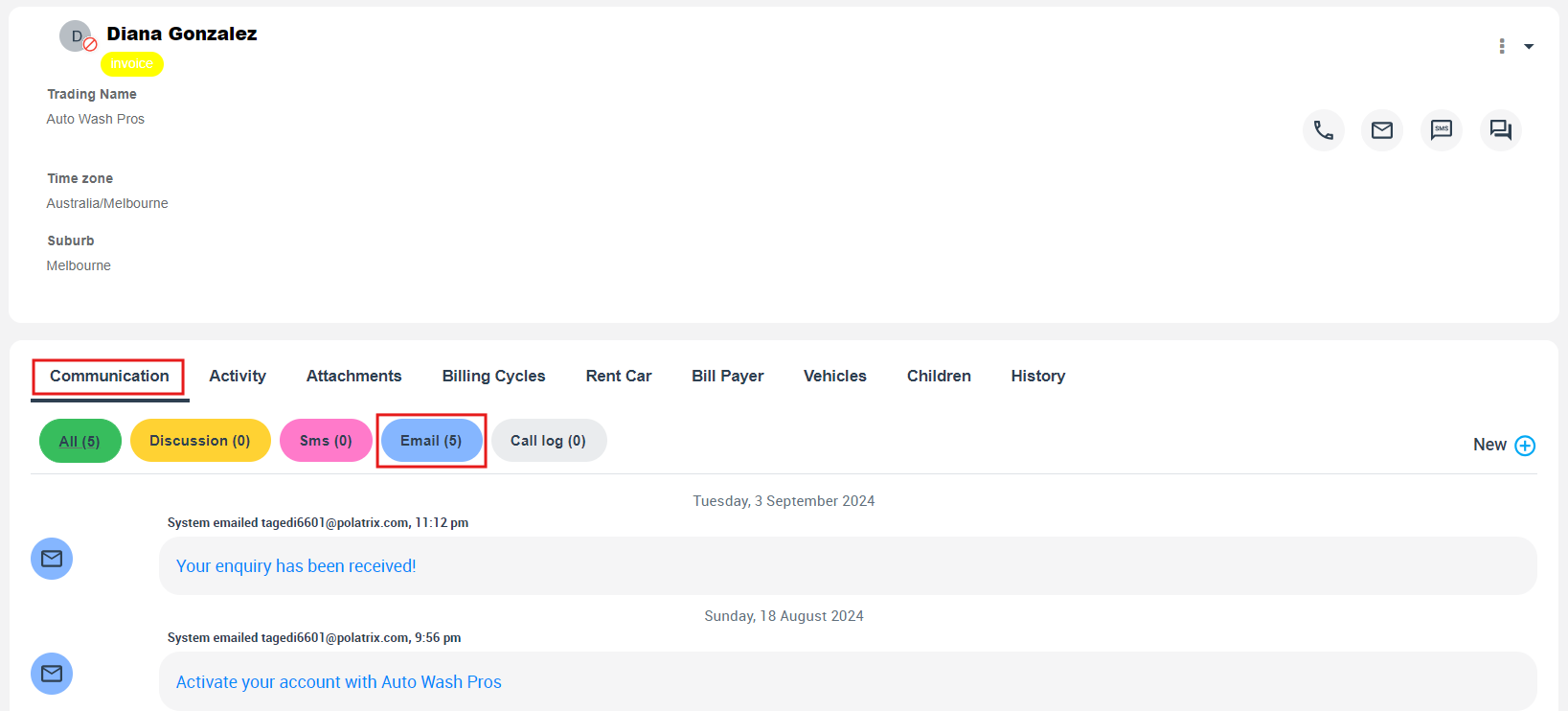
From inside the customer profile: use the contact icons and the Communication tab to view email/SMS/discussion/call history.
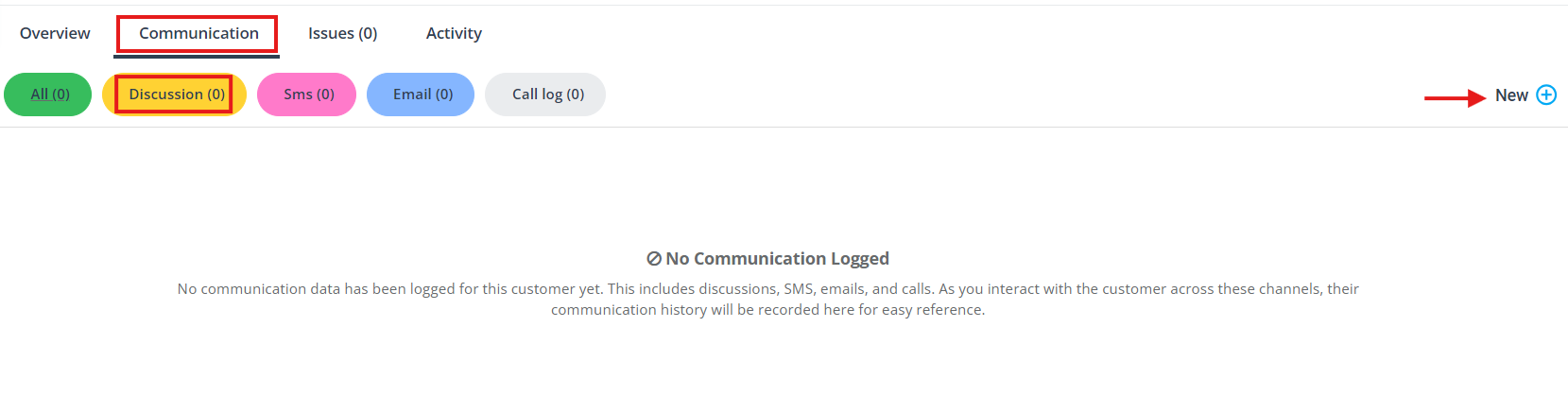
Discussions (chat thread): use discussions to keep everything in context (with attachments) and control visibility (internal-only vs customer-visible).
Related guides:

Customer activity timeline (audit trail)
The Customer Activity Timeline provides a chronological record of customer-related actions and events—helping your team understand what happened and when. This is especially useful for support, dispute resolution, onboarding, and handovers.
Typical activity events include:
- Bookings created/updated, status changes, fieldworker updates
- Quotes/estimates sent/accepted/declined/expired
- Invoices issued, payments added, refunds/credits recorded (if applicable)
- Communications sent (emails/SMS/discussions/calls) depending on your setup
- Profile edits and administrative actions (where enabled)
Related guide: Customer activity timeline

Customer ratings & reviews
Customer ratings and reviews help you collect feedback after a job is completed, so you can monitor service quality, coach your team, and quickly identify operational issues (e.g., late arrival, communication, workmanship, professionalism).
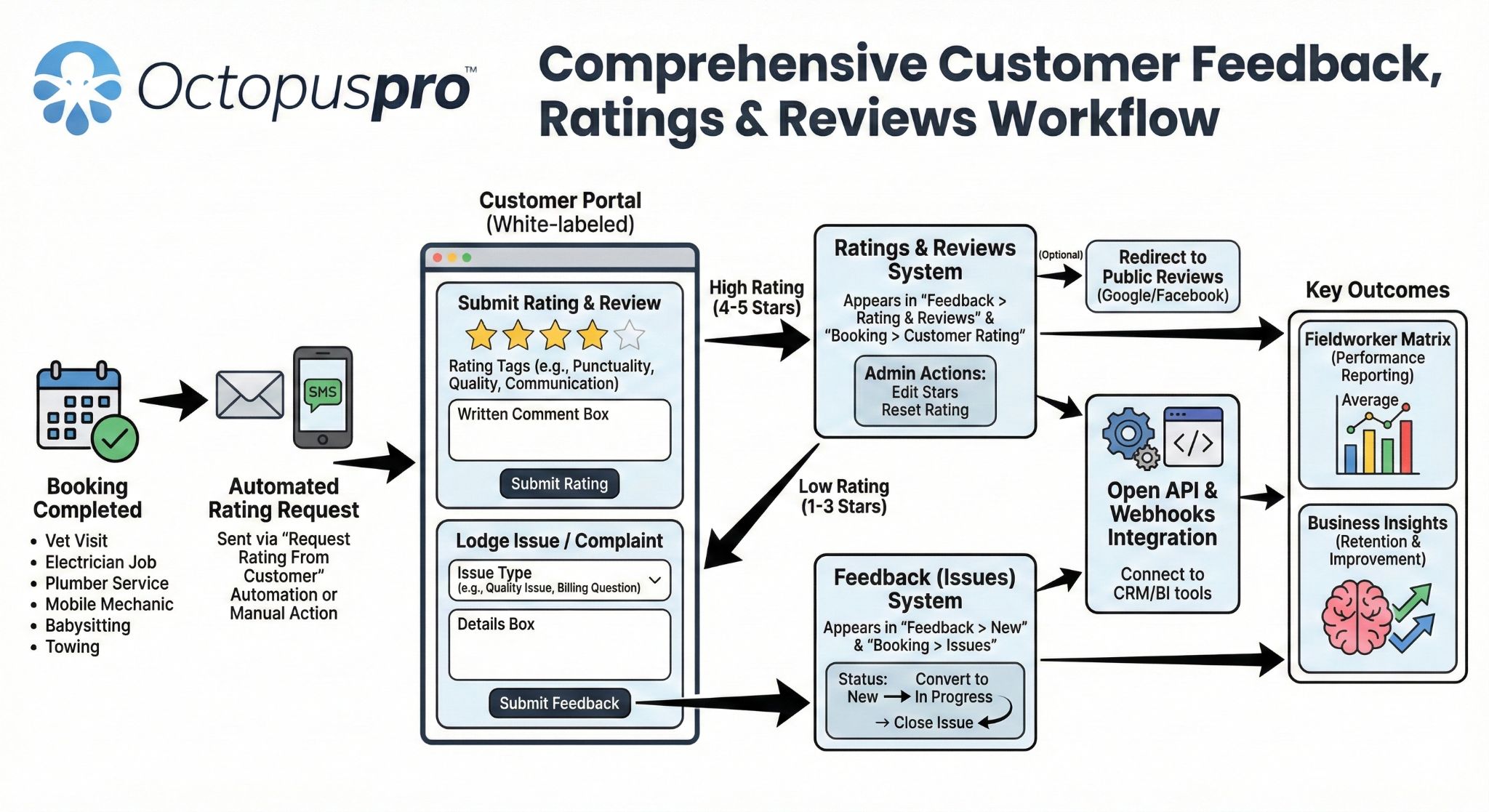
What you can use ratings & reviews for:
- Team performance insights: spot trends by fieldworker/technician, service type, or region.
- Quality control: find recurring complaints and fix the root cause.
- Customer retention: follow up with unhappy customers quickly and turn the experience around.
- Reputation management: encourage satisfied customers to leave public reviews (if you choose).
Best practice: Request feedback immediately after job completion and include a short optional comment field so customers can explain their rating.
Related guide: Customer Feedback, Ratings & Reviews
Customer account statements
A Customer Account Statement provides an account-level summary of invoices and balances for a customer—ideal for recurring clients, corporate accounts, and customers who receive multiple invoices.

Common use-cases:
- Monthly/quarterly billing summaries for commercial or recurring clients
- Overdue follow-ups where multiple invoices are outstanding
- Account reconciliation requests
Generate a statement: open the customer profile, open the Actions menu, and select View statement.
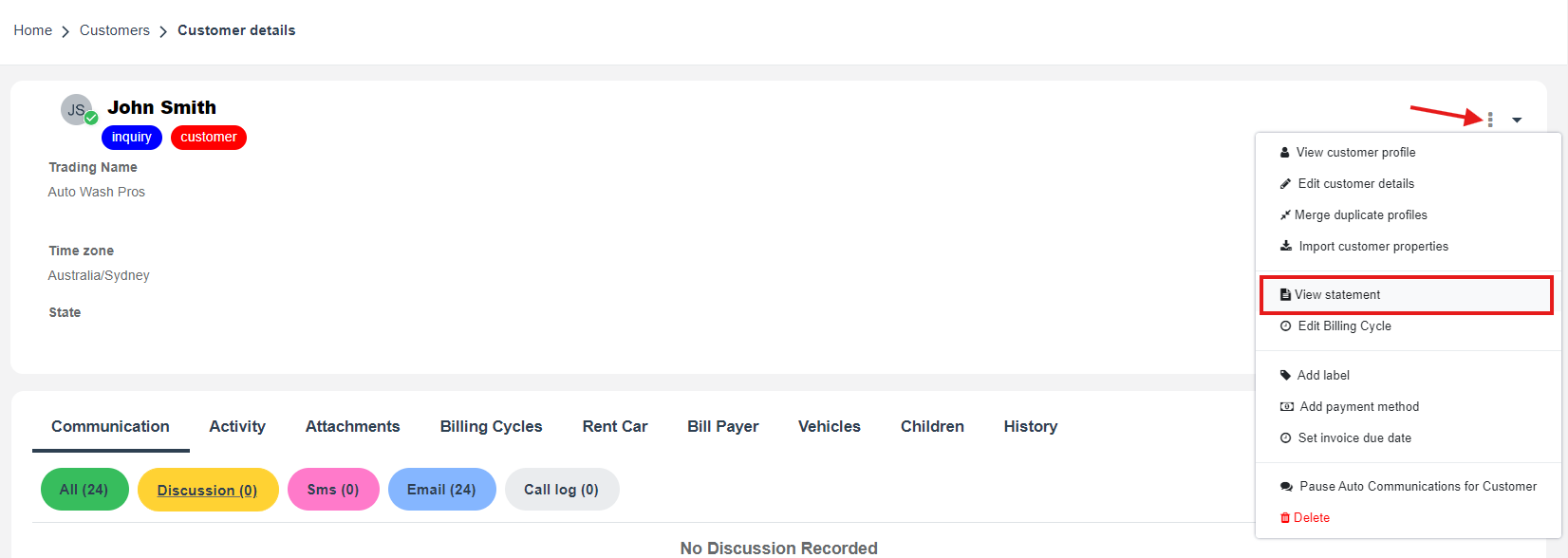
Print or email: once the statement opens, use Print PDF or Email Statement.
Related guide: Customer account statement
Customizable invoice due dates
OctopusPro supports flexible invoice due dates so you can match real-world payment terms (e.g., due on receipt, Net 7, Net 14, Net 30). This helps you provide a smoother billing experience—especially for commercial customers, account clients, and recurring services.

You can manage due dates at multiple levels:
- Company-level default terms: set a standard due date rule that applies to new invoices by default.
- Customer-level payment terms: assign a specific due date rule to a customer (useful for special contracts or account clients).
- Invoice-level override: change the due date for a specific invoice when needed (e.g., one-off arrangement).
How it works (recommended logic): If a customer has custom payment terms, those should override the company default. If you manually change the due date on a specific invoice, that invoice-level due date takes precedence.
Why this matters: Accurate due dates reduce disputes, improve cash flow, and make automated reminders more reliable.
Related guide: Invoice Due Dates Management (Payment Terms)
Edit customer details
Keep customer records accurate by updating contact information, addresses, and profile data whenever changes occur (e.g., new phone number, updated billing address, new site contact, or business name changes).
Typical fields you may update include:
- Customer type (individual vs business)
- Name/business name and primary contact details
- Phone numbers and email addresses
- Primary and additional addresses
- Customer notes and internal instructions
- Custom field values (e.g., lead source, preferences, access notes)
Related guide: Edit customer details
Manage billing cycles for customers
Billing cycles help you consolidate multiple bookings into a single invoice based on a schedule (e.g., weekly, fortnightly, monthly). This is ideal for recurring service customers, commercial accounts, and contracts where you invoice periodically instead of per job.

Common use cases:
- Recurring services: cleaning, maintenance, lawn care, pest control, inspections, and facility services.
- Commercial accounts: invoice monthly with itemised jobs completed during the period.
- Multi-site customers: consolidate jobs across multiple properties into one statement/invoice cycle.
How billing cycles improve billing:
- Fewer invoices: reduces admin time and customer confusion.
- Consistent invoicing schedules: supports predictable billing and payments.
- Clear audit trail: each invoice can reflect all jobs included in that billing period.
Tip: If a third-party Bill Payer is involved (e.g., real estate agency, organisation, family account), combine billing cycles with bill payer settings to ensure invoices go to the correct payer.
Related guide: Customer Billing Cycle Management for Consolidated Billing
Customize customer profiles using custom fields
Use Custom Fields to tailor the customer profile to your business. This is useful when you need to store information that doesn’t exist in standard fields.
Examples: lead source, preferred service time, access instructions, allergies, property type, account manager, referral partner, parking notes, gate codes, and customer preferences.

Related guide: Customer profile customization using custom fields
Customer properties, assets & dependents
Many businesses need to manage customer-related assets/dependents (sometimes called properties). OctopusPro supports storing and managing these under the customer profile.
Common examples:
- Properties/Sites: residential or commercial locations
- Vehicles: for mechanics, detailing, towing, fleets
- Children/Dependents: for family accounts, classes, childcare
- Pets: for vets, grooming, pet sitting
- Equipment/Assets: appliances, HVAC units, warranties, serial numbers

Related guide: Customer properties
Merge duplicate customers
Duplicate customer profiles can happen when customers submit multiple inquiries with different contact details, or when records are added by different team members. Use the Merge Duplicate Customers workflow to consolidate history, contact information, and related records into a single customer profile.
Important: merging is typically irreversible. Always confirm which record should remain as the primary profile before completing the merge.

Typical process:
- Identify duplicates (system suggestions or manual review).
- Select the primary customer to keep.
- Select the secondary customer to merge into the primary.
- Review, then confirm merge.
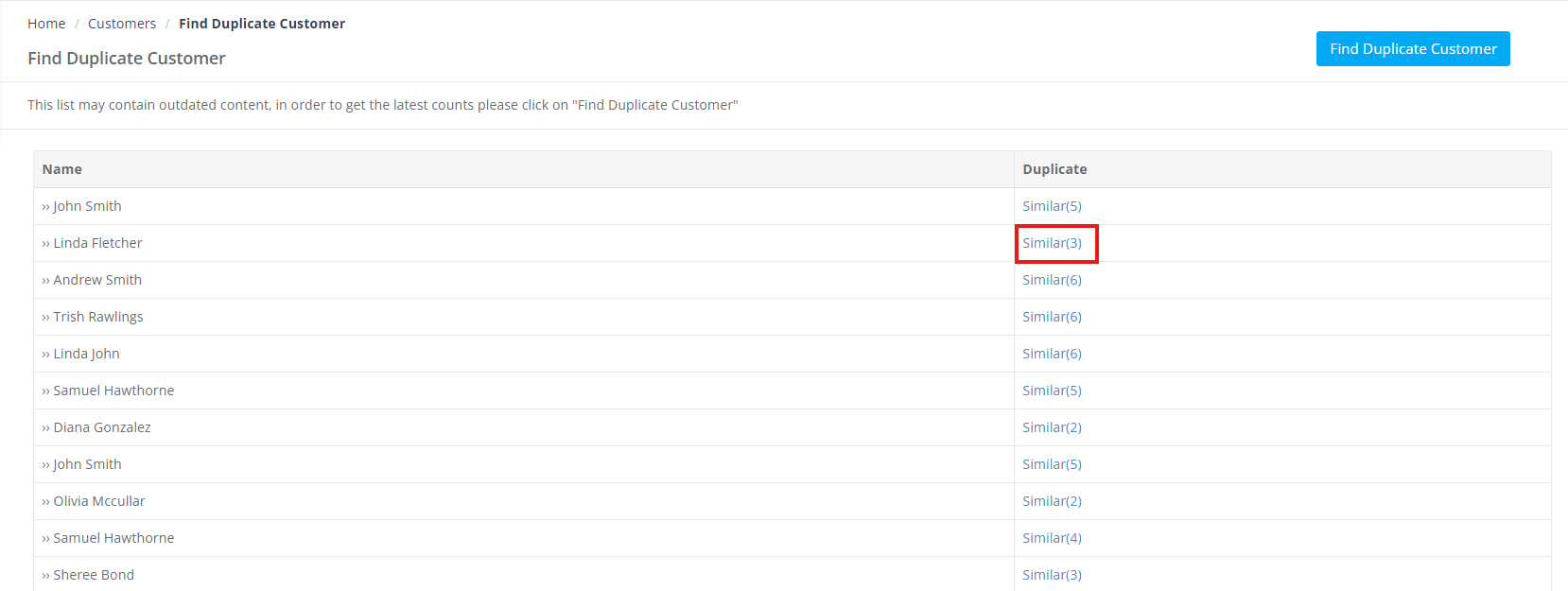
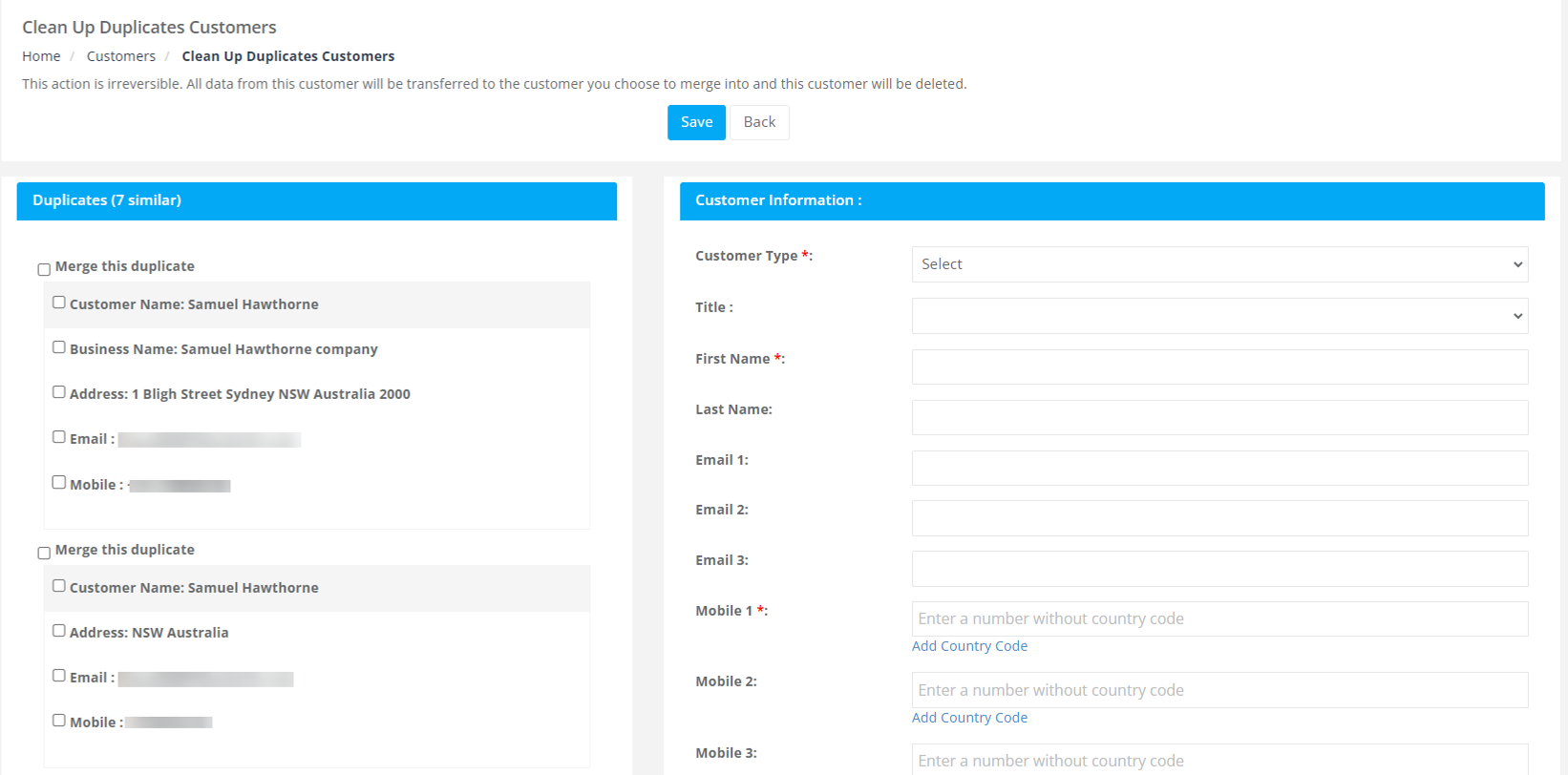
Related guide: Merge duplicate customers
Import existing customers (CSV)
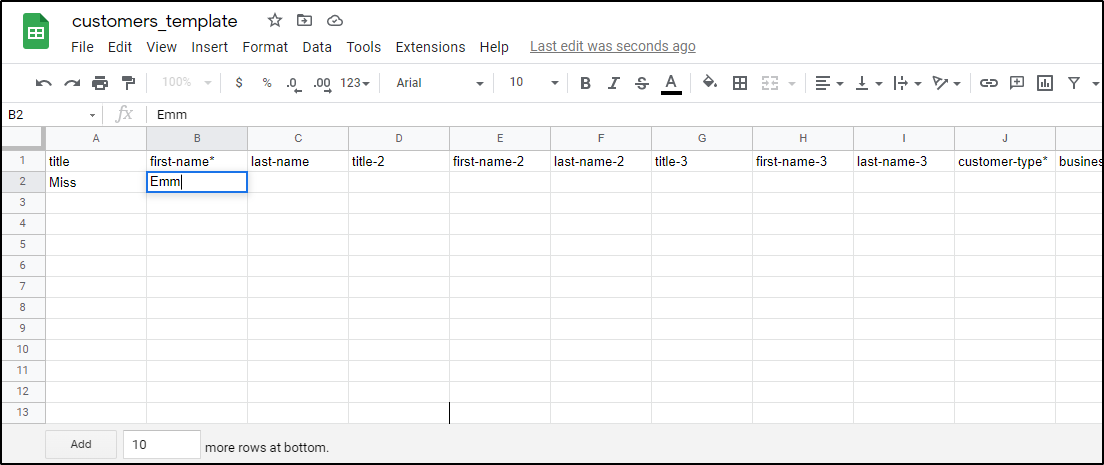
If you already have customers in another system (or a spreadsheet), you can import them into OctopusPro using a CSV template. This is ideal for onboarding and migrations.

Quick import steps:
- Go to Customers → All Customers.
- Click Import customers.

- Download the import template, then fill it in (keep headers unchanged).
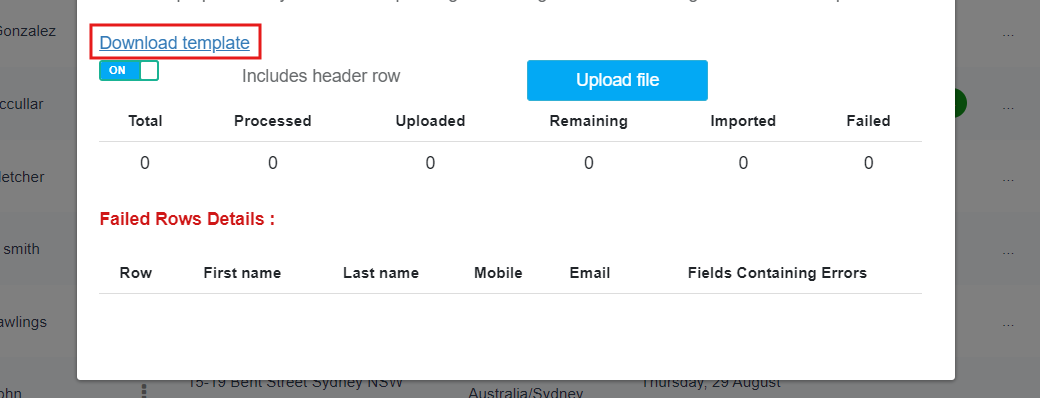
Example template:
Related guide: Import existing customers
Delete & restore customers
If a customer record is no longer required, you can delete it. Depending on your settings and workflow, deleted customers may be recoverable for a period, allowing you to restore them if deletion was accidental.

Common scenarios:
- Accidental duplicates created during onboarding
- Test records created during setup
- Incorrect customer record created by mistake
Related guide: Delete & restore customers
Best-practice tips
- Standardize data entry: set naming conventions for business customers, sites, and contacts.
- Use labels + custom fields: makes filtering and segmentation faster (VIP, commercial, high-risk, membership, etc.).
- Log communications consistently: keep discussions/customer-visible notes in the same place for easy handover.
- Clean duplicates regularly: merge duplicate profiles to keep reporting and billing accurate.
- Keep billing data updated: invoice statuses and payments should be maintained so statements reflect the correct balance.
- Control permissions: limit who can edit customers, delete records, and view sensitive logs where required.
Related guides
- View customer details
- Customer activity timeline
- Customer account statement
- Edit customer details
- Customer profile customization using custom fields
- Customer properties
- Merge duplicate customers
- Import existing customers
- Delete & restore customers
- Contact a customer
- Customer communication history
To stay updated, please subscribe to our YouTube channel.