
Collecting Customer Signatures

OctopusPro lets you capture legally-binding customer signatures everywhere you need them—directly on quotes, bookings, invoices, the customer portal, and in the fieldworker mobile app—while also giving you the option to store a “master” autograph on the customer profile for future re-use. Because OctopusPro stores a tamper-evident audit trail, every scribble you collect is enforceable under the US ESIGN Act and EU eIDAS Regulation, the same statutes that underpin global e-signature leaders such as DocuSign and Adobe Acrobat Sign. Studies show this slashes document turnaround time by up to 80 % and saves roughly US $28 per agreement while boosting first-time-fix rates in field service.
Signature Capture Pathways
| Channel | Typical Use Case | Enable / Trigger (Admin) | Key Benefit |
|---|---|---|---|
| Booking / Quote / Invoice Docs | One-off approvals on core commercial documents | Nothing extra. All standard docs ship with a signature container; just send from the record (ensure template includes {customer_signature_url}). | Creates a legally binding approval tied to the document; faster turnaround vs print/scan. |
| Custom Forms & Checklists | Safety inspections, job-completion reports, risk / compliance attestations | Build in Settings → Forms & Checklists; drag in Signature Pad; attach to service or individual booking/quote. | Signed, tamper-evident checklist stored with the job; tightens compliance & speeds close-out. |
| Customer Portal | Self-service bookings, pre-service consent, post-job acceptance | Portal enabled; in service settings choose Require customer signature (pre or post). Documents opened in portal auto-surface the pad; Ts&Cs can be shown inline. | 24/7 mobile signing by the customer; reduces back-and-forth, improves transparency & lowers disputes. |
| Fieldworker App (On-Site) | Proof of completion before leaving site | No setup; tech in Fieldworker role opens booking → Actions → Customer Sign-Off. | GPS/time-stamped sign-off protects revenue & reduces lost paperwork; ideal for regulated trades. |
| Email / SMS Link | Remote quote, booking, or invoice acceptance (customer signs on own device) | Include {customer_signature_url} token in email/SMS template; OctopusPro generates secure, one-time URL. | Works on any device; high completion rates; ESIGN / UETA compliant workflow pattern. |
| Customer-Profile “Master” Signature | Long-term maintenance, EVV, home-care contracts needing recurring sign reuse | Create Signature custom field in Customer Profile; capture once (admin, portal, or field) for auto-reuse. | Eliminates repeat signing; consistent consent record across recurring appointments & compliance programs. |
- Portal Requirements: Customer must have portal access; admin selects whether signature is required before booking confirmation, after completion, or for quote approval. Presenting contracts + consent at the moment of decision is a recommended e-signature best practice.
- Role Reminder (Owner-Operators): On-device sign-off appears only in the Fieldworker mobile interface so the audit log records the correct technician ID + GPS context—critical in regulated field trades.
- Security & Legal: All signature channels generate an electronic record (signer intent + timestamp). Properly implemented e-signatures are recognized under ESIGN/UETA (US) and are accepted in most business processes worldwide.
- Forms vs Document Signatures: Use a Form Signature Pad when you must certify checklist data (safety, inspection readings). Use the Document Signature when you need commercial acceptance (quote, invoice). Combining both in a single workflow produces a stronger audit trail.
A. Collecting Signatures on Quotes, Bookings & Invoices
These three commercial documents are signature-ready out of the box—no extra fields or template hacks required. Each PDF already contains a hidden signature container that will reveal the autograph automatically once it is captured through any of the channels below.
-
Email-Based Signature Capture
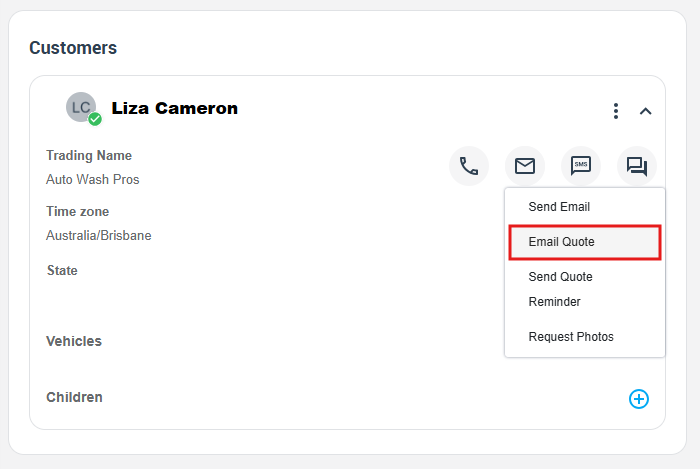
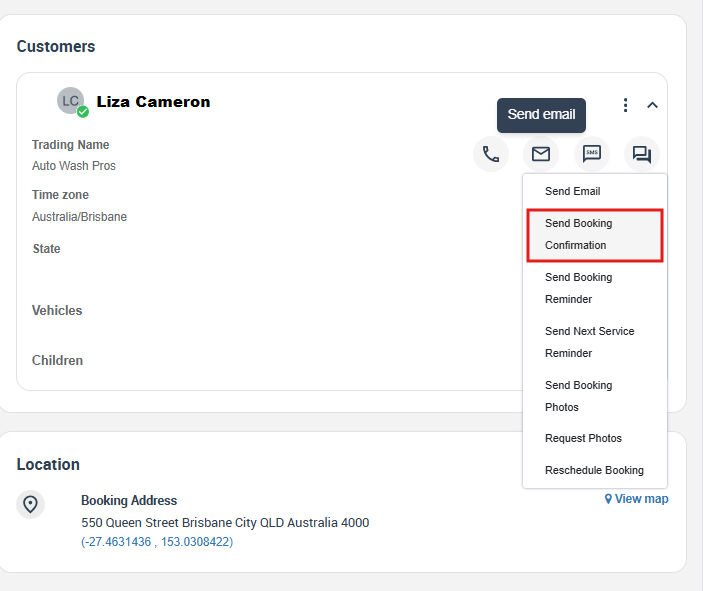
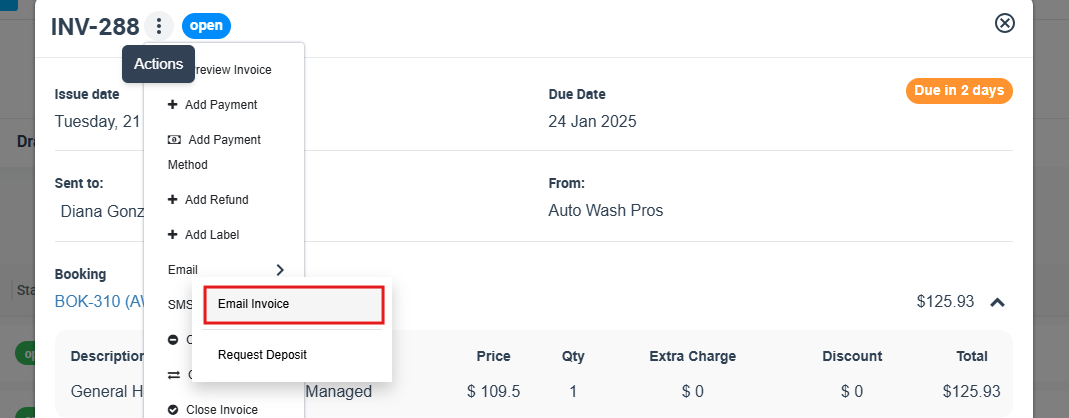
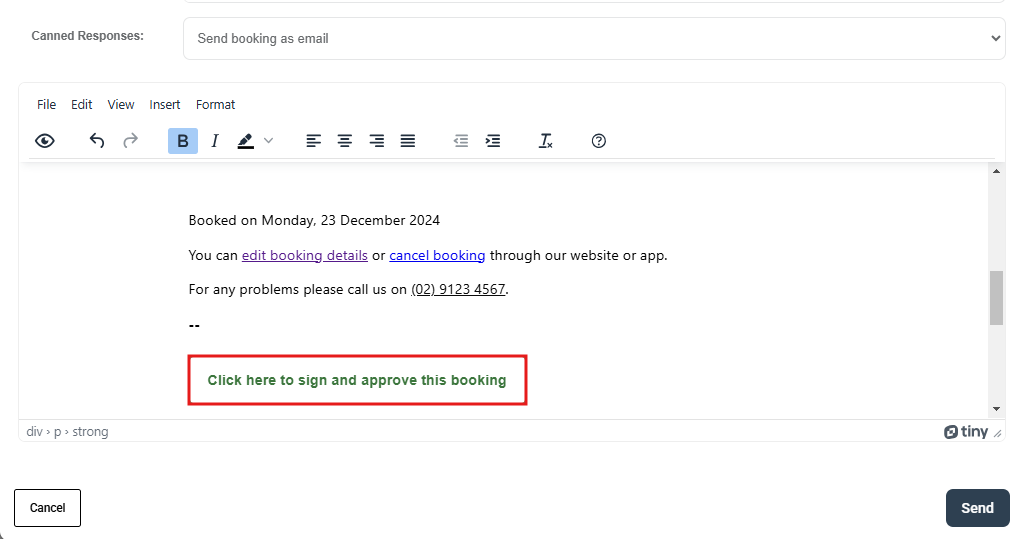
Step Quote Booking Invoice Open record Quotes → All Quotes → View Bookings → Upcoming/Past → View Invoices → All Invoices → View Send for signature Customer section → Email → Email Quote
Customer section → Email → Booking Confirmation
Top-right → Email Invoice
Template Loads the Quote Approval canned response 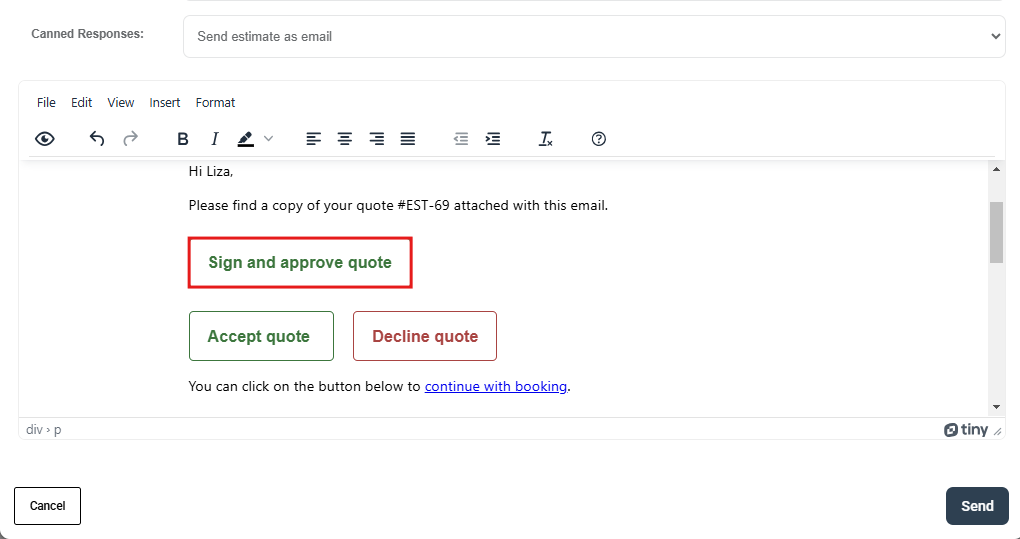
Loads the Booking Confirmation template
Loads the Invoice for Payment template
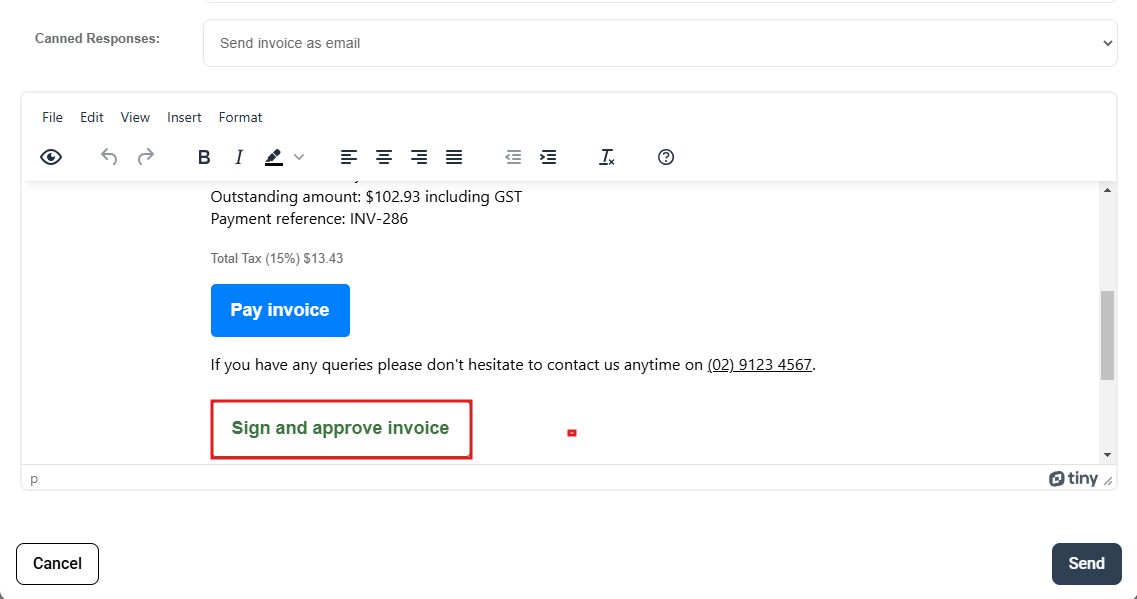
Action Make sure the body contains the token {customer_signature_url} → Send What happens next
- OctopusPro replaces {customer_signature_url} with a one-time, SSL-secured URL containing the document ID, customer ID, and 30-day expiry token.
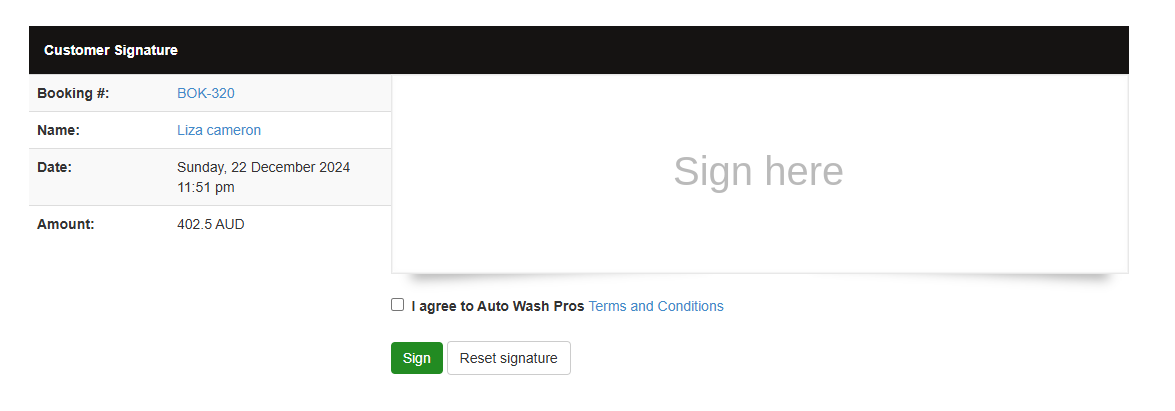
- The customer clicks the button or hyperlink and lands on a mobile-responsive signing page that displays all key details (items, totals, terms).
- They draw their signature with finger, stylus, or mouse and tap Submit.
Desktop view:
 Mobile View:

- OctopusPro stamps the autograph onto the document, regenerates the PDF, and sends real-time alerts to the admin and, if configured, the assigned fieldworker.
- The document status flips to Signed (and Accepted for quotes), ensuring your pipeline and dashboards stay accurate.
Pro-tip – Wrap {customer_signature_url} in your own HTML button for stronger CTAs:
< a style="background-color: #fff; font-size: 18px; font-family: Helvetica, Arial, sans-serif; font-weight: bold; text-decoration: none; padding: 14px 20px; color: #3c763d; border: 1px solid #3c763d; border-radius: 5px; display: inline-block; miso-padding-alt: 0; margin-top: 10px;" href="{customer_signature_url}">Sign and approve quote </a > -
On-Site Signature via Fieldworker App
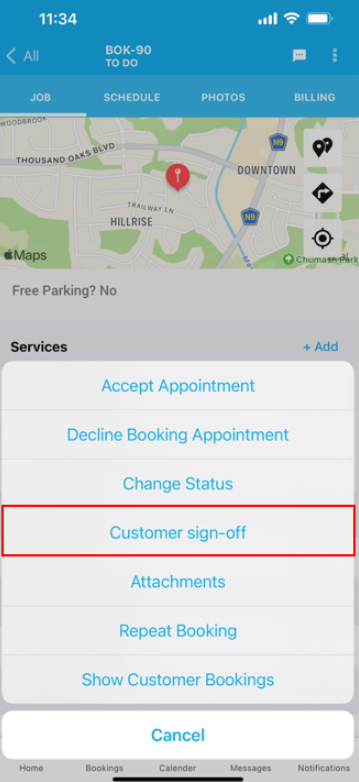
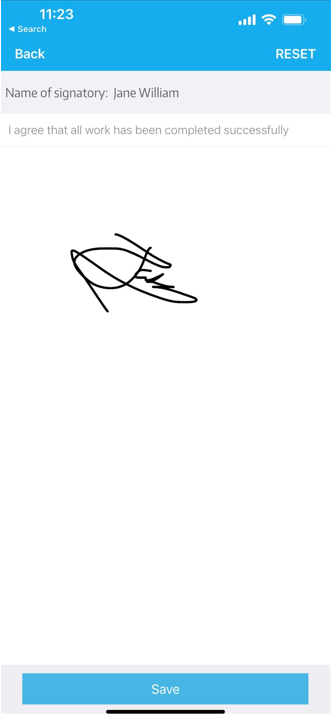
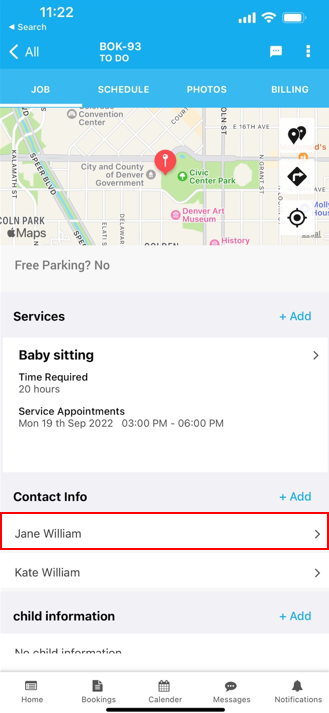
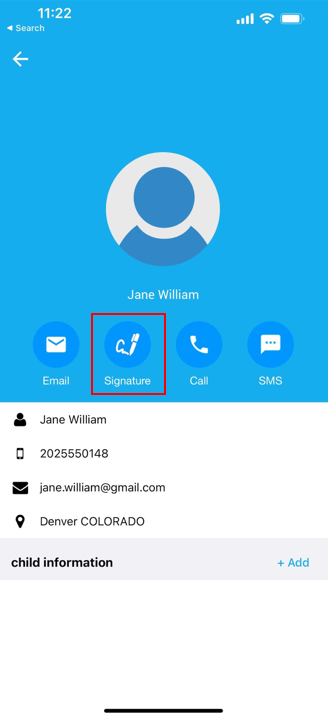
- Fieldworker opens the booking → Actions → Customer Sign-Off. Alternatively, fieldworker can select the customer name they want to collect customer from, then click on the signature icon in their profile.
- Hand the device to the customer; they sign on the canvas and tap Save.
- Signature appears instantly on the booking PDF and view page; invoice (if generated) inherits the autograph automatically.
Use this flow for proof-of-completion jobs where paperwork must be closed before the technician leaves the site.
-
On-Site Signature via Fieldworker App (Owner-Operator Clarification)
Collecting a customer’s handwritten sign-off while you’re standing on site requires that you are logged in as (or switched into) the Fieldworker role on your mobile device. Many owner-operators run OctopusPro in Admin mode most of the day and forget to switch when they head out to a job—then wonder why they can’t open the on-screen signature pad. Here’s how to do it right, plus what to do if you prefer to get the customer to sign from their phone instead.
When You’re Ready to Capture the Signature On Site
- Switch to Fieldworker Role (if you’re an owner-operator):
- Open the actions menu in the mobile app.
- Tap your name / role selector.
- Choose Fieldworker (or the specific fieldworker profile tied to you).
- Open the job/booking.
- Tap Actions → Customer Sign-Off.
- Hand your device to the customer; they sign with finger/stylus and tap Save.
- The signature is stamped onto the booking; if an invoice is generated later, it automatically inherits that autograph.
The signature control is surfaced only in the mobile technician/fieldworker interface so evidence is captured with the correct user credentials, GPS context, and timestamp for audit and proof of work.
What If You Forget to Switch (or Don’t Want to Hand Over Your Device)?
No problem—you can still secure a legally binding signature remotely while you’re on site:
Email or SMS the Document:
- From the admin/web interface (or mobile web), open the Quote / Booking / Invoice and send it to the customer.
- Make sure your template includes the OctopusPro {customer_signature_url} token; the customer taps the link on their own phone to review and sign.
- SMS delivery is strongly recommended as a backup to email.
Quick Role-Switch Cheat Sheet (Owner-Operators)
Scenario Recommended Role Why Signature Option You’re dispatching from the office Admin Full scheduling, billing tools Send email/SMS signature links. You’ve driven to the job and want on-glass sign-off Fieldworker Unlocks Customer Sign-Off button & GPS stamp Capture signature directly on device. Customer prefers to sign on their own phone Either role Admin can send doc; fieldworker can request office to send, or send it themselves if granted permission Use {customer_signature_url} via email/SMS. Mobile service apps highlight the importance of operating in the correct technician context to capture reliable on-site confirmations; using the wrong role can omit required service-report fields and signature capture points.
Best Practice: Get It Signed Before You Leave
Capturing a signature in the field shortens billing cycles and reduces disputes because the customer certifies the work while still looking at the result. Field-service studies show that closing the loop in the mobile technician app (photos + signature) materially improves post-visit acceptance and speeds invoicing.
Short Note (for inline drop-in):
Note: To capture a customer’s handwritten signature on your device, you must be logged into the Fieldworker role. Owner-operators who normally work in Admin mode should switch roles in the mobile app before handing the device to the customer. Prefer the customer sign on their own phone? From Admin, email or SMS the quote/booking/invoice (with {customer_signature_url}) and they can sign instantly from their device.
- Switch to Fieldworker Role (if you’re an owner-operator):
-
Collecting Customer Signature through Customer-Portal
The OctopusPro Customer Portal lets clients review documents and sign them digitally from any browser or mobile device—no app install required. When enabled for a service or document type, the portal automatically displays a signature pad at the appropriate step (during checkout, pre-service authorization, or post-job review), captures the customer’s drawn or typed signature, time-stamps it, and stores it with the related quote, booking, or invoice. This mirrors the embedded, device-responsive signing flows used by leading e-signature and field-service platforms, which have been shown to cut approval turnaround time dramatically and reduce disputed charges.
When Does the Signature Pad Appear?
You control signature capture points at the service / workflow level:
Portal Step Typical Trigger What Customer Sees Recommended Use During Checkout Service requires pre-work authorization Terms + signature pad before confirming booking Use for consent forms, liability waivers. Post-Job Review / Completion Service configured to capture completion sign-off Work summary + “Confirm Work Complete” signature pad Use to confirm satisfaction & release invoice. Quote Approval Customer opens quote in portal Detailed estimate + Sign/Accept action Converts quote to confirmed booking. Invoice Acknowledgment Customer opens invoice in portal Charges + signature + optional Pay Now Adds acceptance evidence for billing disputes. Presenting signatures at task-appropriate points in a self-service portal is a best-practice pattern called contextual signing—users sign exactly when the decision is made, improving completion rates and accuracy.
Enable & Configure Portal Signatures
- Confirm Portal Access Is Enabled (Admin > Customer Portal settings).
- Service Rules: For each service, toggle Customer must sign before confirming booking and/or Customer must sign off after completion.
- Document Templates: Ensure your quote / booking / invoice templates include at least one signature region (these are built-in; no extra coding needed).
- Terms & Conditions: Attach service-specific Ts&Cs so the customer reviews and signs in one step—reduces back-and-forth and missed waivers. Customer-presented Ts&Cs at point of booking are highlighted as a self-service portal best practice.
- Notifications: Include the
[portal-link](or document-specific link) in booking/quote emails so customers jump straight to the portal to sign. Embedded signing links improve conversion and lower abandonment compared with “print, sign, scan” workflows.
Signing Experience (What Your Customer Does)
- Clicks the secure portal link (from email, SMS, or bookmarked login).
- Authenticates (password, SSO, or token—depending on your portal configuration).
- Reviews the document summary (items, dates, address, amount, and any attached form/checklist).
- Draws a signature with finger/stylus (mobile) or mouse/trackpad (desktop); typed-name fallback also supported. Responsive, touch-optimized signing dramatically raises completion on mobile devices versus static PDFs.
- Clicks Submit; the portal confirms “Signature Recorded,” and the document status updates (e.g., Quote → Accepted). Customers value the ability to complete approvals on their own schedule; self-service portals measurably raise engagement and satisfaction.
Where the Signature Is Stored
Every portal-captured signature is stored in the same secure, audit-ready container as signatures collected in the fieldworker app or via email links:
- Embedded on the document view page (quote, booking, invoice).
- Burned into the PDF rendition with signer name, date/time, and (where available) IP/device metadata—an eIDAS/ESIGN-aligned audit marker.
- Logged in the document history / activity trail so admins can confirm who signed, when, and from what channel; similar traceability is recommended across e-signature compliance frameworks.
Multi-Device & Accessibility Notes
The customer portal’s signing canvas responds to screen size; documents reflow for readability on phones and tablets (a “responsive signing” UX proven to increase completion rates). Provide large touch targets, optional zoom, and high-contrast modes to remain accessible under WCAG usability recommendations common in enterprise e-signature tools.
Integrating Custom Forms & Checklists in the Portal
If a service requires pre-start safety declarations, risk assessments, or regulatory forms, attach a Custom Form or Checklist with a Signature Pad field. Customers complete required fields and sign in one flow, and the signed form is stored with the booking. Integrated form signing eliminates fragmented approvals—a documented efficiency gain.
Owner-Operator Tip: Portal vs App
If you’re on site but logged in under your Admin role (not Fieldworker), you may prefer to have the customer sign in the portal on their device:
- From the admin view, email or SMS the doc (quote/booking/invoice) with a portal link.
- Customer taps, reviews, and signs immediately—works even if you don’t want to hand over your device. Service businesses report fewer disputed charges when customers sign digitally at or near service time, whether on a technician’s tablet or via their own phone.
Use-Case Examples
Industry Portal Signature Trigger Outcome Massage / Wellness Client self-books Pregnancy Massage; portal presents prenatal consent + signature before confirming. Reduces pre-service phone waivers; clearer liability coverage. Home Cleaning Post-visit portal review requests: “Inspect + Sign to Release Bond Clean.” Lowers end-of-lease disputes (similar provider-app signoffs reduce chargebacks). HVAC Projects Customer signs scope change order via portal link from email. Faster approval turnaround; field teams start extras same day. Medical / Care Visits Guardian logs in nightly to sign digital care log. Supports compliance & remote family oversight; self-service portals touted as critical in healthcare scheduling.
Best-Practice Configuration
Make It Mandatory Where Risk Is High – Require signatures for high-liability or regulated services (e.g., gas work, medical treatments). Clear digital consent is a core compliance safeguard under eIDAS/ESIGN frameworks.
Pair With Rich Context – Include summary line items, pricing, and terms just above the pad; signers are more likely to complete when they can review the document inline (embedded signing guidance).
Automate Reminders – Schedule follow-ups if a portal signature isn’t received within X hours; automated re-engagement is a widely recommended tactic in e-workflow and approval management software.
Support Reset & Re-Sign – Allow customers to clear and redo mistakes (resetting the canvas is a usability element called out in provider-app signature guidance).
Troubleshooting Portal Signatures
Problem Likely Cause Fix Customer can’t see signature pad Service not configured to require signature OR document already signed Check service settings & document status. Signature won’t submit on phone Poor connectivity / page timeout Ask customer to retry on Wi-Fi; portal auto-saves partial data when connection resumes (self-service portal best practice). Customer refuses to sign on shared device Privacy preference Email/SMS portal link so they sign from their own device; embedded e-signature links are mobile friendly.
C. Viewing & Auditing
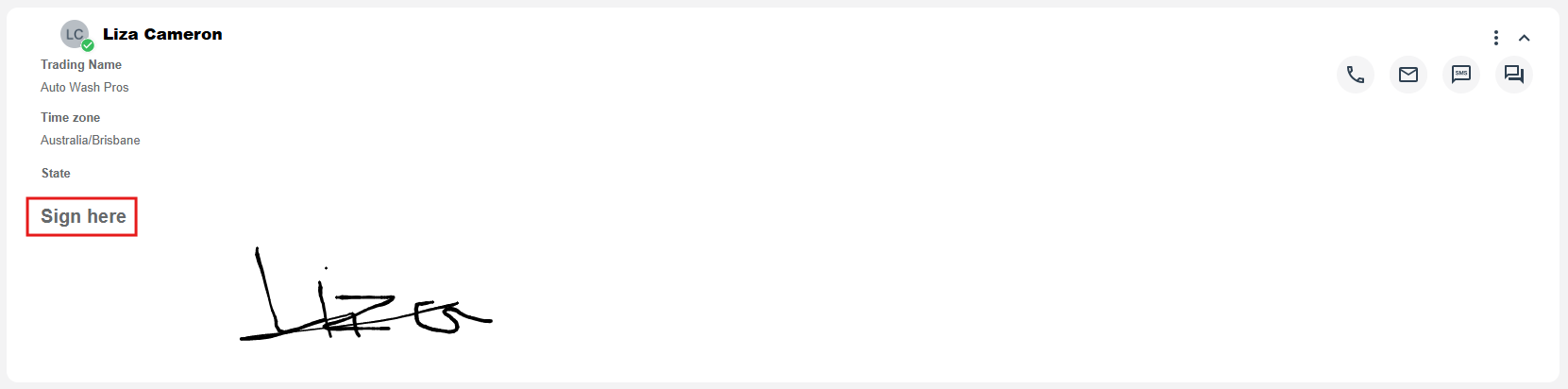
- Record View Pages – customer info panel displays the latest signature with date/time.
- PDF Outputs – handwritten image + “Signed on YYYY-MM-DD HH:MM” footer embedded.
- Audit Trail – every capture logs IP, device ID and user; meets ISO 27001 style audit expectations.
B. Collecting Signatures through Forms & Checklists
Creating custom digital forms & checklists—complete with a signature pad field—lets you bundle safety inspections, job-completion reports, risk assessments, or service authorisations directly into any quote or booking, so the customer can sign the form itself (not just the document). Many leading FSM platforms report 25-40 % faster job close-outs and a double-digit drop in customer disputes after moving to signed digital checklists.
What Are Custom Forms & Checklists?
A custom form is a drag-and-drop worksheet you design once and attach to one or more services, quotes, or bookings.
- Field types include text, dates, buttons, photos, radio groups …and a Signature pad for legally-binding e-signatures.
- Completed forms embed as an extra PDF inside the parent document, giving you a tamper-evident audit trail similar to FastField, ServiceM8 and Adobe Field Apps.
Typical Deployments
| Industry | Sample Form | Who Signs & When |
|---|---|---|
| HVAC | Commissioning checklist | Customer upon equipment hand-over |
| Construction | Site safety SWMS | Site manager before works start |
| Cleaning | End-of-lease bond report | Tenant + cleaner on completion |
| Home-care | Client care plan review | Patient or guardian each visit |
Step-by-Step Setup in OctopusPro
1. Create the Form Template
- Settings → Forms & Checklists → Create New Form.
- Add blocks for questions, photos, drop-downs, etc.
- Insert a Signature Pad
- Click Add Field → choose Signature pad (see screenshot).
- Mark it Mandatory if sign-off is required before closing the job.
- Save & name the form (e.g., “HVAC Completion Checklist”).
2. Attach the Form to Workflows
- Per Service: Services → Edit → Forms → toggle your new checklist so it appears on every booking of that service.
- Per Quote/Booking: open the record → Forms tab → Add Existing Form.
– Perfect for ad-hoc risk assessments.
3. Collect the Signature
- Fieldworker App: Tech opens the form during the visit, fills fields, hands device to customer to sign → Save.
- Customer Portal / Email Link: If the form is customer-facing, OctopusPro adds a secure placeholder (similar to {customer_signature_url} ), so clients complete & sign remotely.
- Offline Mode: Signatures cache on device; sync as soon as connectivity returns—mirroring FieldCamp & Connecteam offline behaviour.
4. Where It Appears
- Booking/Quote View: “Forms” panel shows status (Pending / Submitted / Signed).
- PDF Bundle: The signed checklist merges into the main document; the signature also surfaces in the customer info sidebar.
Examples & Use-Cases
| Use-Case | Flow | Benefit |
|---|---|---|
| Job-Site Inspection – construction | Fieldworker completes 20-point checklist, captures photos, client signs onsite. | Cuts paper, meets ISO 45001 record-keeping. |
| Warranty Commissioning – solar install | Installer fills technical data + signature; PDF auto-emails to manufacturer. | Provides proof for 5-year warranty claims. |
| Home-Care Visit Note | Nurse opens “Care Plan Review,” patient signs on tablet. | Meets Medicaid EVV and HIPAA audit needs. |
| Pre-Hire Equipment Checklist | Driver inspects vehicle, signs; copy emailed to fleet manager. | Reduces accident liability & supports OSHA logs. |
Benefits
- Single-Visit Close-Out: No second trip just for paperwork; signature on form = ready to invoice.
- Error-Free Data: Mandatory fields ensure all safety questions answered before signature allowed.
- Audit & Compliance: IP, time-stamp, user ID saved; aligns with ESIGN/UETA/eIDAS.
- Customer Experience: Mobile-friendly canvas; nothing to print or scan.
Best-Practice Tips
- Version Control: Clone old forms when regulations change; archive originals for audits.
- Conditional Logic: Hide the signature pad until all checklist items are ‘Pass’.
- Auto-Notify: Trigger “Form Received” emails to warranty teams or compliance officers.
- Stylus Kits: Provide cheap capacitive pens for clear signatures in dusty worksites.
By embedding signature pads inside your custom forms, OctopusPro lets you turn every safety checklist, job completion report, or service authorisation into a fully signed, legally compliant PDF—captured once, stored forever, and accessible from any device.
C. Optional “Master” Signature on Customer Profile
- Settings → General Settings → Customer Profile → Create New Field.
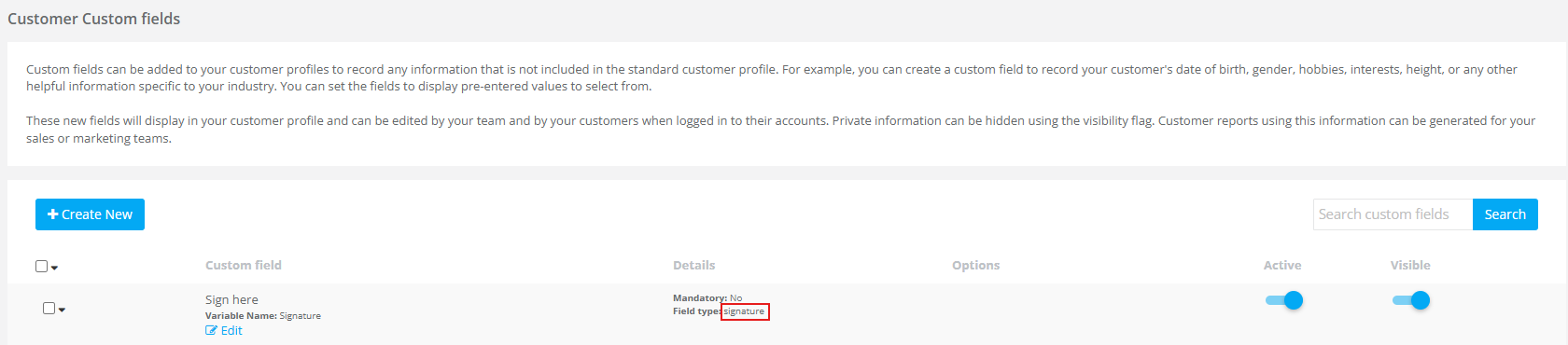
- Select Field Type = Signature, then Save; toggle Active & Visible.
- Capture the autograph via:
- Admin/CSR editing the customer record
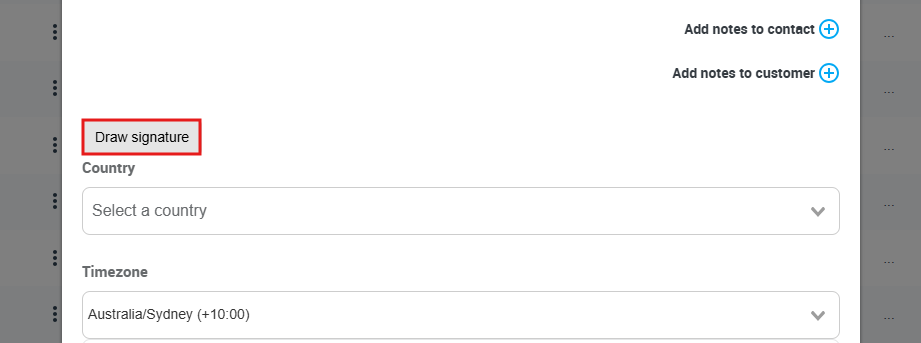
- Customer Portal → My Account → Edit → Draw Sign Here

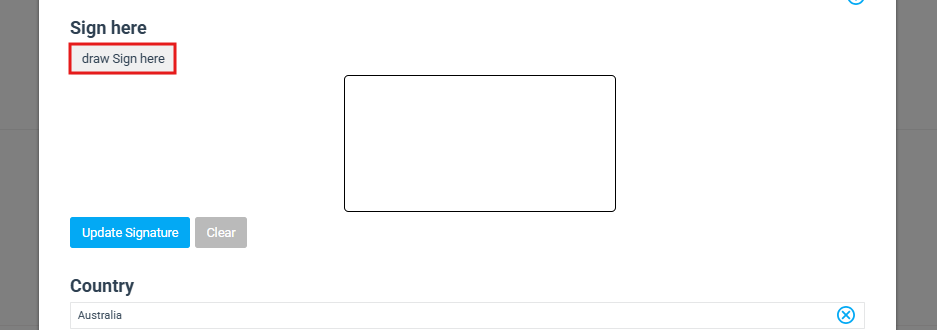
- Admin/CSR editing the customer record
Tip: Use this only if you need a reusable signature (e.g., recurring services or EVV programmes). All other signature flows below work out of the box.
Viewing & Auditing Signatures
- CRM View Pages: Customer info panel shows latest signature with date/time.
- PDF Outputs: Handwritten image + “Signed on YYYY-MM-DD HH:MM” footer.
- Audit Log: Each capture logs IP, device, and user ID—aligned with ISO 27001 audit expectations.
Practical Examples
- Residential Cleaning Franchise – Portal signatures for first booking, on-site sign-off each visit; cut payment disputes by 23 %.
- HVAC Project Work – Email quote signed same day; invoice signed on-site, trimming Days-Sales-Outstanding by 35 %.
- Home Health Care – Stored patient signature reused on weekly visit notes to satisfy Medicaid EVV.
Best-Practice Tips
- Pair Sign-Off with Photos – add a mandatory “after” photo checklist item in the fieldworker app.
- Automate Reminders – schedule a follow-up email if a quote remains unsigned after 48 h.
- Stylus Gear – supply technicians with low-cost capacitive pens for clearer signatures in the field.
- Security First – enable two-factor login for staff who can view signatures, aligning with GDPR & HIPAA guidelines.
FAQs (Quick Reference)
| Question | Answer |
| Can customers sign from a smartphone email? | Yes—signature page is responsive; finger or stylus input works. |
| Where do signatures appear in OctopusPro? | On the Quote/Booking/Invoice view pages and all related PDFs. |
| Is a typed name valid? | Yes, under ESIGN and eIDAS “Simple” signature rules; drawing adds biometric weight. |
| Can I force a signature before job start? | Add a mandatory pre-start checklist item “Customer signature required”. |
By combining out-of-the-box signature pads on every document with an optional reusable signature field on customer profiles, OctopusPro lets you lock in approvals faster, protect revenue, and create an iron-clad audit trail—all while giving clients a seamless digital experience.
To stay updated, please subscribe to our YouTube channel.