
Track & Manage Lead Sources (Marketing Attribution)
Lead Source Tracking helps you understand where new customers are coming from (for example: Website, Google Ads, Referral, Facebook, Instagram, Phone Call). By capturing a lead source on every booking, quote, and inquiry, you can measure channel performance, improve conversion rates, and make smarter marketing and staffing decisions.

On this page
- What this is for
- Key concepts
- Enable & manage lead sources
- Add a lead source on bookings
- Add a lead source on quotes
- Add a lead source on inquiries
- Reporting: inquiries by source
- Best practices
- Troubleshooting
- Related guides
What this is for
A Lead Source (also shown as Source / Inquiry Source) is the channel a customer used to reach you—such as a website, referral, social media platform, or paid advertising. Lead source data is intended for internal reporting and is visible to admin users, not customers.
Use lead sources to:
- Measure marketing ROI by comparing lead volume across channels (e.g., Google vs Facebook vs referrals).
- Improve conversions by tailoring your follow-up based on source (e.g., urgent phone leads vs research-based SEO leads).
- Allocate budget wisely by investing in sources that generate high-quality leads.
- Spot trends (seasonality, campaign spikes, and channel shifts).
- Standardize reporting so your team tracks sources the same way across the business.
Key concepts
- Lead Source / Source: The marketing or communication channel that generated the lead (e.g., Website, Google Ads, Referral).
- Where it’s used: Lead source can be selected on Bookings, Quotes, and Inquiries.
- Consistency matters: Reporting is only as accurate as your naming. Avoid duplicates like “Google”, “Google Search”, “Google Organic” unless you intentionally want that level of separation.
Enable & manage lead sources
1) Activate lead source visibility (admin)
Admin users can enable lead source visibility from the web portal (and, if applicable, the mobile admin experience).
- Go to Settings > General Settings > Lead Sources.
- Enable the relevant visibility flag to show lead sources to admin users.
2) Create (add) a new lead source
- Go to Settings > General Settings > Lead Sources.
- Click Add new +.
- Enter the source name (for example: Google Ads, Referral, Instagram).
- (Optional) Add a description and set the source as Active.
- Click Save.
3) Edit / rename a lead source
If you need to standardize naming, update an existing source from the same Lead Sources settings page (for example, change “Facebook” to “Facebook Ads” to distinguish paid vs organic).
Tip: Renaming is usually better than creating duplicates, because it keeps reporting clean and prevents staff from selecting the “wrong version” of the same channel.
4) Set a default lead source (optional)
If most of your leads come from one channel, you can optionally set a Default Lead Source so it’s preselected when creating new records (this reduces missed attribution).
5) Delete a lead source
To remove a lead source from the list:
- Go to Settings > General Settings > Lead Sources.
- Click the X next to the source you want to delete.
Best practice: If you have historical data you still want to interpret, consider renaming the source (for example, add “(Legacy)”) rather than deleting it, so your past reporting remains clear.
Add a lead source on bookings
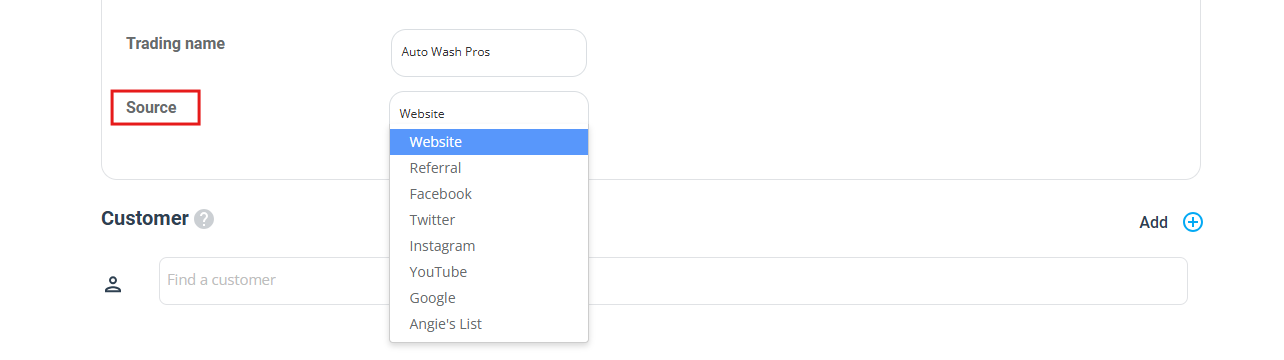
Set the source when creating a booking
- Go to Bookings > Create new.
- Find the Source field.
- Select the correct lead source from the dropdown.
- Save the booking.
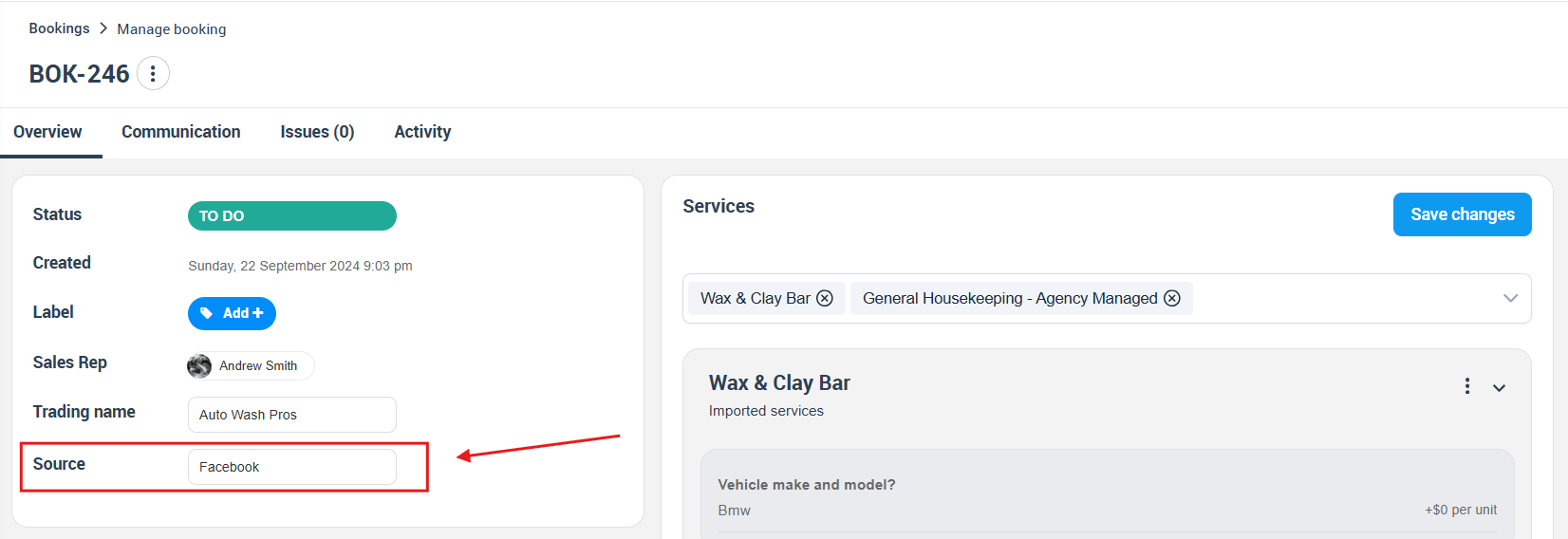
View the source on the booking details page
After saving, the selected source appears on the booking details page for quick reference.
Add a lead source on quotes
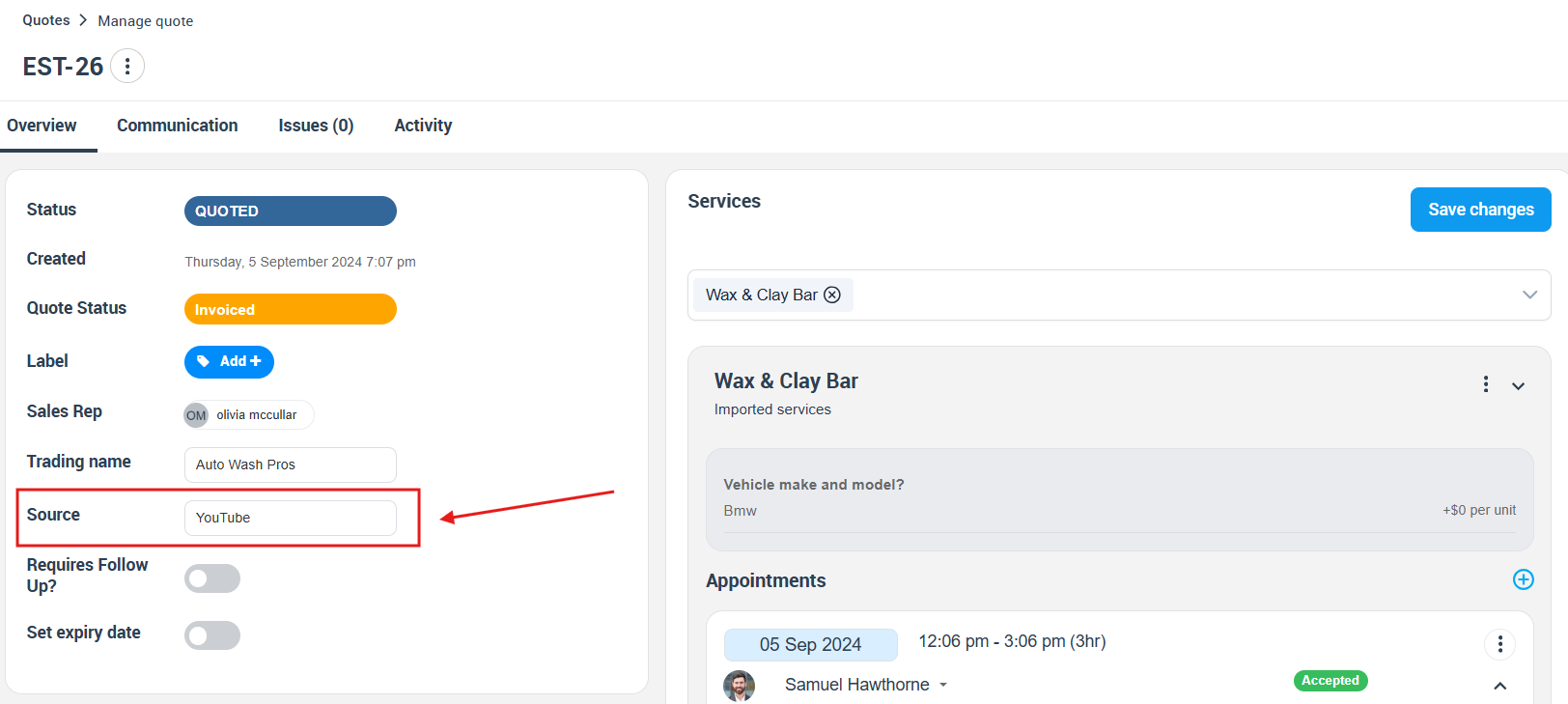
You can set a lead source when creating a quote and view it later in the quote details.
- Go to Quotes > Create new.
- Click the Source field and select the lead source from the dropdown.
- Save the quote.
Add a lead source on inquiries
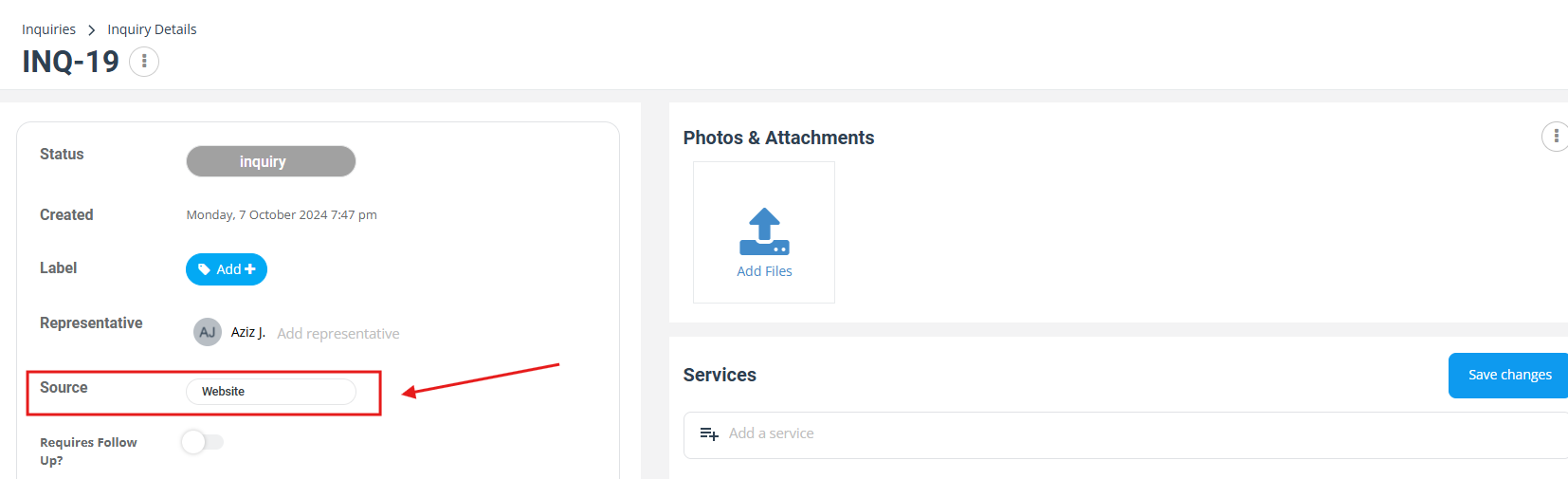
Lead source is especially useful on inquiries so you can measure which channels generate the most new leads and prioritize follow-up workflows accordingly.
- Go to Inquiries > Create new.
- Scroll to Inquiry Source (or Source).
- Select the lead source from the dropdown.
- Save the inquiry.
Reporting: inquiries by source
To compare lead volume across channels, use the Inquiries Statistics dashboard and review the Inquiries by Source table.
- Go to Statistics.
- Open Inquiries.
- Review the Inquiries by Source table across time periods (Today, This Week, This Month, This Quarter, etc.).
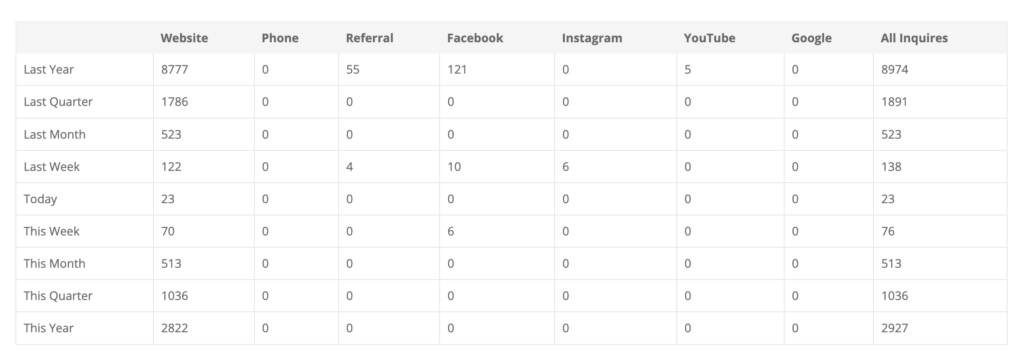
How to act on this data (examples):
- If Google Ads is high volume but low conversion, refine keywords/landing pages and improve quote follow-up speed.
- If Referrals convert best, invest in a referral incentive program and make “Referral” easy for staff to select consistently.
- If Website leads spike after hours, ensure auto-responses and follow-up processes are in place so you don’t miss them.
Best practices
- Keep the list short and meaningful: track channels you actively manage (ads, website, referrals, phone), not every micro-campaign.
- Use a naming standard: e.g., “Google Ads” (paid), “Google Organic” (SEO), “Facebook Ads” (paid social), “Instagram” (organic social).
- Train your team: make selecting the Source part of your booking/quote/inquiry creation checklist.
- Use a default source (optional): reduce missing attribution by preselecting the most common channel.
- Review regularly: retire outdated channels by renaming as “(Legacy)” to keep reporting understandable.
Troubleshooting
- I can’t see the Source / Inquiry Source field: confirm lead source visibility is enabled in Settings > General Settings > Lead Sources, then refresh and try again.
- The list has duplicates: standardize naming (e.g., choose “Google Ads” instead of having “Google”, “Google paid”, “AdWords”).
- Reports don’t look accurate: ensure staff consistently select a source for every new inquiry/booking/quote—missing sources reduce reporting value.
Related guides
- Inquiries & Lead Management (capture, follow up & convert leads)
- Website Lead Capture Form (embed an inquiry form on your website)
- Customer Portal Contact Us Form & Lead Capture
- Inquiries Statistics Dashboard (track inquiries by source)
- Create a New Booking
- Create a New Quote
To stay updated, please subscribe to our YouTube channel.