
Deleting Users (vs Deactivating or Blocking) in OctopusPro
Managing user access is essential for security, operational control, and keeping your account tidy. In OctopusPro, you can Delete, Deactivate, or Block users depending on your goal.
On this page
- Delete vs Deactivate vs Block (choose the right option)
- What happens when you delete a user?
- Before you delete a user (recommended checks)
- Delete one user (from the Users list)
- Delete a user (from Fieldworkers / profile view)
- Delete multiple users (bulk delete)
- Permissions & subscription/billing notes
- FAQ
Delete vs Deactivate vs Block (choose the right option)
These options are commonly confused, but they do very different things:
| Action | What it does | Can they log in? | Best for | Reversible? |
|---|---|---|---|---|
| Delete | Permanently removes the user account from your Users list. The user can no longer access the system. | No | Ex-staff, old subcontractors, test accounts, duplicate accounts you no longer need. | No |
| Deactivate | Puts the account “on hold”. Deactivated users cannot be assigned jobs, but may still be able to log in depending on your setup. | Usually yes | Seasonal/temporary leave, long-term absence, pausing job assignment without fully removing the account. | Yes |
| Block | Prevents the user from logging in entirely while keeping their account record in your system. | No | Immediate access removal (security concerns, terminated staff, contract dispute). | Yes |
Related guides (open in a new tab): Activate / Deactivate Users, Blocking Users, Role-Based Access Control (RBAC) & Permissions.
Tip: If you’re unsure, Block (to stop access immediately) or Deactivate (to pause assignment) is usually safer than deleting.
What happens when you delete a user?
Deleting a user permanently removes their user account. However, OctopusPro keeps historical records for reporting and accountability.
- Removed: the user account (login access), user profile record in the Users list, and their ability to be assigned new jobs.
- Kept: the data they created (e.g., bookings/jobs, entries, notes, logs) remains available for audit trails and reporting.
Important: Deleting is permanent and cannot be undone. If you may need the user again, deactivate instead.
Before you delete a user (recommended checks)
To avoid operational gaps, it’s best practice to do a quick offboarding check:
- Reassign upcoming work: if the user is a fieldworker/subcontractor, reassign upcoming bookings/appointments to avoid unassigned jobs.
- End active sessions (security): if access removal is urgent, Block the user or Force logout first, then delete once everything is confirmed.
- Confirm admin coverage: ensure you’re not deleting the only admin who can manage settings, permissions, billing, or integrations.
Helpful security-related guides (open in a new tab): Force Logout Users, Change / Reset User Passwords, Login as Another User (Impersonation).
Delete one user (from the Users list)
- Go to Settings > Company Settings > Users.
- Find the user (use search/filters if needed).
- Click Actions on the user row.
- Select Delete user.
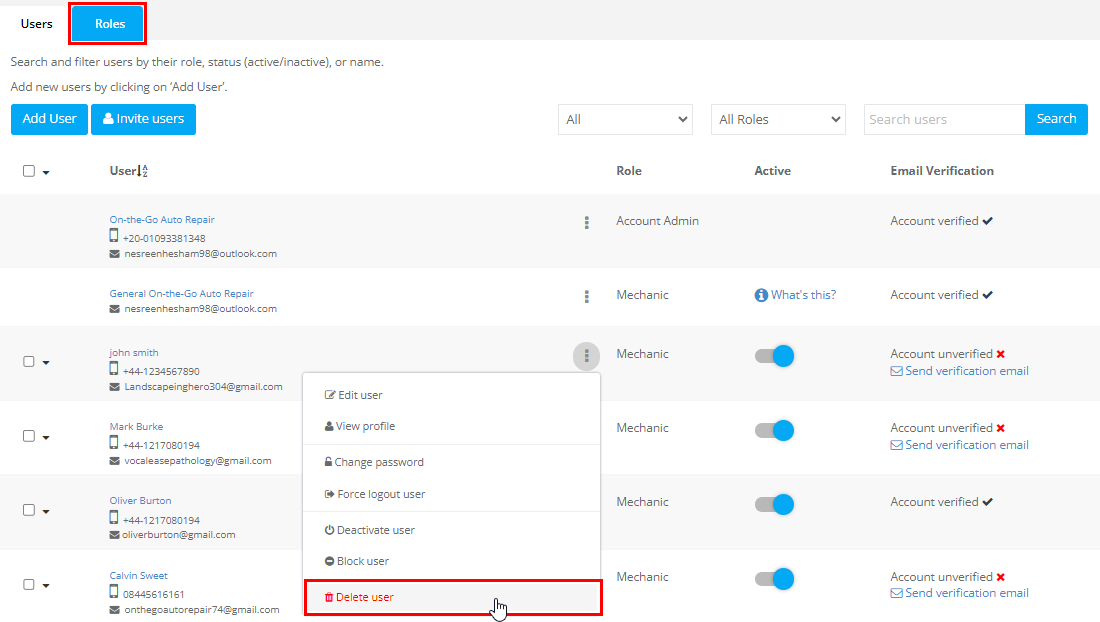
- Confirm the deletion in the prompt window.

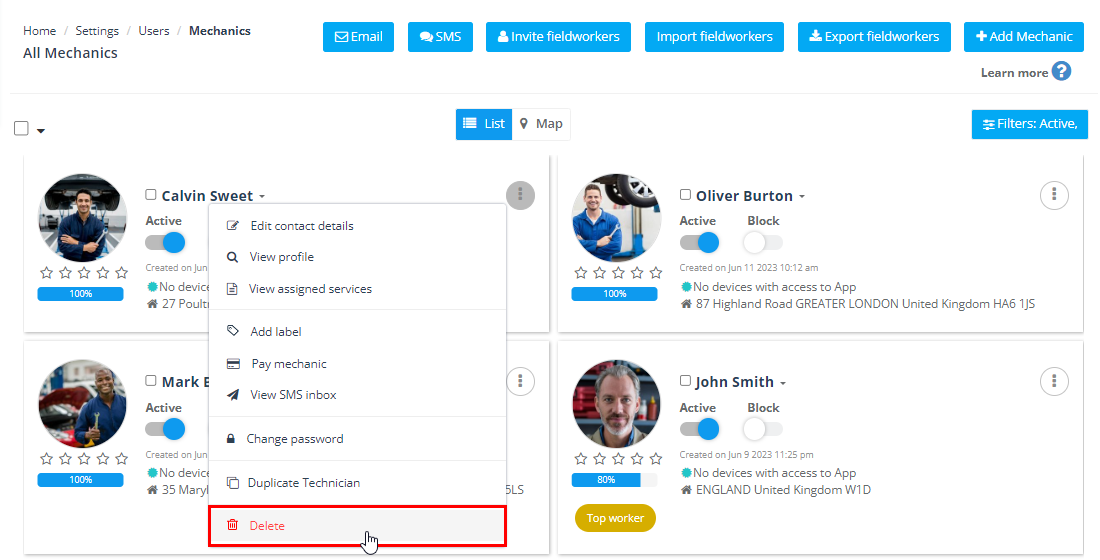
Delete a user (from Fieldworkers / profile view)
If you’re managing field staff, you can also delete a fieldworker from the Fieldworkers list:
- Open Fieldworkers from the left sidebar menu.
- Locate the fieldworker, then click Actions.
- Select Delete / Delete user.
- Confirm the deletion.
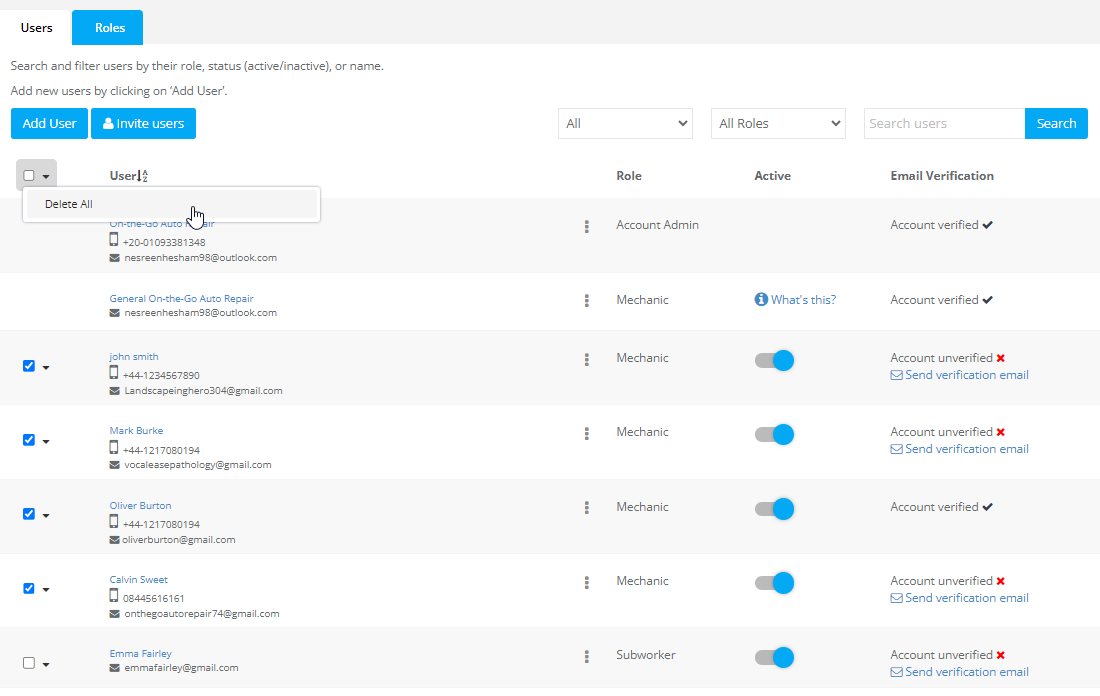
Delete multiple users (bulk delete)
Bulk deletion is useful for cleaning up old accounts, duplicate users, or test profiles:
- Go to Settings > Company Settings > Users.
- Select the checkbox next to each user you want to remove.
- Click Actions at the top of the users list.
- Select Delete Users (or Delete selected).
- Confirm the deletion in the prompt window.
Permissions & subscription/billing notes
- Permissions: only administrators (or roles with the required user-management permissions) can delete user accounts. Manage permissions here: RBAC & Permissions.
- Per-user subscription plans: If your plan charges per active user, removing users can reduce your user count. In most cases, the updated user count is applied from your next renewal / billing date (not retroactively for the current period).
- Unlimited-user plans: If your plan includes unlimited users, deleting users won’t change your subscription price. Use deletion mainly for security and account cleanup (e.g., removing ex-staff, duplicates, or test accounts).
FAQ
Can I undo a deleted user?
No. Deleting a user is permanent. If you might need them again, deactivate instead.
Will deleting a user remove their bookings, notes, or history?
No. Records they created (jobs/entries/notes/logs) remain in your account for reporting and audit purposes.
What if I only want to stop login access immediately?
Use Block (recommended for immediate access removal) or Force logout to end active sessions: Force Logout Users.
Why can’t I see the Delete option?
This is usually permission-related. Ask an admin to update your role permissions: RBAC & Permissions.
Is deleting a customer the same as deleting a user?
No. Customers are managed separately. Use these guides: Delete or Restore Customers and Access Deleted Customers.
To stay updated, please subscribe to our YouTube channel.