
How to Contact Fieldworkers by Email, SMS, Chat or Call
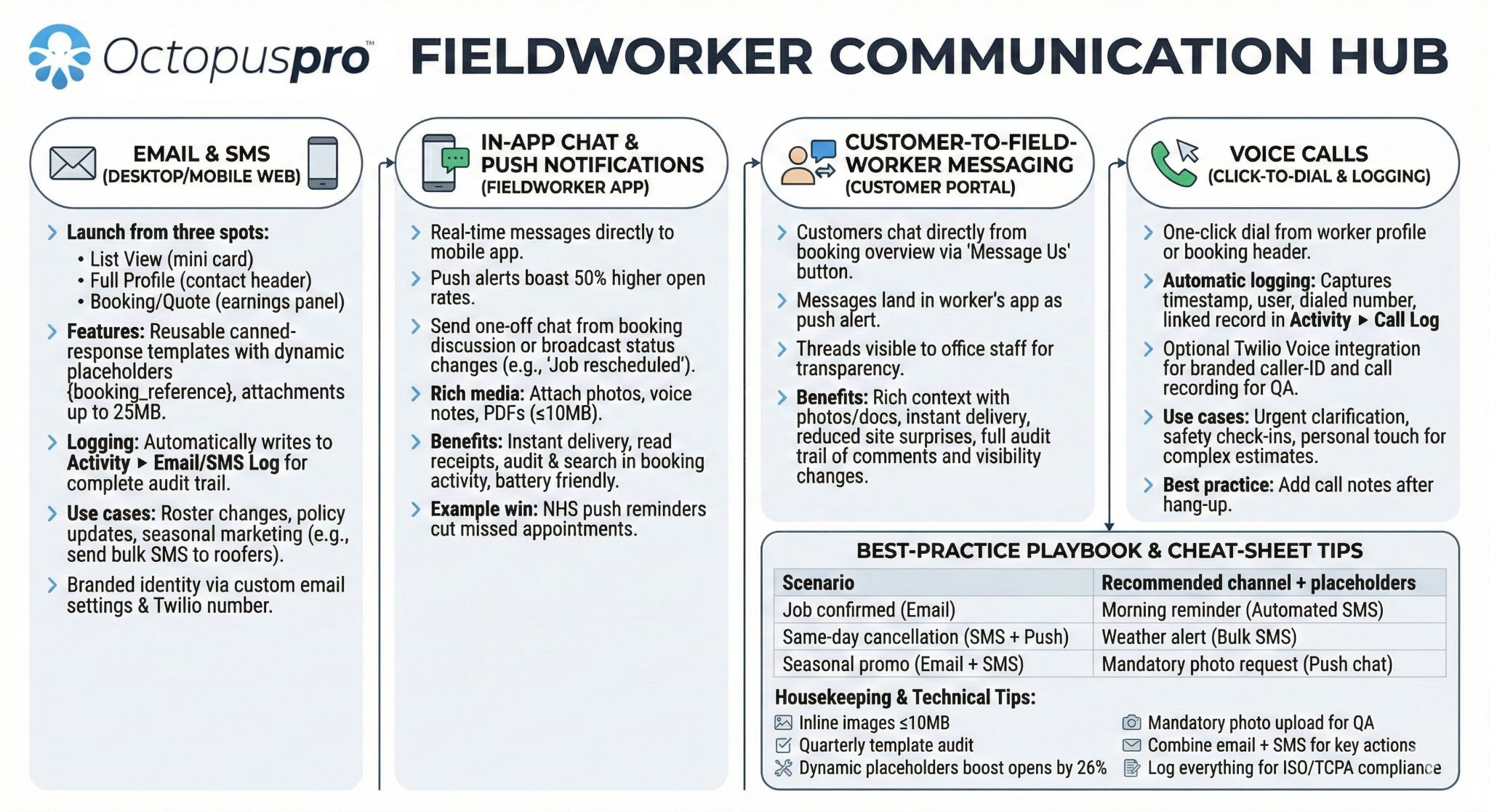
OctopusPro gives you one command-centre for every field-team conversation—send an email, drop an SMS, fire a push-chat, or click-to-call all from the same dashboard. The tools share a single address book, pull wording from reusable canned-response templates, and write an automatic entry to each fieldworker’s communication log, so operations, finance, and compliance always have a complete audit trail. Multichannel contact isn’t just convenient: industry studies show that templated replies trim response times by 40-50 % and lift first-time-fix rates because instructions reach workers quickly and consistently. SMS open-rates hover around 98 % with 90 % read inside three minutes, making texts ideal for last-minute schedule changes. Push notifications deliver similar immediacy on mobile apps, boosting engagement by as much as 88 % over email alone. By routing all channels through your branded email domain or connected digital phone number, OctopusPro preserves brand identity, ensures high carrier deliverability, and keeps every message—manual or automated—searchable forever.
1. Email / SMS– how to reach fieldworkers from desktop or mobile web
OctopusPro lets you launch an email or SMS from three spots – the list view, the mini-hover card, and the full profile – so you never have to hunt for the right button.
| Where you are | Exact clicks / taps | What happens |
|---|---|---|
| Fieldworker list – checkbox arrow | Hover a name ➜ mini card ➜ ✉ Send Email or 📱 Send SMS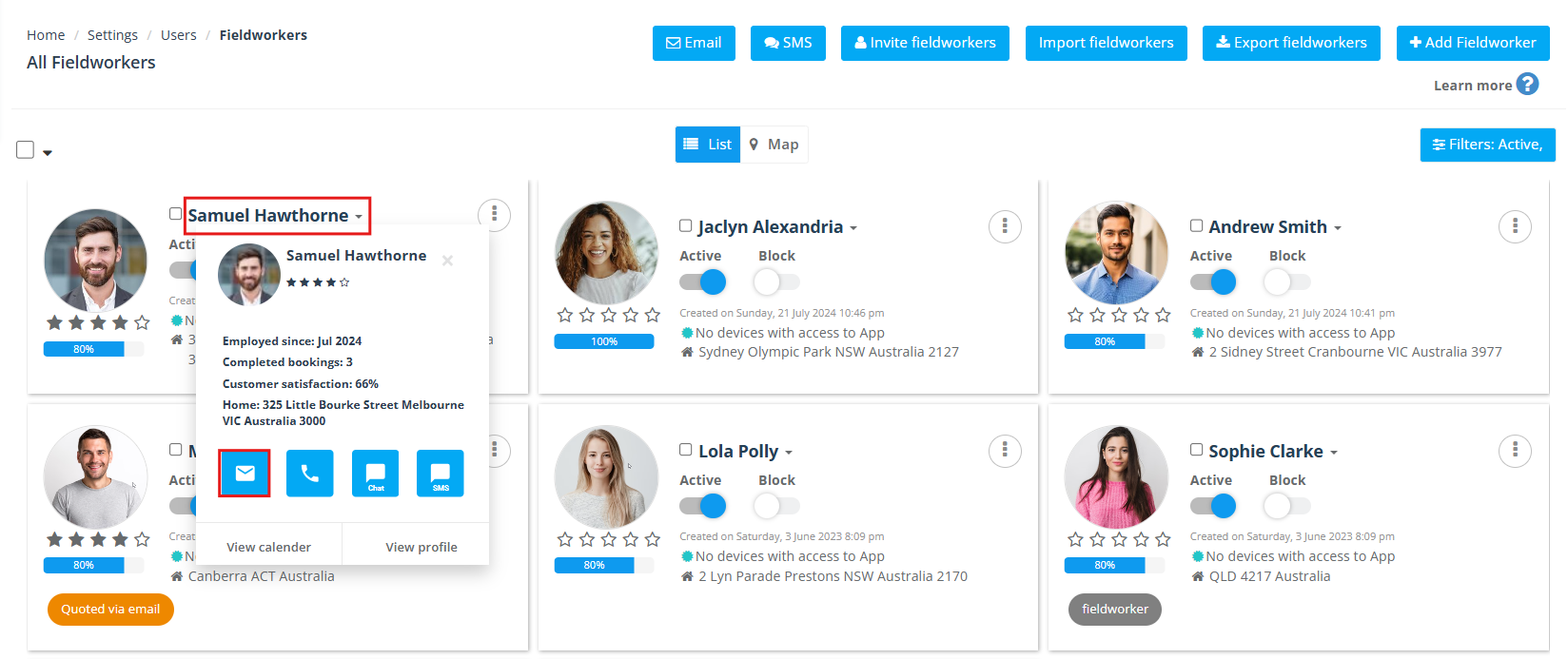 |
Opens the compose window pre-filled with the worker’s address. For a quick one-to-one note while you’re browsing the roster |
| Fieldworker list – Multiple Fieldworkers | Tick one or more workers → top-left ▾ arrow beside master checkbox → Send Email or Send SMS → pick template → Send |
Targeted broadcast to a hand-picked subset—e.g. only the three roofers who haven’t supplied documents |
| Bulk email / SMS | Fieldworkers list ➜ top-right Email / SMS button ➜ choose All, All with filters (Active/Inactive, Service, City) or Some ➜ Send 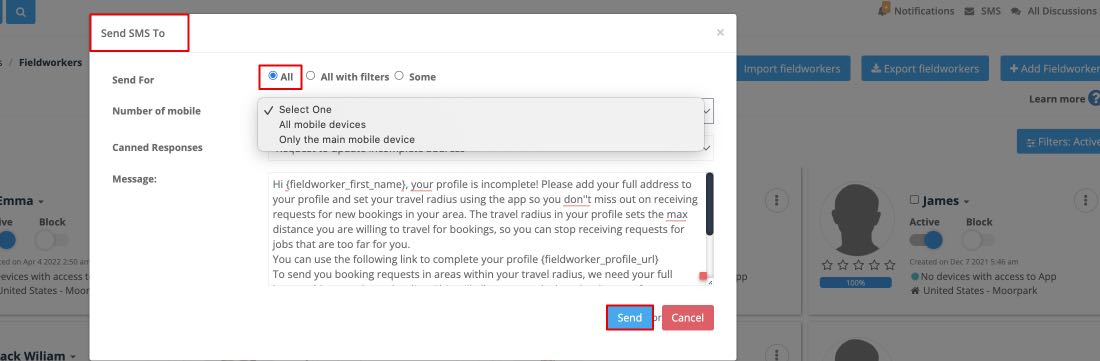 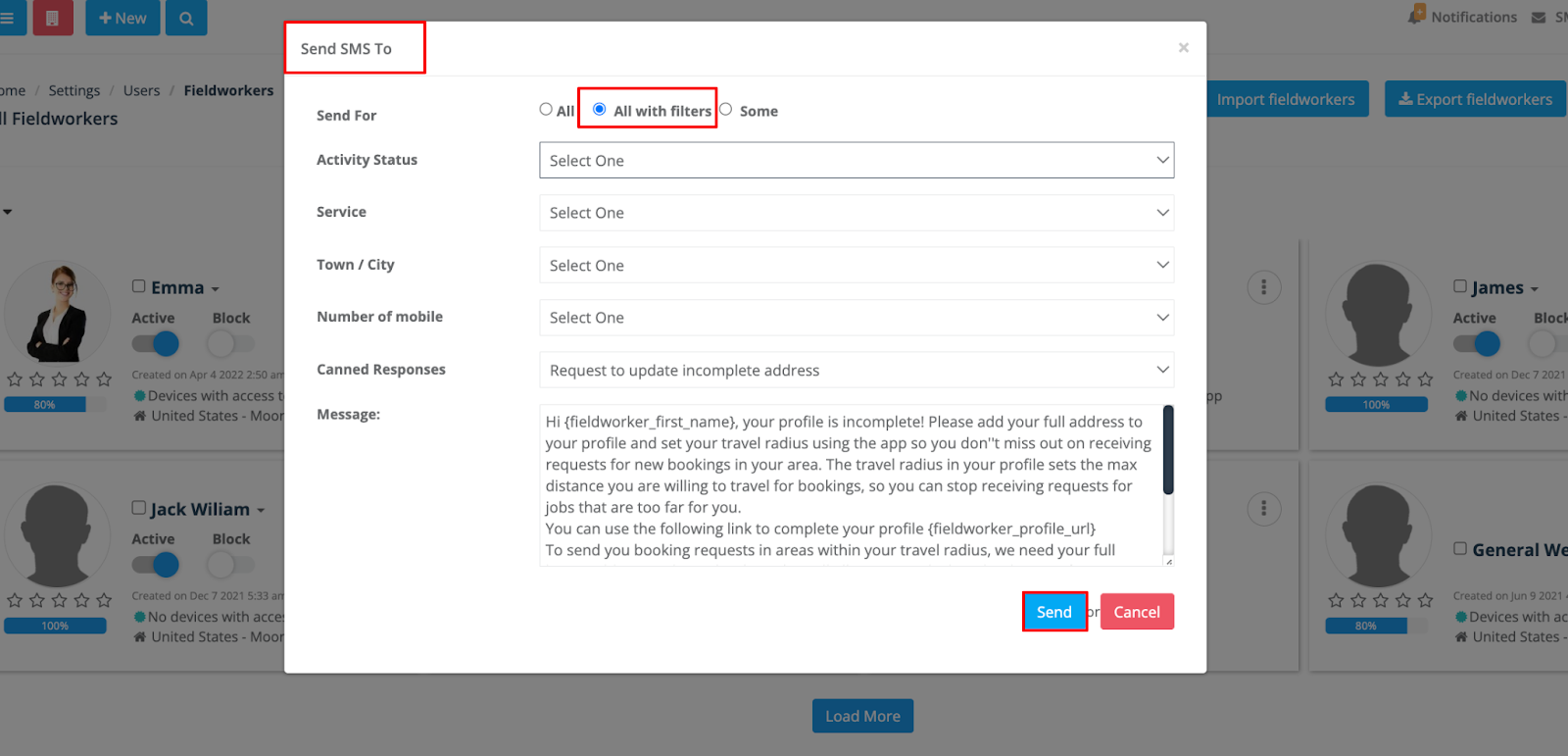  |
Fires a templated email / SMS to dozens or hundreds at once. For roster change, policy update, seasonal marketing, etc. |
| Fieldworker profile | Fieldworker list ⋮ Actions ➜ View profile ➜ Profile header ▸ Contact → choose Send Email ✉️ or Send SMS 📱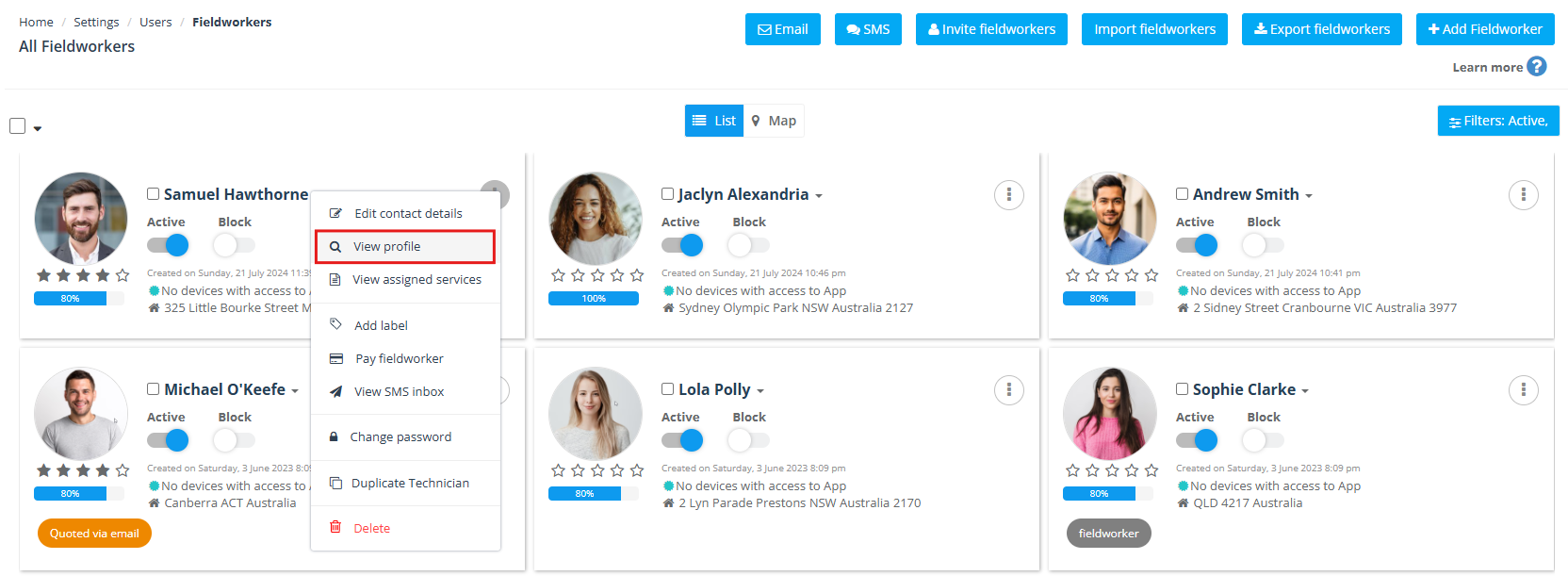 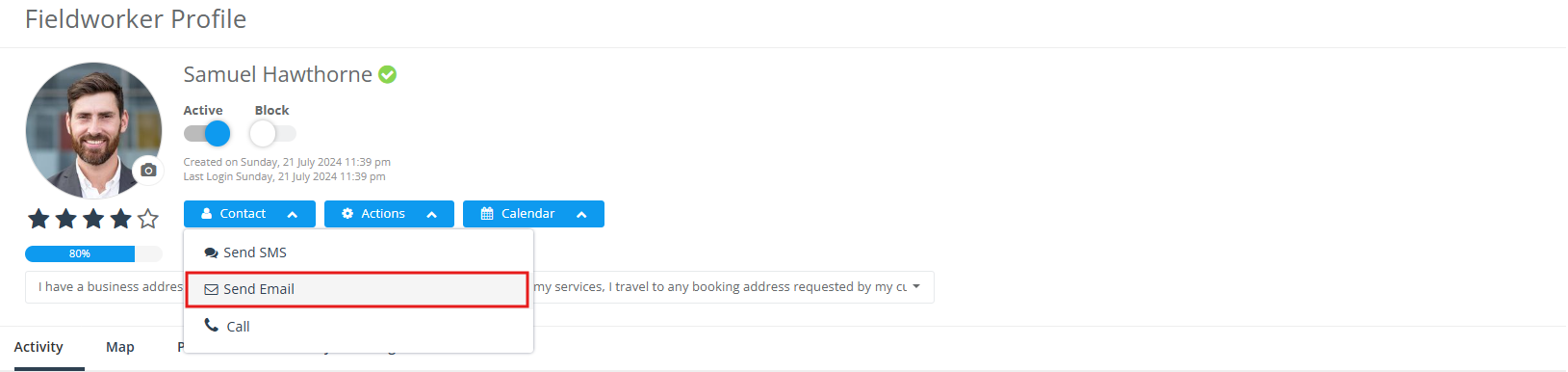 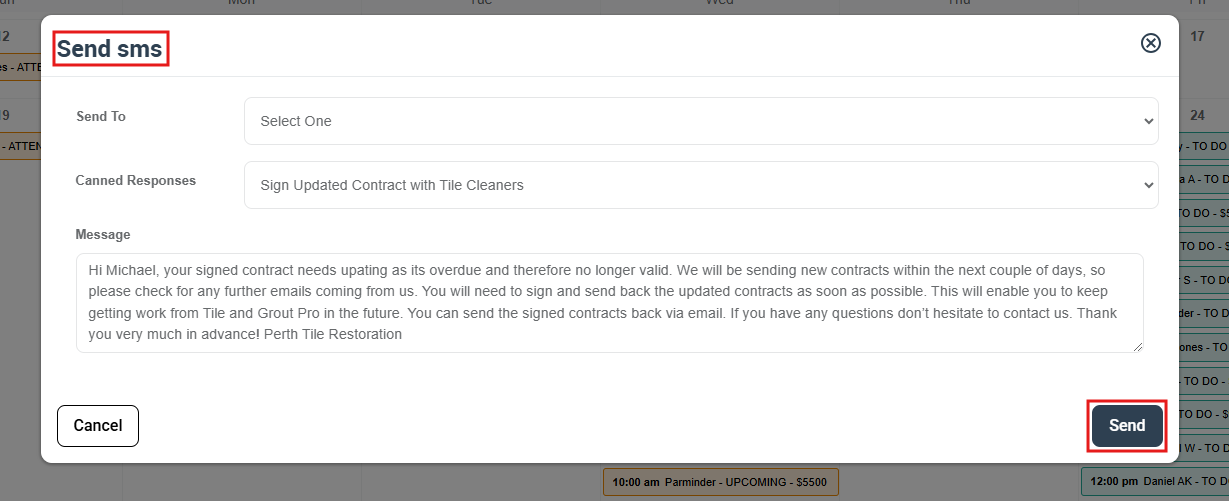 Alternatively, from the Fieldworker profile open the Discussion tab → Add Comment to post an in-app message (with optional photo) that the fieldworker sees in their mobile app; pick visibility (office-only, worker-only, or both) and click Post Comment. Fieldworker will receive a push notification in the app, but you can also choose to send them an email or SMS notification regarding your comment once you press Post Comment. 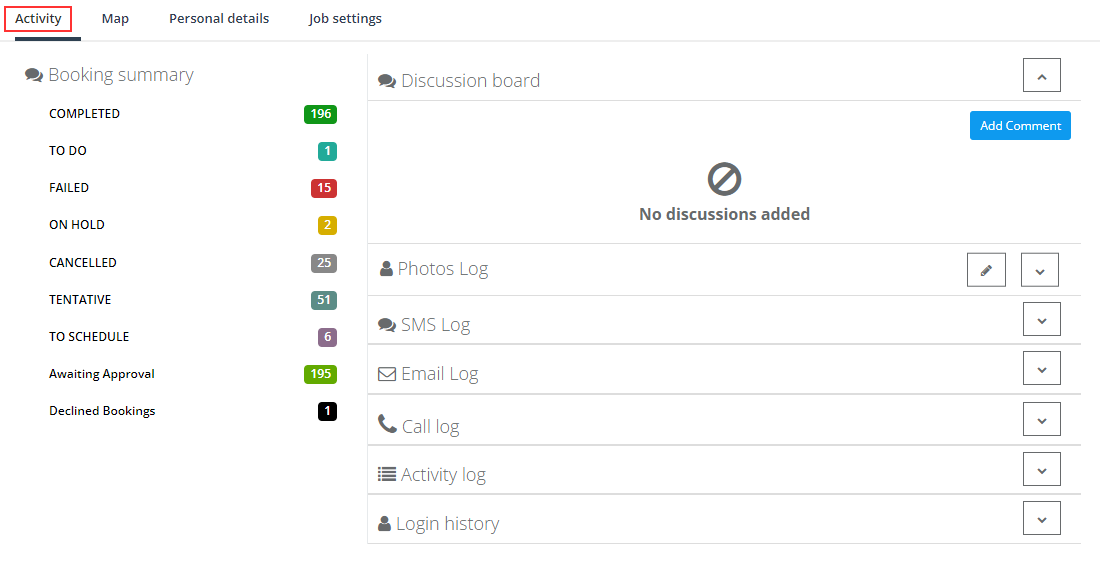 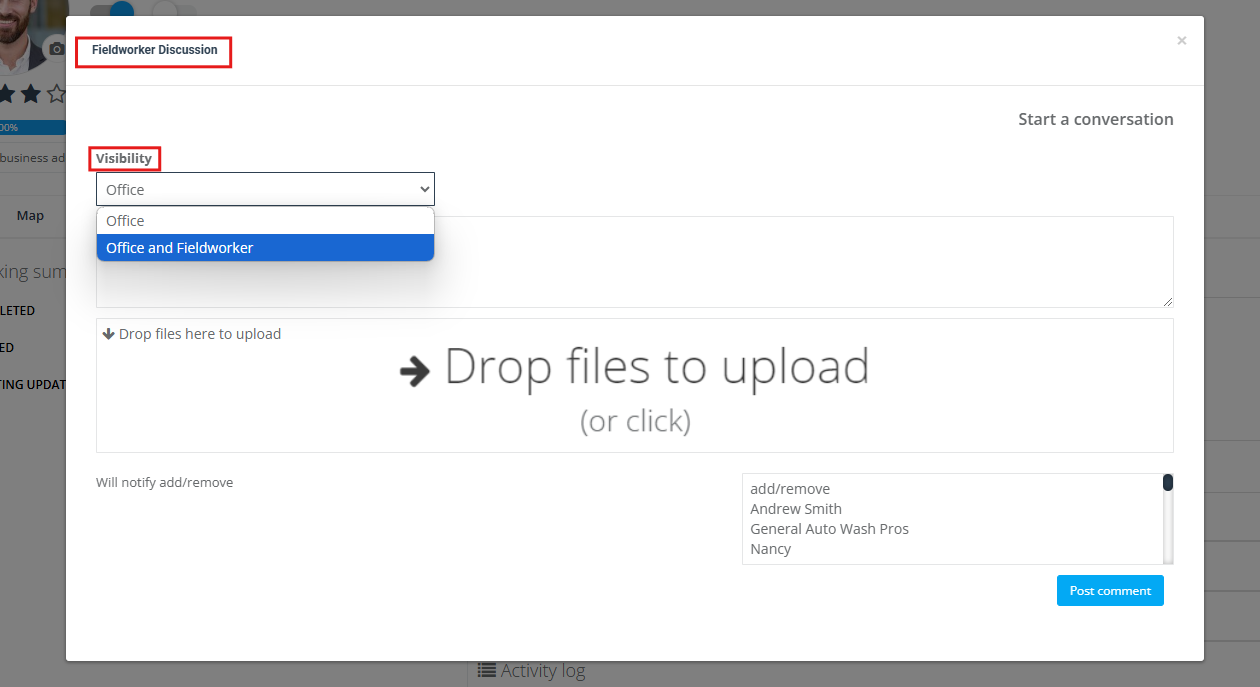 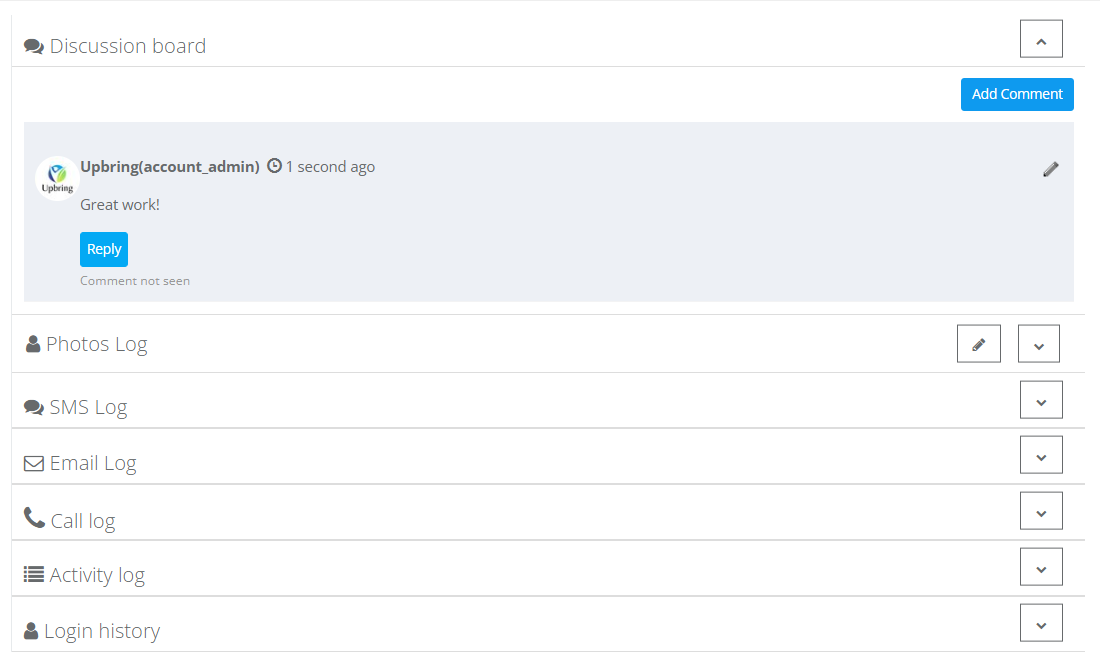 |
Same compose window, but you can scan their history first. For when you need performance stats or previous comms before writing |
| Booking / Quote list | Bookings ▸ Upcoming / Past (or Quotes) ➜ hover worker name in the row ➜ Email or SMS icon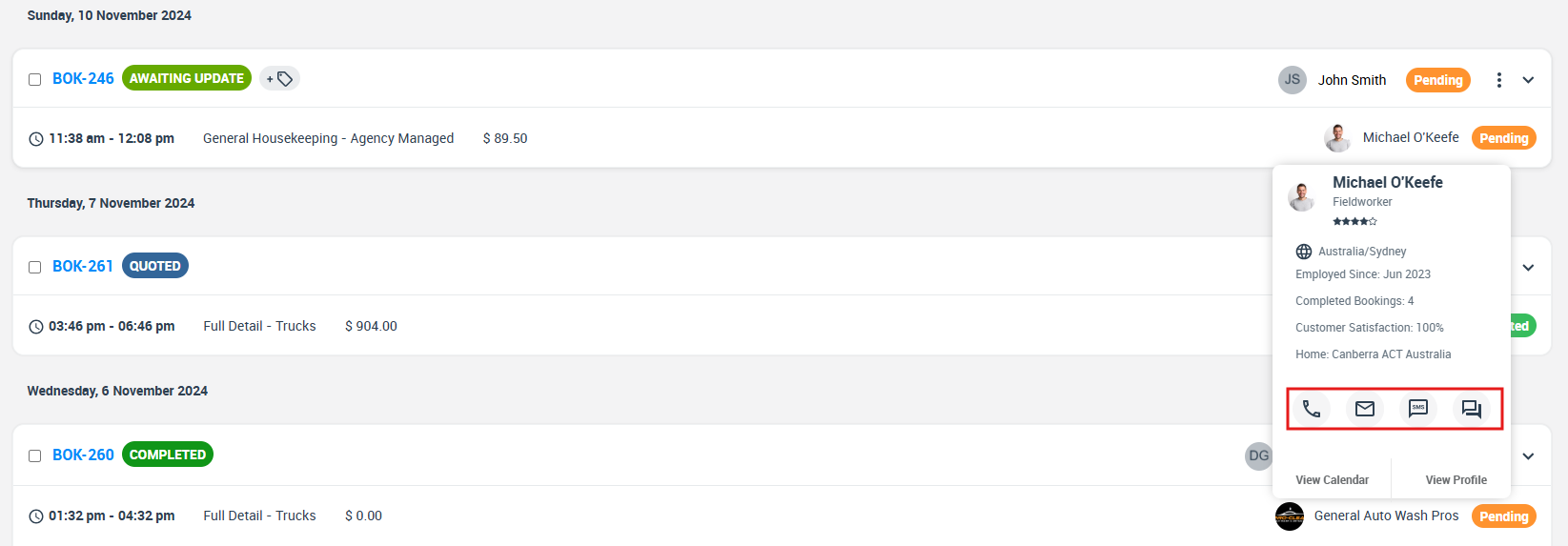 |
Pulls the job ID, date & location into the message (via placeholders). For a fast follow-up on a single job without opening the record |
| Inside a Booking / Quote | Open the record ➜ Under the services section, hover over the fieldworker’s name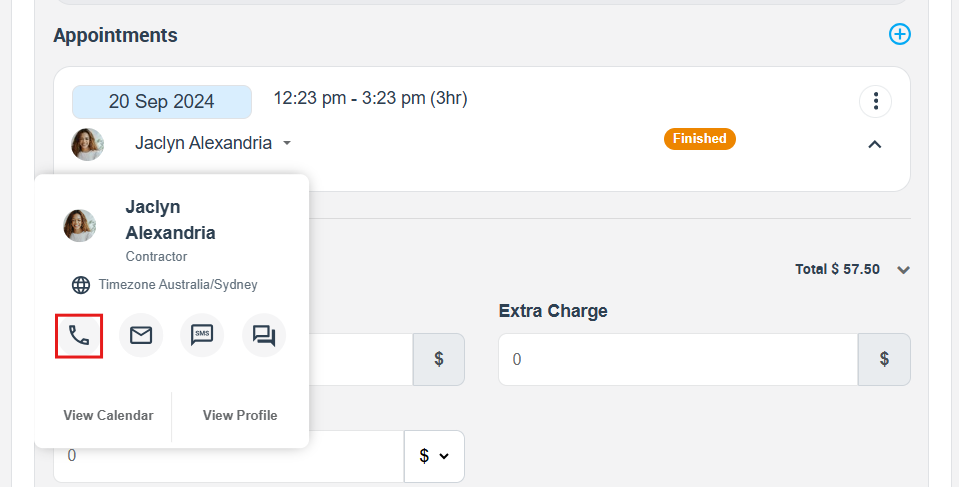 Alternatively, open the record ➜ Fieldworker Earnings panel ➜ hover the name ➜ Email or SMS icon Alternatively, open the record ➜ Fieldworker Earnings panel ➜ hover the name ➜ Email or SMS icon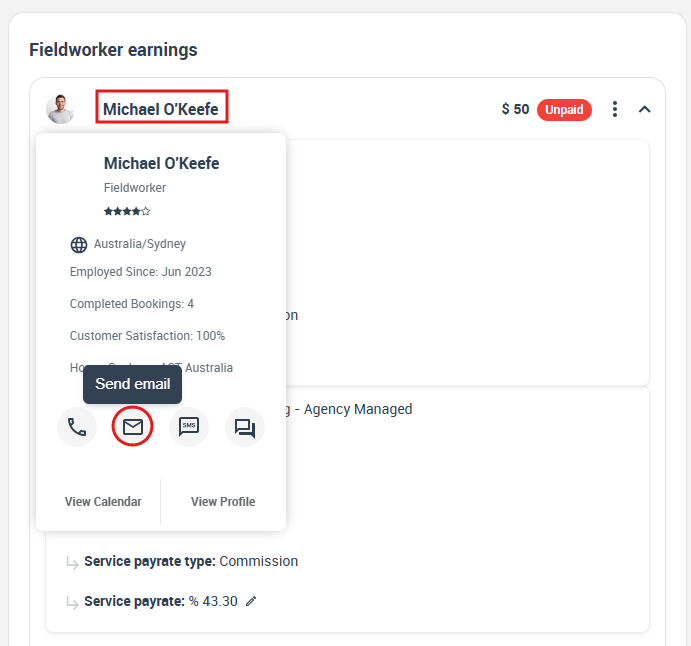 Alternatively, open the record➜ Available Fieldworkers ➜ hover the name ➜ Email or SMS icon 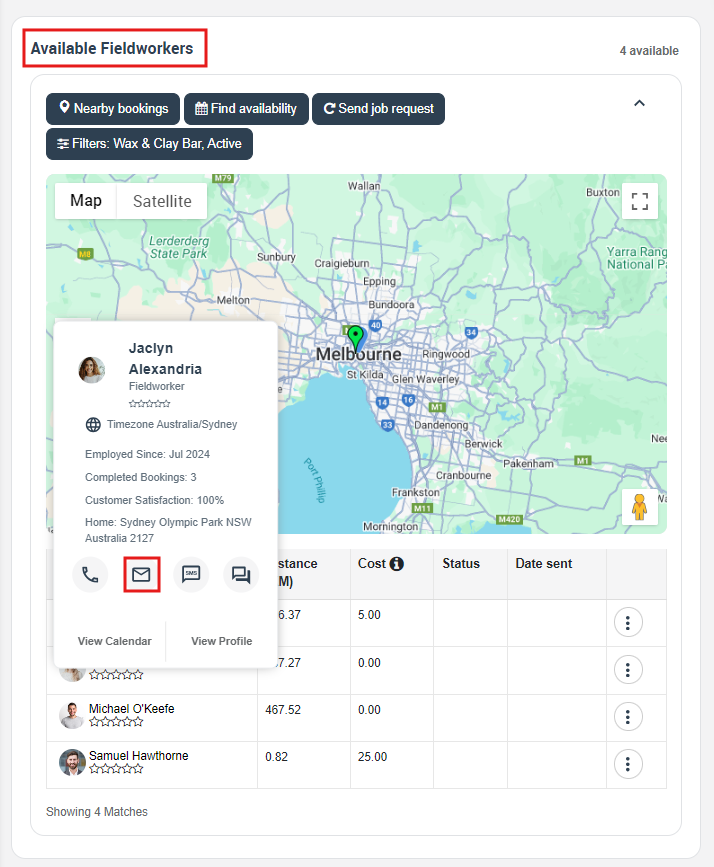 |
Context-rich email / SMS with all job data available for placeholders. For deep-link to job files, request update or send amended instructions |
| Calendar view (day / week / month) | Open the booking ► hover the worker’s name in the pop-up ► ✉ / 📱 / ☎ / 💬 icons. Alternatively choose View profile from the same pop-up, then follow the steps above.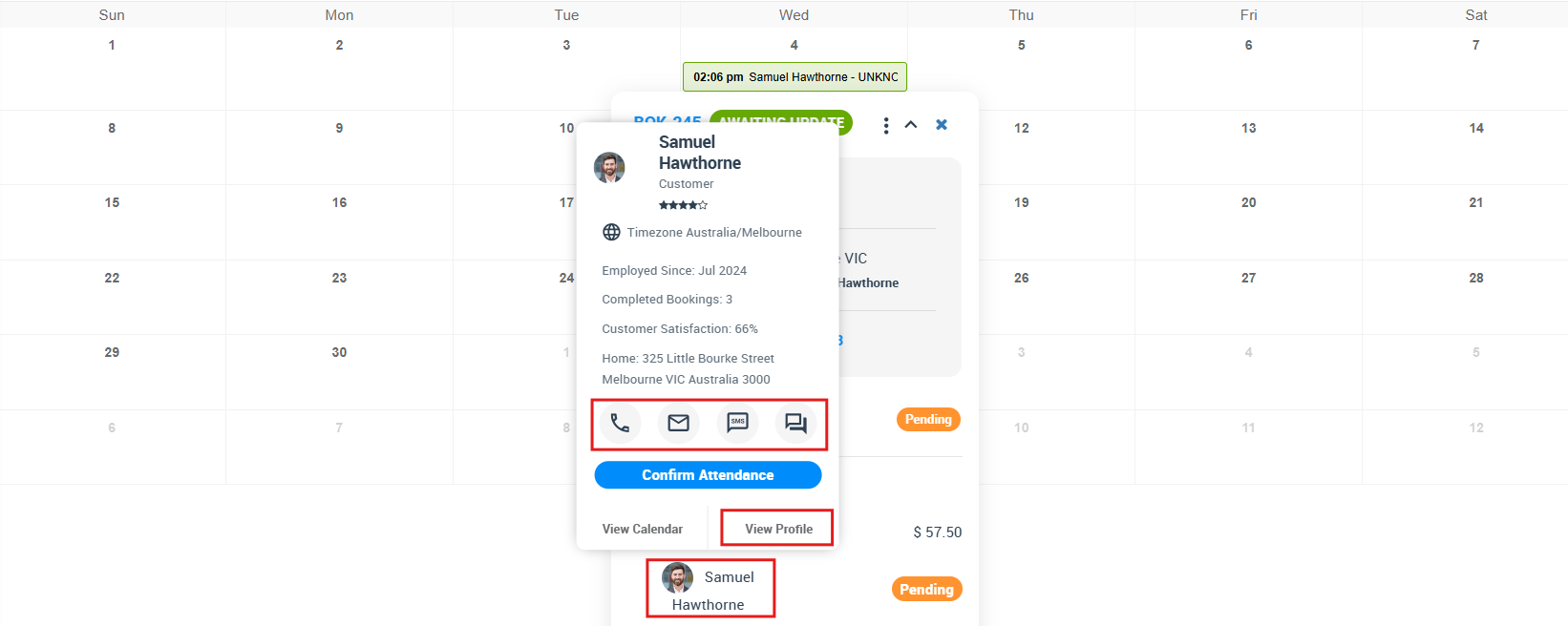 |
Fire off a last-minute update while editing time-slots; slots respect your general working-hours rules |
What stays the same no matter the entry point
- Canned Templates & placeholders – pick any saved canned response; dynamic tags like {booking_reference} fill automatically.
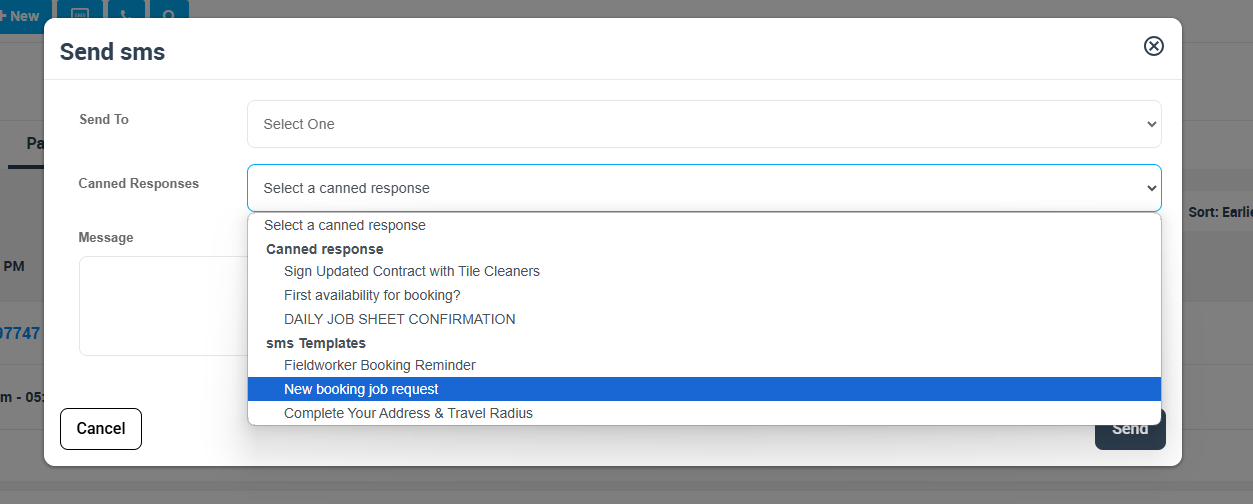
- Attachments – add up to 25 MB per email.
- Logging – every send is written to Activity ▸ Email Log / Activity ▸ SMS Log on the worker profile and the global Outbound Email Log (date, sender, subject, attachment names, status), and Report ▸ SMS Log.
- Brand identity
- Email: verify your sender under Settings ▸ Communications ▸ Custom Email Settings.
- SMS: connect your Twilio number under Settings ▸ Communications ▸ Digital Phone System.
Tip: Need to reach only Los Angeles Guitar Tutors? Use Email ▸ All with filters → Service = Guitar Lessons + Town/City = Los Angeles – the list updates live, then click Send.
2. In-app chat & push notifications (Fieldworker mobile app)
Fieldworkers carry the OctopusPro app everywhere, so real-time messages land in their pocket even when email is ignored. Push alerts boast open-rates 50 % higher than email and reach the handset within seconds, which slashes missed updates and idle travel. Below is a quick-action matrix followed by setup notes and best-practice tips.
| What you need to do | Where you click | What the worker sees | Example win |
|---|---|---|---|
| Send a one-off chat from the office | Booking ▸ Communication ▸ Discussion → type message → Send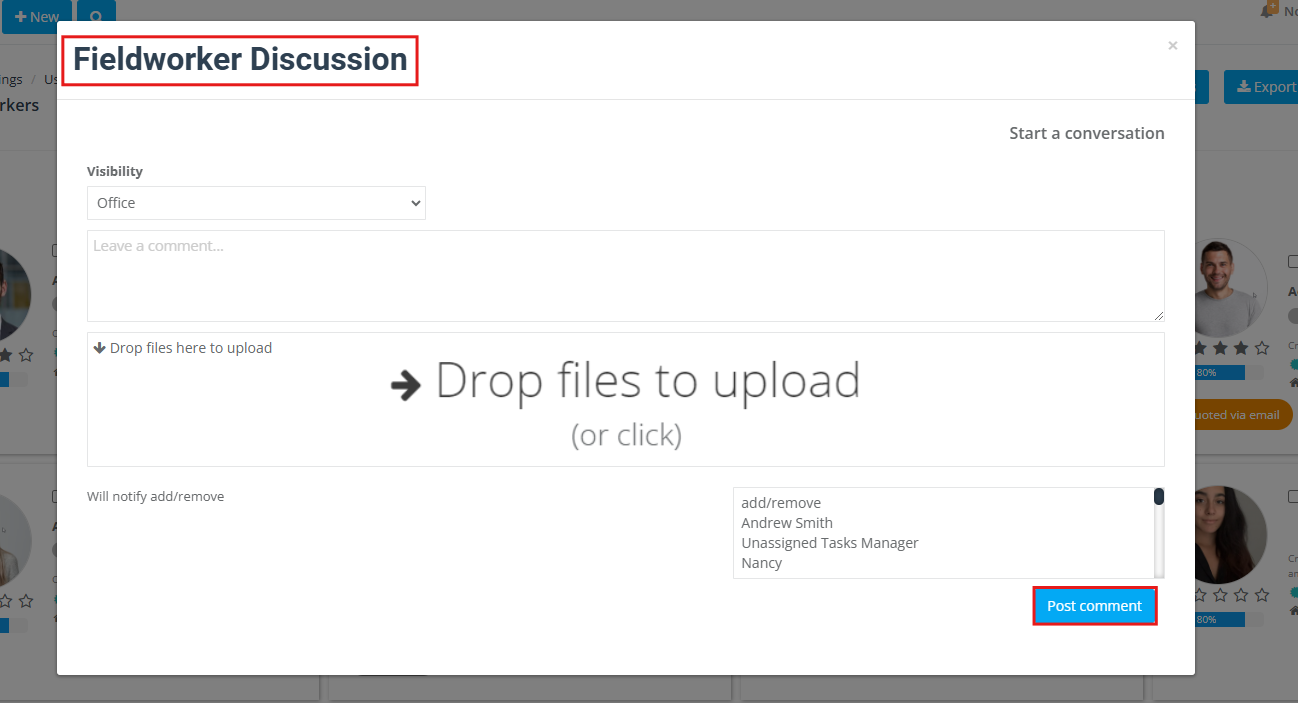 |
Instant push banner + chat bubble in their Messages tab | Clarify gate code before arrival; no phone call needed. |
| Worker replies or starts a thread | App ▸ Messages or Booking ▸ Chat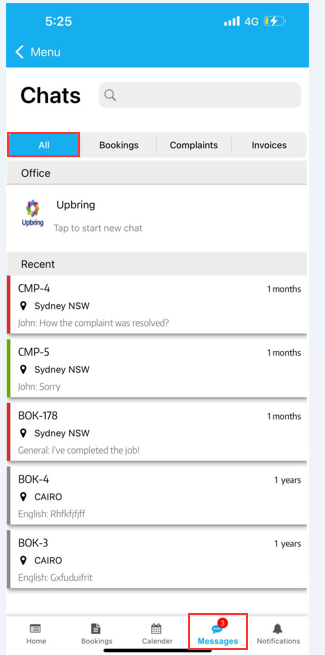 |
Office gets desktop toast + the note in booking timeline | Worker shares a site photo for same-day part approval. |
| Message a worker on a Quote / Invoice / Inquiry thread (record-based discussion) |
Quotes: Quotes ▸ open quote ▸ scroll to Discussion ▸ type message → Send Invoices: Invoices ▸ open invoice ▸ open the Discussion thread ▸ type message → Send Inquiries: Inquiries ▸ open inquiry ▸ Communication ▸ Discussion ▸ type message → Send |
Instant push banner + message logged against that specific record (Quote/Invoice/Inquiry). The thread is also accessible from the worker’s Messages tab. | Get fast approval on a quote variation, clarify invoice/payment notes, or confirm inquiry details before dispatch—without mixing it into general profile chatter. |
Fieldworker profile – general (non-booking) message |
Option A (Contact menu)• Fieldworkers list ▸ ⋮ Actions ▸ View profile• Profile header ▸ Contact ⟶ Send Email ✉️ or Send SMS 📱Option B (Discussion board)• Same profile ▸ Discussion tab ⟶ Add Comment• Choose Visibility (Office, Worker, Both) → type message, attach photo → Post Comment |
Email or SMS lands in the inbox / phone just like job-related mail.• For Discussion comments, the worker gets an in-app push, the chat bubble appears in Messages, and the note is logged in their profile timeline. | HR or policy updates that aren’t tied to a specific job.• Ongoing performance feedback, uniform reminders, birthday congratulations, etc.—all stored in one auditable thread. |
| Broadcast status changes (auto) |
Any booking status update triggers a push | “Booking assigned”, “Job rescheduled”, etc. | Worker acknowledges with one tap, dispatcher sees read receipt. |
| Automation alerts (auto) | Settings ▸ Communications ▸ Automations → toggle push the automations you’d like to enable | Scheduled reminders, safety tips, overtime prompts | Reduces no-shows by up to 30 %. |
Key features & why they matter
- Instant delivery, anywhere – Push notifications reach field staff even on poor data because they ride the OS notification channel, not email polling.
- Rich media chat – Workers and office can attach photos, voice notes or PDFs inside the thread, speeding diagnostics and approvals.
- Audit & search – Every chat message is time-stamped and stored in the booking’s Activity feed, satisfying ISO and client audit requests.
- Read receipts – Push shows delivered/read flags, so dispatch knows who is in the loop. ✔︎
- Battery friendly – Notifications are silent background pings; they don’t hold the data line open, preserving battery life—important for full-day routes.
Best-practice checklist
- Images ≤ 10 MB – quicker upload on 4G, avoids worker frustration.
- Use canned phrases – create “On my way”, “Running late” templates to standardise tone.
- Enable critical alerts – mark safety or compliance pushes as High Priority in Automation settings; phones will override Do-Not-Disturb.
- Test annually – send a broadcast to “All fieldworkers” each quarter to ensure everyone still receives pushes (new phones, OS permissions).
- Combine with SMS fallback – for workers with the app logged out, automated SMS ensures nothing slips through.
Real-world gains
- NHS push reminders cut missed appointments and resends by “thousands per month”.
- ManageEngine study shows photo-based chat shortens approval cycles and halves re-work trips.
- Companies that layer push + chat on top of email report an 88 % higher read-rate for urgent notices.
By pairing real-time chat with high-priority push alerts—both fully logged—OctopusPro keeps your distributed workforce aligned, responsive, and accountable, without phone-tag or inbox overload.
3. Customer-to-Fieldworker Messaging (customer portal)
OctopusPro lets customers chat directly with the fieldworker assigned to their job—all without picking up the phone. A quick note or photo posted from the booking-overview screen lands in the fieldworker’s mobile app as a push alert, while the same thread remains visible to office staff for full transparency. Real-time customer/fieldworker collaboration is proven to cut scope creep and speed approvals in field-service workflows.
How customers send a message – step-by-step
| Step | What the customer does | Behind the scenes |
|---|---|---|
| 1 Open the booking | Customer portal ▸ Bookings → select the job to open the overview page. | Overview shows service, time, and assigned fieldworker. |
| 2 Click “Message Us” | Blue Message Us button opens a chat pop-up.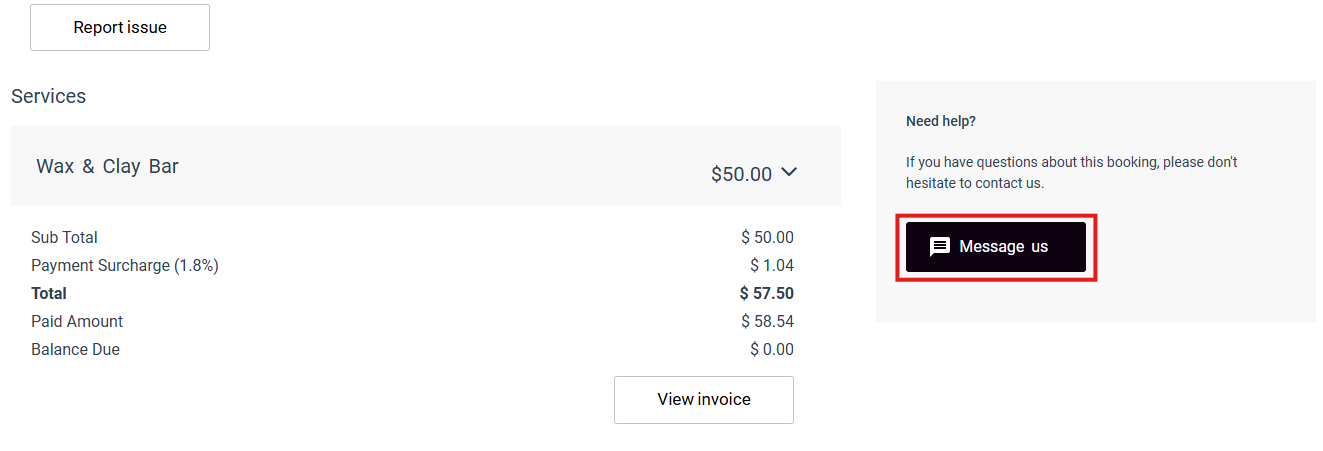 |
Thread is tied to this booking ID for perfect context. |
| 3 Type & (optionally) attach | Click text box → write message. Drag-and-drop photos/docs into Drop files to upload (≤ 25 MB).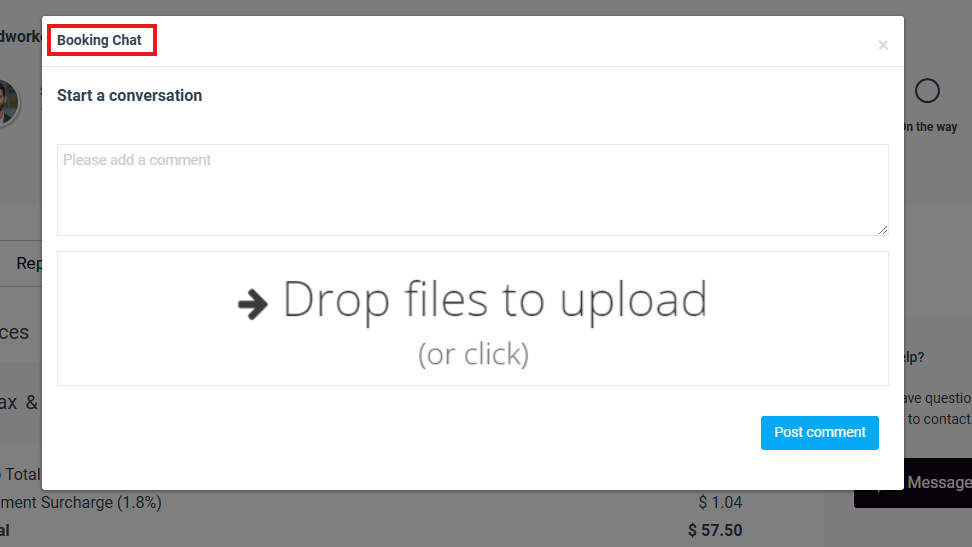 |
Files and text post together; thumbnails render in the chat. |
| 4 Post Comment | Press Post Comment.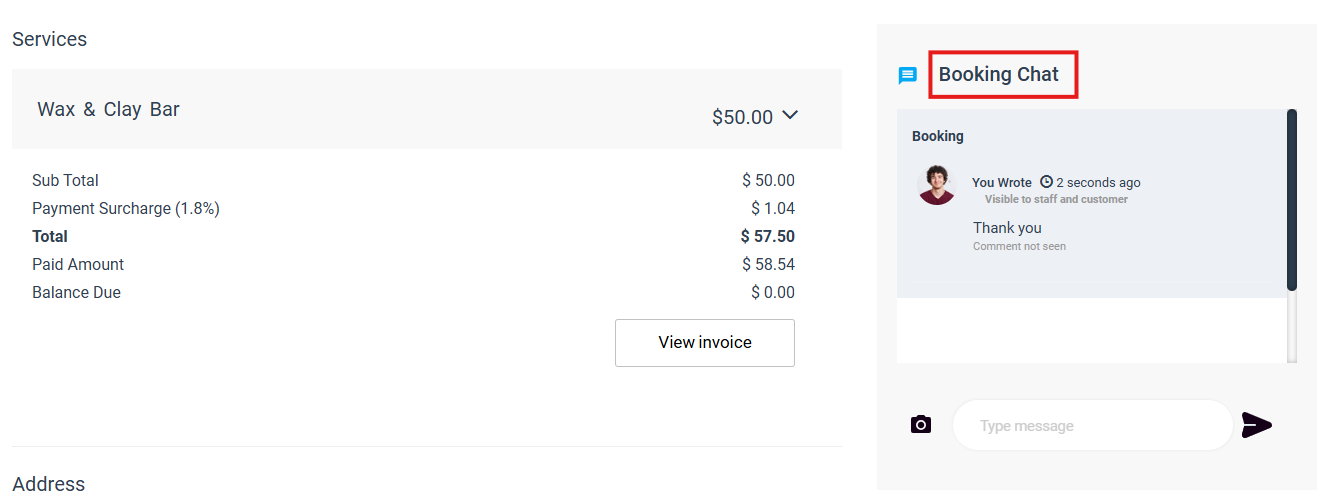 |
• Worker’s app fires a push banner + chat badge. • Admin users see the same post in the booking Discussion tab. |
| 5 Visibility control | Customers don’t need it, but staff can later edit the post and set Visibility (Office only / Worker only / Both). | Keeps internal notes private while still storing one audit trail. |
What the fieldworker sees
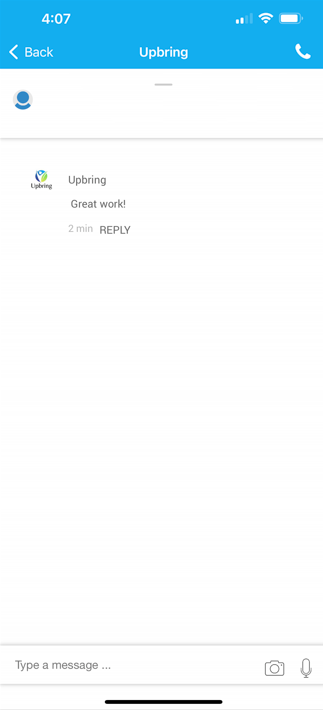
- Push notification on their device (“New message on BKG-2378”).
- App ▸ Messages tab lists the thread; tapping it shows the post and any images.
- Worker can tap Reply, type a response, or add their own photos. Reply streams back to the customer portal and admin dashboard instantly.

Why use profile discussion for non-job topics?
If the customer’s note isn’t tied to a specific booking—e.g., a standing access code or general preference—admins can open the worker’s Profile ▸ Discussion and post there instead. The worker still receives a push alert, but the conversation lives on the profile timeline rather than cluttering an individual job record.
Benefits at a glance
- Rich context – photos, PDFs, or instructions ride with the job, so no details are lost.
- Instant delivery – push alerts hit phones faster than email, improving response time by up to 30 %.
- Reduced site surprises – advance photos help workers arrive prepared, cutting re-visits.
- Full audit trail – every comment, file, and visibility change is time-stamped for ISO/QA audits.
4. Voice calls — click-to-dial with automatic call logging
A quick phone call still solves problems that back-and-forth messages cannot. OctopusPro makes voice outreach effortless and fully traceable.
4.1 Click-to-dial anywhere you see a phone number
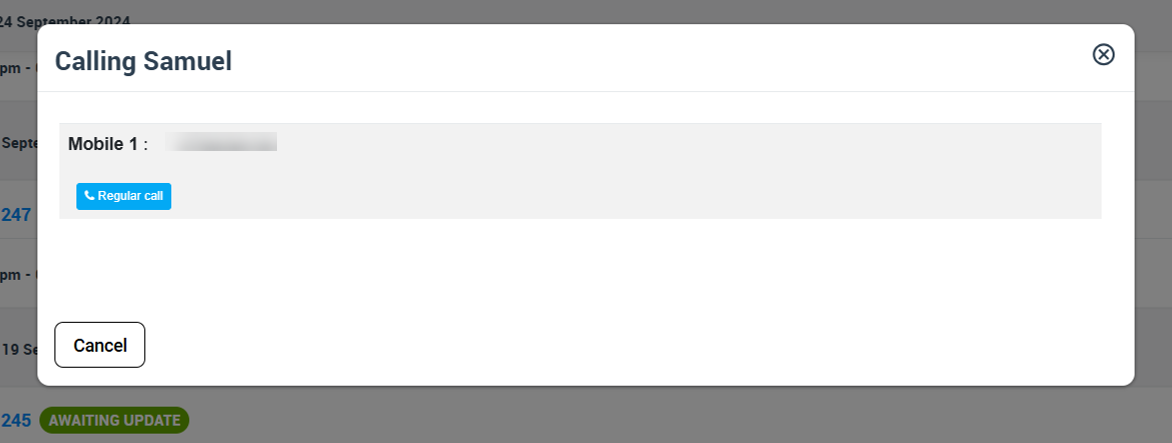
- Worker profile and every booking header display the fieldworker’s primary mobile as a blue hyperlink.
- Click the link (desktop or mobile browser) and the OS launches your default soft-phone or dialler; VoIP users can route calls through a desk extension or Zoom Phone. Industry research shows click-to-call shortcuts shorten handling time by 12-18 % because agents skip manual dialling.
4.2 What OctopusPro records
| Data captured automatically | Why it matters |
|---|---|
| Timestamp (start & end) | Confirms when contact was attempted or completed. |
| User who placed the call | Gives management a clear accountability trail. |
| Dialled number | Proves the correct contact details were used. |
| Linked record (booking ID or worker profile) | Keeps communication history in one place for audits and dispute resolution. |
You’ll find the entry in Activity ▸ Call Log on the fieldworker profile and in the booking’s timeline right after you hang up.
4.3 Optional Twilio Voice integration
If you connect a Twilio voice number (same screen used for SMS), OctopusPro can:
- Display caller-ID as your branded company number—improves answer rates and trust.
- Fetch the Twilio Call SID and carrier status (completed, no-answer, busy) for deeper troubleshooting.
- Enable recording (if you toggle it on in Twilio) to capture verbal approvals or quality-assurance evidence, stored under the same Activity tab. Call-record retention follows your global storage settings.
Setup: Settings ▸ Communications ▸ Digital Phone System → paste Voice-capable Phone Number SID. All future click-to-call links will route through Twilio automatically.
4.4 Everyday use-cases & benefits
- Urgent clarification – confirm a hazardous-materials note before dispatch; reduces first-visit failures.
- Safety check-ins – duty-of-care calls on remote sites are time-stamped for WHS compliance.
- Personal touch – complex estimates often close faster after a voice conversation compared with email alone.
4.5 Best-practice tips
- Add a call note immediately—click the pencil icon beside the log entry so colleagues know the outcome.
- Use headsets or VoIP apps for clearer audio and automatic device logging.
- Respect quiet hours—pair voice calls with SMS or push for after-hours updates unless it’s a safety issue.
With one-click dialling, automatic logging, and optional Twilio recording, OctopusPro keeps voice communication fast and auditable—closing the loop on truly omnichannel fieldworker coordination.
5. Best-practice playbook: proven templates, channels, and tips
Field-service teams that mix email for detail, SMS for urgency, and push for instant confirmation see faster responses, fewer no-shows, and higher upsell rates. Below is a cheat-sheet you can copy, plus practical housekeeping rules.
| Scenario | Recommended channel + placeholders | Why it works |
|---|---|---|
| Job confirmed | Email – {booking_date}, {fieldworker_name}, {add_photo_url} | Written summary sets expectations; photo-upload link invites customers to share site images, cutting scope creep by up to 30 %. |
| Morning reminder | Automated SMS – {start_time}, reschedule & support links | SMS open-rate averages 98 % and 90 % are read within 3 min, so workers spot late changes in time. |
| Same-day cancellation | SMS + Push – dynamic reschedule URL | Instant alert prevents wasted travel and frees the slot for re-booking. |
| Weather / safety alert | Bulk SMS (filtered by City) | Geo-filtered blast keeps only affected crews informed; avoids inbox noise. |
| Seasonal promo | Email + SMS – {voucher_code}, expiry date | Cross-channel consistency lifts redemption and upsell revenue. |
| Policy change / overtime rate | Bulk SMS → Send For = All with filters (Active only) | Text reaches mobile crews who seldom check email; ensures compliance. |
| Mandatory photo request | Push chat – “Tap to upload on arrival” | Real-time push has up to 88 % higher read-rate than email, boosting QA evidence capture. |
Housekeeping & technical tips
| Tip | Benefit |
|---|---|
| Inline images ≤ 10 MB and descriptive names (2025-06-26_roof_before.jpg). | Faster load, fewer spam flags. |
| Quarterly template audit – update prices, links, brand voice. | Keeps comms current; removes dead CTAs. |
| Dynamic placeholders ({customer_first_name}) boost opens by 26 %. | Higher engagement. |
| Mandatory photo upload rule on job completion. | Provides before/after proof for QA and warranty. |
| Combine email + SMS for key actions. | Multichannel reminders can cut no-shows by up to 50 %. |
| Log everything. Email Log, SMS Log, and Chat timeline give a full audit trail (date, user, status, SID). | Meets ISO/TCPA compliance. |
Use this playbook as a template starter kit—then tweak language, filters, and timing to match your brand voice and customer expectations.
6. Quick-reference cheat-sheet (step-by-step)
| Your goal | Where to click / what to fill | What happens (and where it’s logged) |
|---|---|---|
| Email one worker | Fieldworkers ▸ Profile → ✉ Send Email → pick template → Send | Message lands in the worker’s inbox and is time-stamped in Activity ▸ Email Log ✔ |
| Bulk SMS to a filtered crew | Fieldworkers (list) → top-right SMS → choose All / Filters / Some → select template → Send | Text blast goes out; each SID + delivery state appears in every recipient’s SMS Log ✔ |
| In-app chat (push) | Booking ▸ Communication ▸ Discussion → type note → Send | Push banner hits the worker’s phone; chat thread is saved in Booking Activity ✔ |
| View any email trail | Fieldworker Profile ▸ Activity ▸ Email Log | Scroll, search, or open full body/attachments for audit ✔ |
| Click-to-call | Phone link on booking header or profile | Dialler launches; date, user and number are written to Call Log ✔ |
Why multichannel matters
- Higher first-time-fix rate – clear, timely instructions reduce on-site errors and repeat visits.
- Faster customer updates – SMS/push alerts are read within 3 min on average, far out-pacing email.
- Full compliance record – every email, SMS, chat, and call is auto-logged with timestamp, sender, and status for airtight audit trails.
- Fewer no-shows – text reminders can cut missed appointments by up to 60 %.
- Quicker response time – click-to-call shortcuts and canned replies shave 12–18 % off handling time.
- Push engagement – mobile push notifications drive up to 56 % higher open rates than email alone.
With email, SMS, push chat, and call logging unified inside OctopusPro, you have complete control and visibility over every touchpoint—keeping fieldworkers aligned, customers informed, and compliance boxes ticked.
To stay updated, please subscribe to our YouTube channel.