
Automate Recurring Service Reminders for Customers
OctopusPro’s Recurring Service Reminder feature helps you automatically remind customers when they are due to book their next service. Instead of relying on customers to remember when follow-up work is due, you can schedule timely reminders by email or SMS after a completed job based on the reminder interval you set for each service.
This feature is ideal for businesses that provide repeat, routine, cyclical, seasonal, or maintenance-based services such as pest control, air conditioning servicing, gutter cleaning, pressure washing, cleaning, pool maintenance, automotive servicing, property maintenance, health and wellness appointments, inspections, and other ongoing services.

In OctopusPro, this feature may also be referred to as a Recurring Service Reminder, Recurring Service Follow-Up Reminder, or Next Service Date Reminder. These all refer to the same process of prompting the customer to book again when their next service becomes due.
On this page:
- What recurring service reminders are
- How the reminder workflow works
- Benefits of automating recurring service reminders
- Recurring service reminders vs booking reminders
- Set a default recurring reminder interval
- Enable and configure the reminder form
- Customize reminder email and SMS templates
- Enable automated reminders
- Track due services and send reminders manually
- Use reminders to drive online rebooking
- Logs and troubleshooting
- Best practices and limitations
- Related guides
What recurring service reminders are
Recurring Service Reminders are follow-up reminders sent after a service has been completed to let the customer know they are due for their next appointment. They help you stay proactive, improve customer retention, and increase repeat bookings without manually checking which customers are due again.
This is especially useful for businesses where customers are expected to return after a set period, such as every 30, 60, 90, 180, or 365 days depending on the service. When used properly, this feature helps turn one-off jobs into repeat business and ongoing customer relationships.
Recurring Service Reminders work well alongside Create & Manage Recurring Bookings, your Customer Portal online booking flow, and your Book Online buttons and direct booking links.
How the reminder workflow works
The recurring reminder workflow usually follows this sequence:
- A booking is completed.
- OctopusPro checks the recurring reminder interval configured for that service.
- The customer becomes due for a follow-up service after the specified number of days.
- The system can send a reminder automatically by email or SMS, or your team can send it manually.
- The reminder prompts the customer to rebook online or contact your business to schedule the next appointment.
- Once rebooked, your usual booking workflow continues with confirmations, reminders, and updates.
This gives you a structured, repeatable follow-up process that helps reduce missed maintenance cycles and keeps customers engaged.
Benefits of automating recurring service reminders
- Increase repeat bookings: Prompt customers to return before they forget.
- Improve customer retention: Keep your business top of mind between visits.
- Save administrative time: Reduce the need for manual outbound follow-up.
- Standardize your customer follow-up process: Apply a clear service-specific reminder schedule.
- Support self-service rebooking: Make it easy for customers to book again online.
- Keep communications relevant and personalized: Use customizable templates and placeholders.
- Improve customer lifetime value: Encourage ongoing service relationships instead of one-off work.
Common use cases
- Pest control: remind customers when the next treatment is due.
- Cleaning and property maintenance: prompt recurring cleaning, pressure washing, gutter cleaning, and maintenance visits.
- Automotive servicing: remind customers when their next service is due.
- HVAC and air conditioning: schedule seasonal inspections and servicing.
- Pool maintenance: prompt repeat cleaning and balancing visits.
- Health, beauty, and wellness: remind customers about follow-up sessions and routine appointments.
- Inspection-based services: trigger timely reminders for re-inspections and maintenance cycles.
Recurring service reminders vs booking reminders
It is important to distinguish this feature from standard booking reminders:
- Booking reminders are sent for appointments that are already scheduled, reminding the customer about an upcoming booking date and time.
- Recurring service reminders are sent when the customer is due to schedule their next service, even if no new booking exists yet.
Use booking reminders when you need to remind customers about an existing appointment. Use recurring service reminders when you want to bring customers back for their next service cycle.
For regular booking reminders and related customer notifications, see Send Booking Update Reminders and Send Booking Confirmation.
Set a default recurring reminder interval
You can configure a default reminder interval at the service level using the Recurring Service Reminder Interval (Days) setting. This determines how many days after a completed booking the customer should become due for their next service reminder.
Examples:
- 30 days for monthly services
- 60 days for bi-monthly follow-ups
- 90 days for quarterly servicing
- 180 days for six-month maintenance
- 365 days for annual reminders

Why this matters:
- The reminder interval is defined per service.
- It creates a consistent follow-up cycle for repeatable services.
- It helps automate re-engagement without relying on manual tracking.
- The default can still be adjusted per booking when needed.
- If a customer has multiple recurring appointments for the same service, reminders can be consolidated to avoid unnecessary duplication.
Enable and configure the reminder form
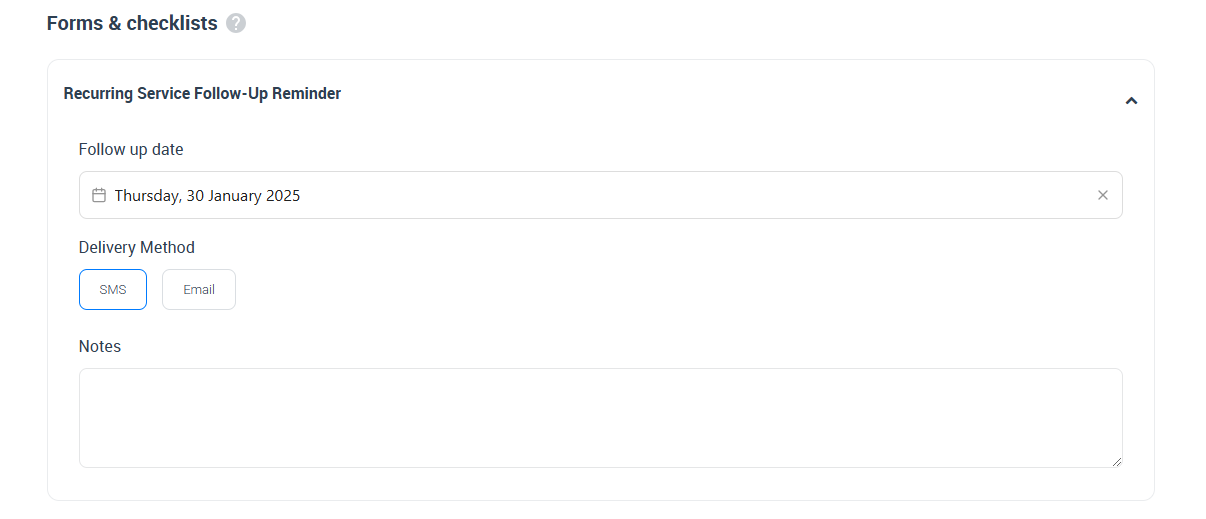
OctopusPro lets you control whether the Recurring Service Reminder form appears during the booking workflow and what information it should capture. This gives you flexibility to match the reminder process to your operational workflow.
The form can include fields such as:
- Follow up date
- Delivery method such as SMS or email
- Notes for internal context and follow-up details
Enable or disable the reminder form
If required, you can turn this form on or off from your Forms & Checklists settings.

You can then open the form settings to customize how it behaves.

Edit the form structure and label
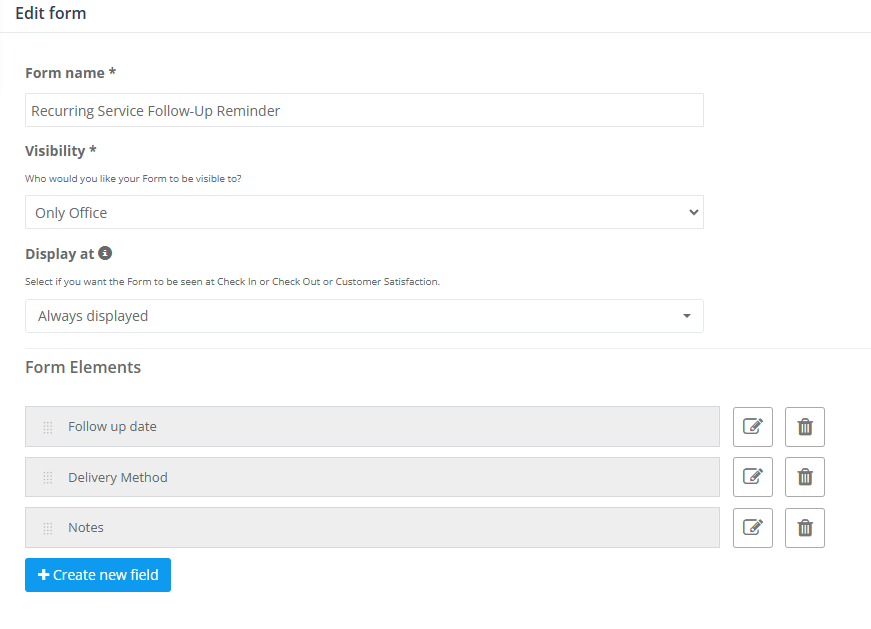
You can rename the form to suit your business terminology. For example, you might prefer names such as Next Service Reminder, Maintenance Follow-Up Reminder, or Rebooking Reminder.
Control visibility
You can decide who can see and use the form, such as office staff only or broader operational roles depending on your workflow.

Choose when the form appears
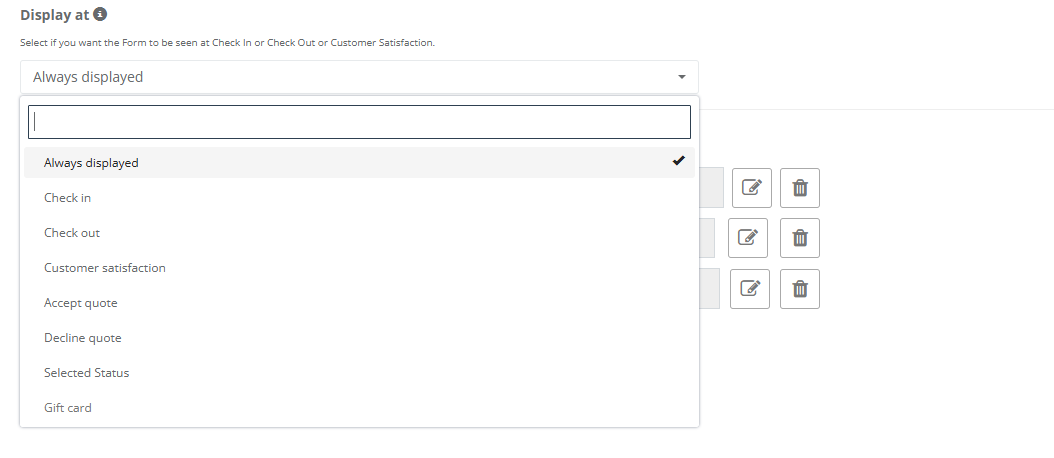
You can control when this form appears in the service workflow, including options such as:
- Always displayed
- Check in
- Check out
- Customer satisfaction
- Selected status
- Other supported workflow points available in your account
Select the form elements
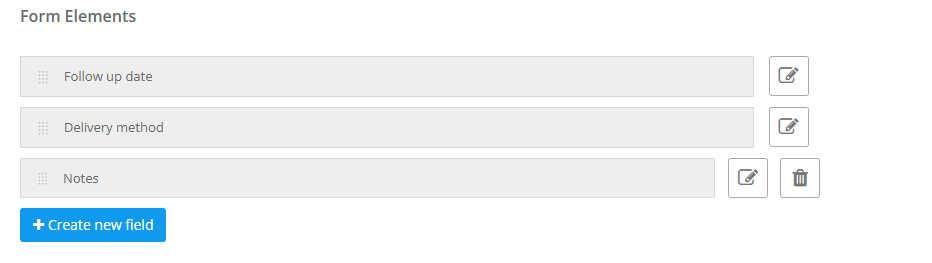
You can decide exactly which fields should appear on the form so you only collect the information your business actually uses.
Assign the form to booking statuses
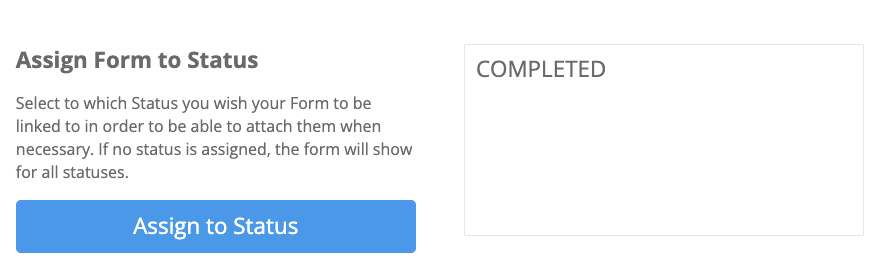
By default, recurring reminder forms are most commonly tied to the Completed status, which makes sense because the next reminder is usually scheduled after the current job has been finished. However, you can customize this to fit your own workflow.
For broader form setup and configuration, see Forms & Checklists Overview, Set Up Forms & Checklists, Configure Forms & Checklist Field Types, Use Forms & Checklists, and View Forms & Checklists Use Cases.
Customize reminder email and SMS templates
OctopusPro allows you to customize the content of recurring reminder emails and SMS messages so they reflect your branding, communication style, and operational requirements.
Your templates can include:
- the customer name
- the service name
- the reason the customer is due again
- a strong call to action
- a booking link or contact instruction
- your business tone, branding, and relevant service notes
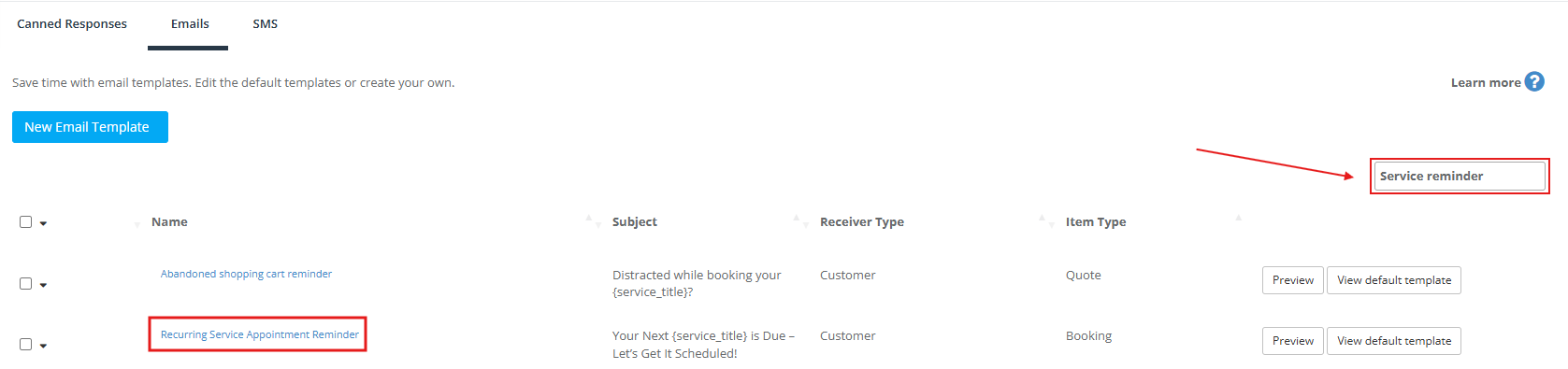
To manage your templates and reusable communication content, see:
Using placeholders helps keep reminders accurate and personalized without needing to rewrite each message manually.
Enable automated reminders
Once your service intervals, form settings, and templates are ready, you can enable automated reminders so OctopusPro sends them without manual intervention.
There are separate automations for recurring reminder email and SMS workflows, allowing you to enable one or both channels depending on how your business communicates with customers.

To manage these automations, see Set Up Automated Reminders, Confirmations & Notifications.
This allows you to:
- enable or disable the automation
- choose the delivery channel
- assign the correct template
- control the run schedule
- manually trigger the automation with Run Now when needed
If you need to temporarily stop automated notifications for a record, see Pause & Resume Automated Notifications.
Track due services and send reminders manually
Although automation is the most efficient option, OctopusPro also gives you manual control when you want to review customers first or send reminders on demand.
Track bookings due for next service
Admins can review customers who are due for another service from the Bookings > Next Service Due area. This provides a convenient working list for your office team to review and follow up.
Use notes for internal follow-up context
The reminder workflow can include a notes field so your team can capture useful follow-up details, such as customer preferences, special timing instructions, or internal reminders.
Run reminders manually in bulk
If you want to trigger reminders immediately rather than waiting for the next scheduled automation cycle, you can use the Run Now option from the automations list.

This is useful when you want to send all due reminders at once, re-engage overdue customers, or launch a manual reminder push before a busy season.
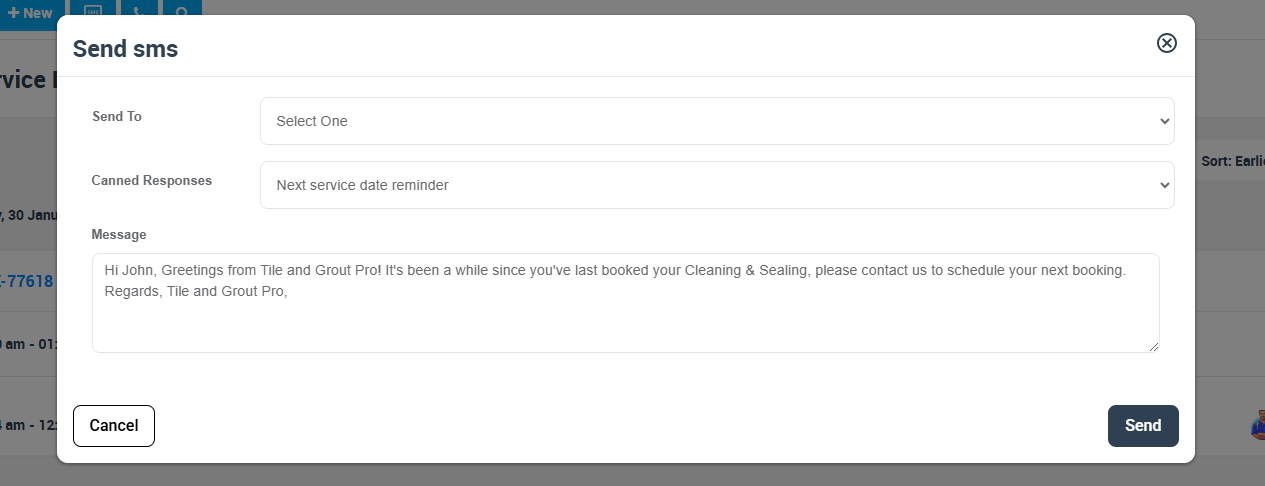
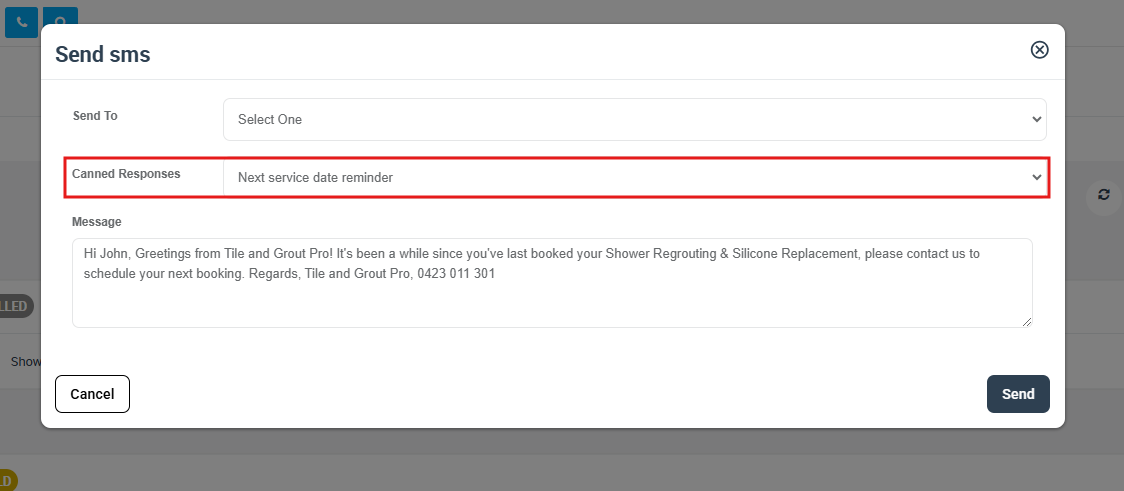
Send SMS reminders manually
You can also send recurring reminder templates manually from the booking workflow when you want precise control over timing and content.
Send email reminders manually
The same applies to manual email reminders, giving your team the ability to review the content before sending if needed.
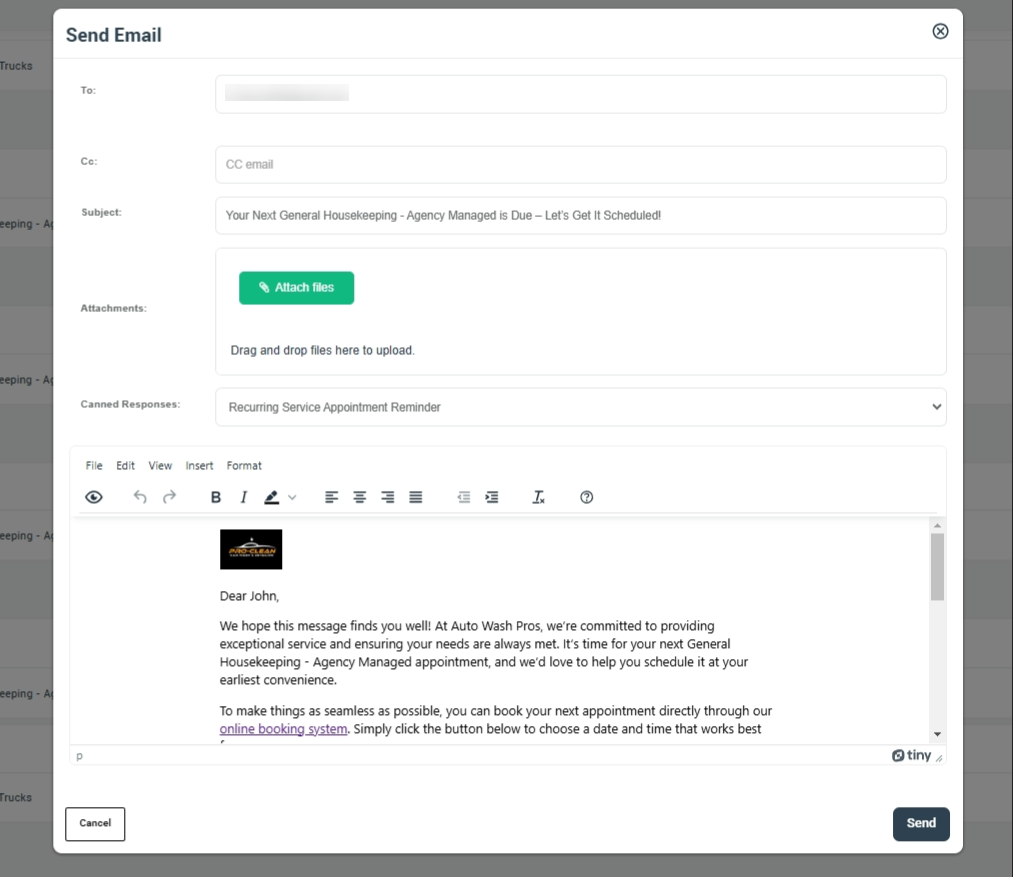
This flexibility is useful for businesses that combine automation with hands-on customer relationship management.
Use reminders to drive online rebooking
Recurring Service Reminders are most effective when the customer can act immediately. For best results, include a clear next step in your reminder, such as:
- a link to your Customer Portal booking flow
- a Book Online button or direct booking link
- a prompt to reply, call, or contact your office
Reducing friction between the reminder and the booking action can improve conversion and reduce the amount of manual follow-up required from your office team.
Logs and troubleshooting
If you need to confirm whether reminders ran successfully or review what was sent, these related logs can help:
These pages are useful when checking whether an automation ran, whether an email or SMS was sent, and whether a reminder workflow needs adjustment.
Best practices and limitations
Best practices
- Use service-specific intervals: different services usually require different follow-up schedules.
- Keep messages concise and action-oriented: explain why the customer is due and what they should do next.
- Use placeholders: personalized reminders are usually more effective than generic ones.
- Include a booking path: make rebooking easy with a booking link, portal link, or clear next step.
- Review the due list regularly: even if automation is enabled, manual review can still help prioritize customers.
- Test templates before rolling out changes: especially when updating calls to action or formatting.
Limitations
This feature is best suited to services with a repeatable or periodic follow-up cycle. For one-off jobs, irregular projects, or customers who do not want reminders, automated follow-up may be less effective and could feel unnecessary if used too aggressively.
Related guides
- Create & Manage Recurring Bookings
- Send Booking Update Reminders
- Send Booking Confirmation
- Booking Communication
- Contact a Customer
- Forms & Checklists Overview
- Set Up Forms & Checklists
- Configure Forms & Checklist Field Types
- Use Forms & Checklists
- View Forms & Checklists Use Cases
- Manage Email Templates
- Manage SMS Templates
- Manage Canned Responses
- Manage Template Placeholders
- Set Up Automated Reminders, Confirmations & Notifications
- Accept Online Bookings Through Your Website
- Add a Book Online Button to Your Website
- Pause & Resume Automated Notifications
- View Automations & Scheduled Tasks Log
- View Outbound Email Log
- View SMS History Log & Notifications
To stay updated, please subscribe to our YouTube channel.