
Change a Quote Number (EST / Estimate ID)
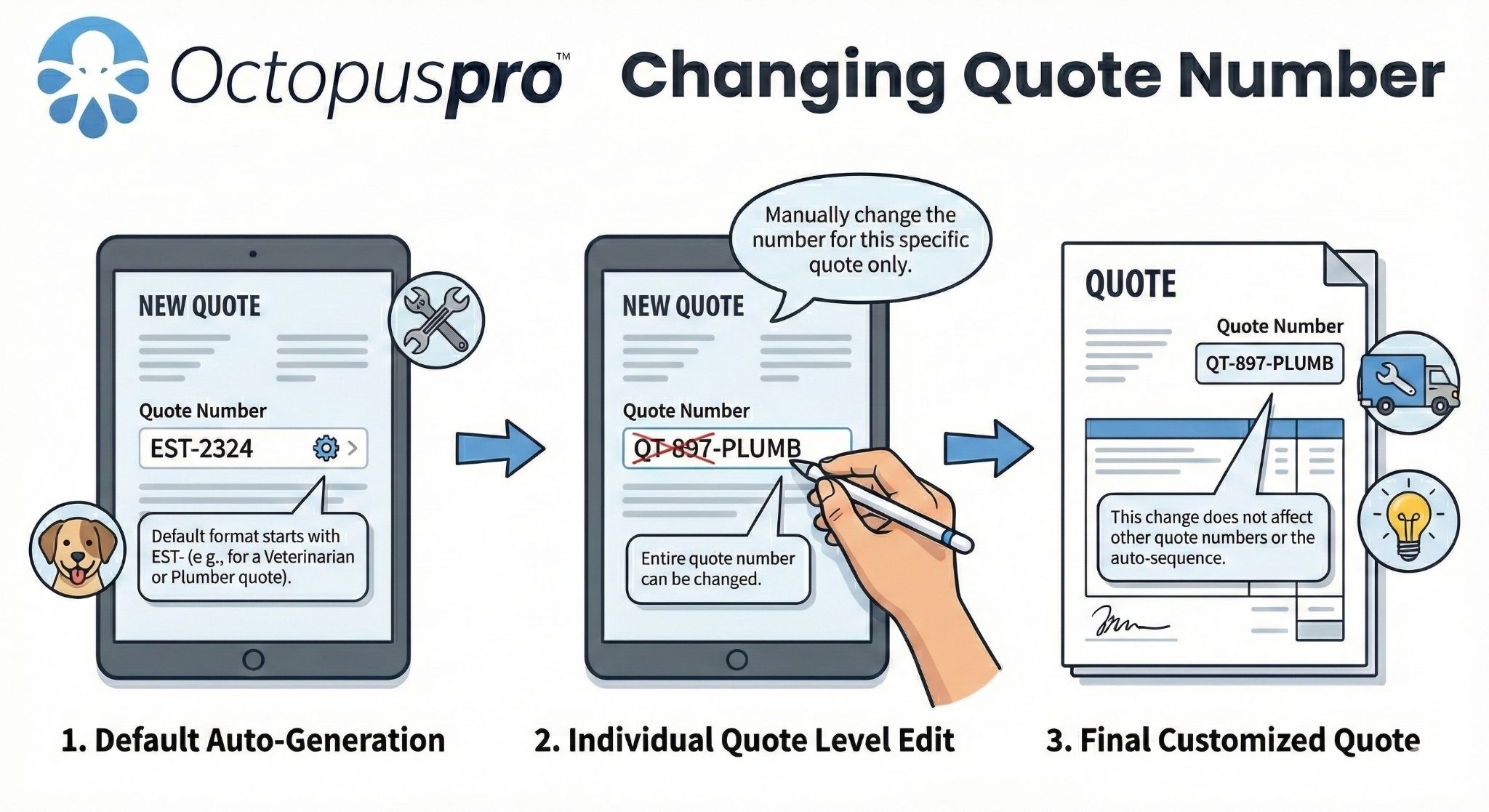
OctopusPro automatically generates a quote number (also called an estimate reference or document number) for every new quote (for example, EST-1042). In some situations, you may need to edit the quote number manually.
Important: Editing the quote number only affects that one quote. It does not renumber any other quotes and it does not change the numbering sequence for future quotes.
When should you change a quote number?
Common reasons include:
- Correcting a typo or formatting issue (e.g., EST-0102 → EST-102).
- Aligning with an external reference (e.g., a legacy quote number from a previous system).
- Resolving a duplicate/conflict when a quote number needs to be unique.
Before you start
- Make sure you have the right permissions to edit quotes (typically an Admin/Office role).
- Decide on a clear internal format (example: EST- prefix + number).
- If you’ve already sent the quote PDF, remember: previously sent copies won’t change — only newly generated views/PDFs will reflect the updated number.
How to change a quote number manually
- Open the quote you want to update.
- Click Quote (top-right menu).
- Select Edit Quote Number.
- Enter the new quote number.
- Click Save.
What changes after you update the quote number?
- The displayed quote number updates for that quote in OctopusPro.
- Searching, referencing, and exporting that quote will use the new number.
- If you track quotes in external tools (spreadsheets, accounting, CRM), update those references manually unless you automate it (see Open API below).
Want to change the starting number for new quotes?
Changing a single quote number is not the same as changing your starting numbers (the sequence used for new records).
To set the starting numbers for future bookings, estimates/quotes, invoices, and inquiries, use the Starting Numbers settings page. Starting numbers are typically set once and apply to new records going forward.
Guide: Add a Starting Number to Bookings, Quotes, Invoices, and Inquiries
Automate quote numbering and integrations with OctopusPro’s Open API
OctopusPro includes an Open API (REST) and Webhooks so you can connect OctopusPro to other systems and automate workflows.
What the Open API is for
Use the Open API to:
- Sync data with your CRM/ERP (customers, users, invoices, payments, quotes, inquiries).
- Build BI dashboards & reporting (Power BI, Looker, Tableau).
- Create custom apps/portals that interact with OctopusPro.
- Automate back-office actions (create/update records programmatically).
Key benefits
- Less manual work: no double entry across systems.
- Fewer errors: one source of truth for customers/quotes/invoices.
- Faster operations: automate actions right when events happen (via webhooks).
How to enable and use the Open API (with screenshots in the system guide)
In OctopusPro, you generate an API key and use it to authenticate requests from your external system.
Generate an API key
- Go to Settings → API & Webhooks Integrations.
- Under API Key Management, click Generate API Key.
- Name the key (e.g., CRM Sync / Data Warehouse).
- Click Generate.
Best practice: Use one API key per integration so you can rotate/disable access without affecting other integrations.
Add webhooks (recommended for real-time automation)
Webhooks notify your system instantly when something changes (instead of polling). Example: Quote updated → notify sales in Slack/Teams.
- Go to Settings → API & Webhooks Integrations.
- Under Webhook Management, click Add Webhook.
- Add your webhook URL and select the event types.
Practical examples (quote-focused)
- Keep CRM opportunities in sync:
- When a quote is created, create an opportunity/deal in your CRM.
- When a quote is updated, update the CRM record and alert sales.
- Enforce numbering conventions automatically:
- When a quote is created, validate your number format and update the displayed quote number via the API if needed.
To stay updated, please subscribe to our YouTube channel.