
Customer Feedback, Ratings & Reviews
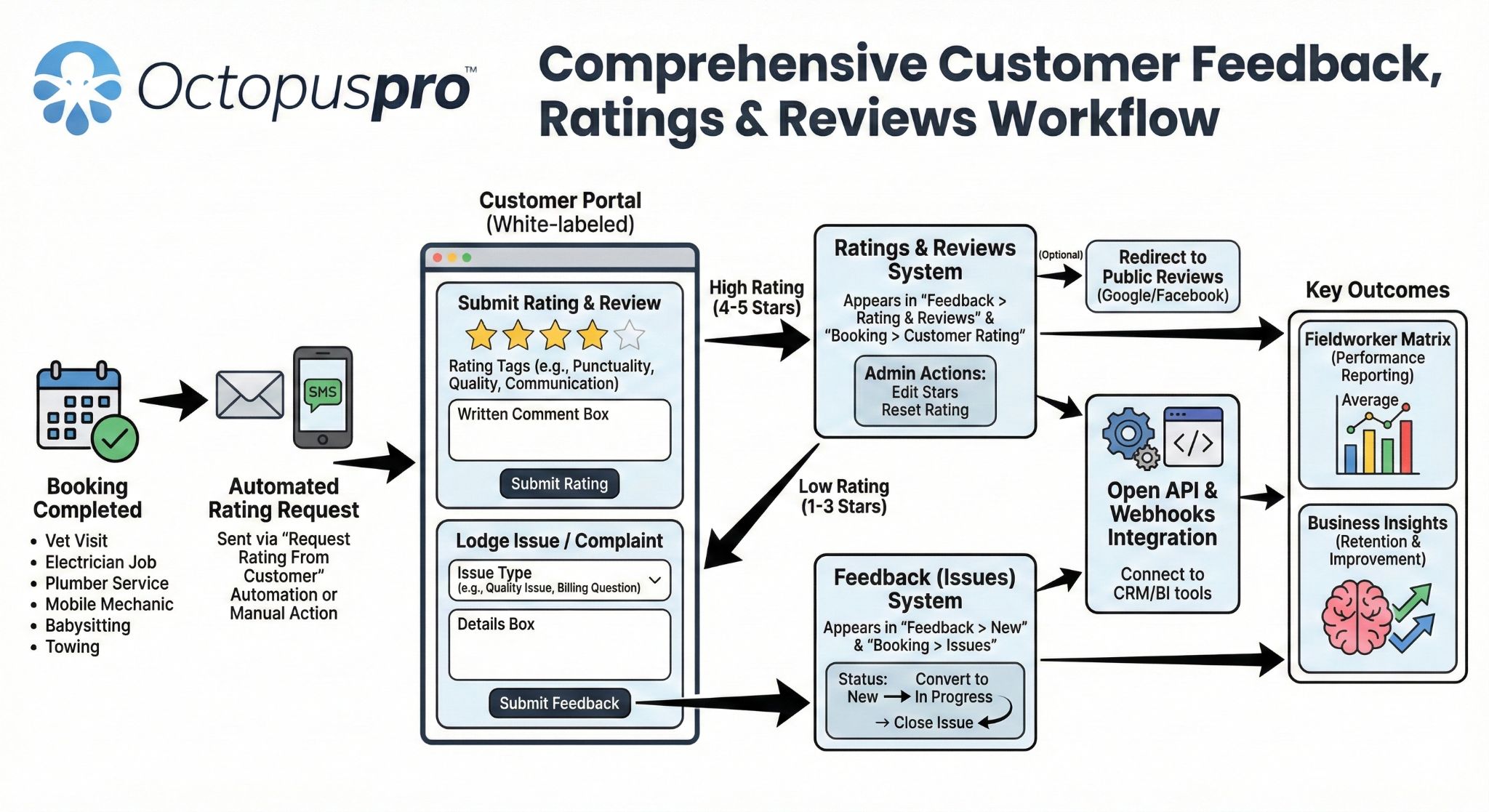
OctopusPro includes a built-in Customer Feedback, Ratings & Reviews workflow that helps you:
- Collect private feedback as trackable Issues (complaints, concerns, service follow-ups).
- Request star ratings and written reviews after a booking is completed.
- Customize rating criteria using Rating Tags (e.g., Communication, Quality, Punctuality).
- Track performance trends using reporting like the Fieldworker Matrix.
- Optionally integrate with external tools using the Open API & webhooks.
On this page
- Overview: feedback vs ratings & reviews
- Customer experience: how customers submit feedback
- Configure feedback settings (Issue Types, Statuses, Rating Tags)
- View and manage Issues (complaints/feedback)
- Convert Issue status (New → In Progress → Closed)
- Request ratings & reviews (manual or automatic)
- View ratings & reviews
- Edit or reset ratings
- Best practices & examples
- Google/Facebook reviews (optional)
- Open API & webhooks (advanced)
- Permissions & visibility
- Troubleshooting
Overview: feedback vs ratings & reviews
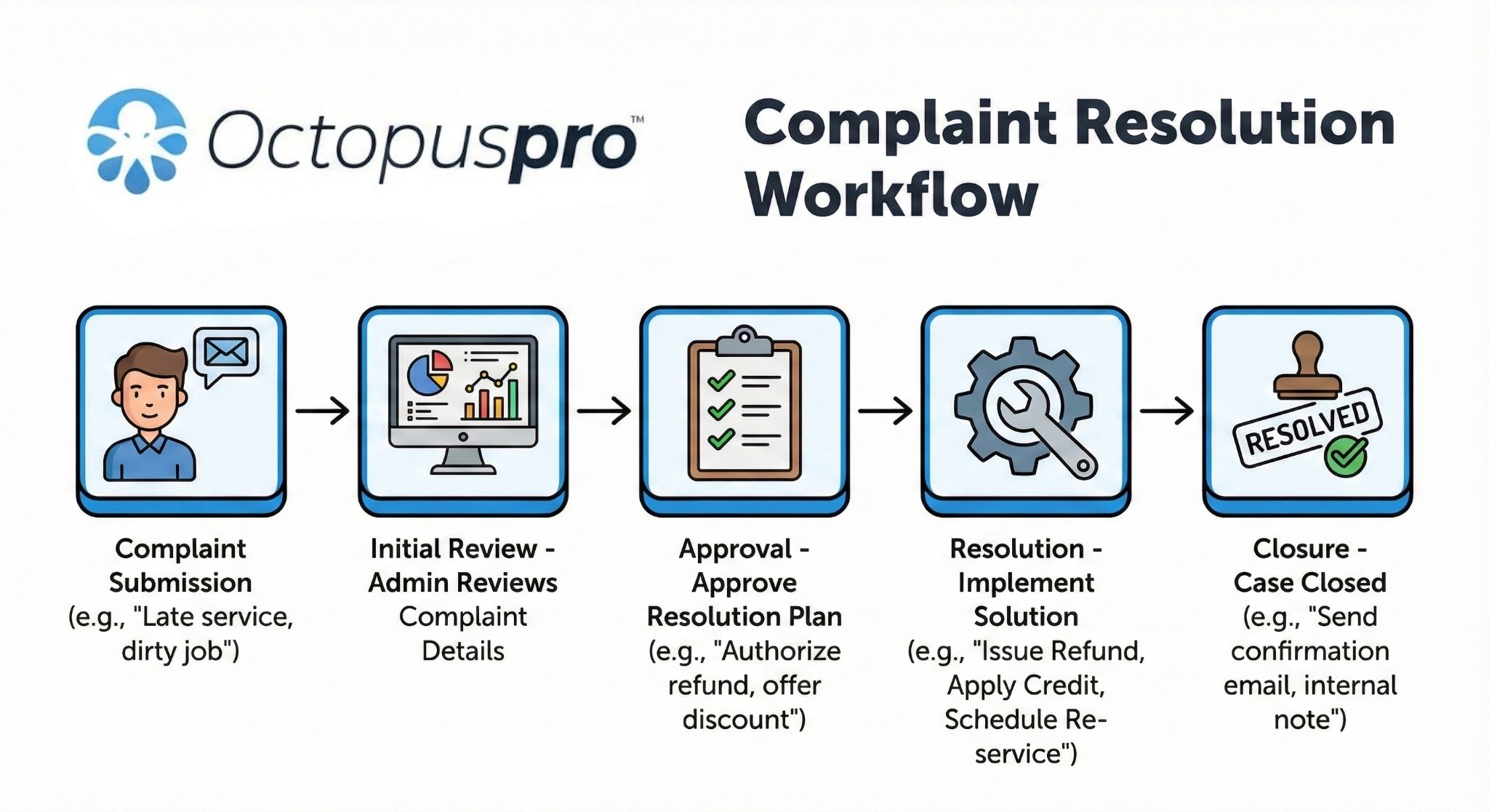
In OctopusPro, customer feedback can be captured in two complementary ways:
- Issues (complaints/feedback): Private, trackable records used to manage service recovery and follow-ups. Issues can be created by customers (via the portal link) or by staff, and then moved through statuses such as New, In Progress, Closed, and more (depending on your settings).
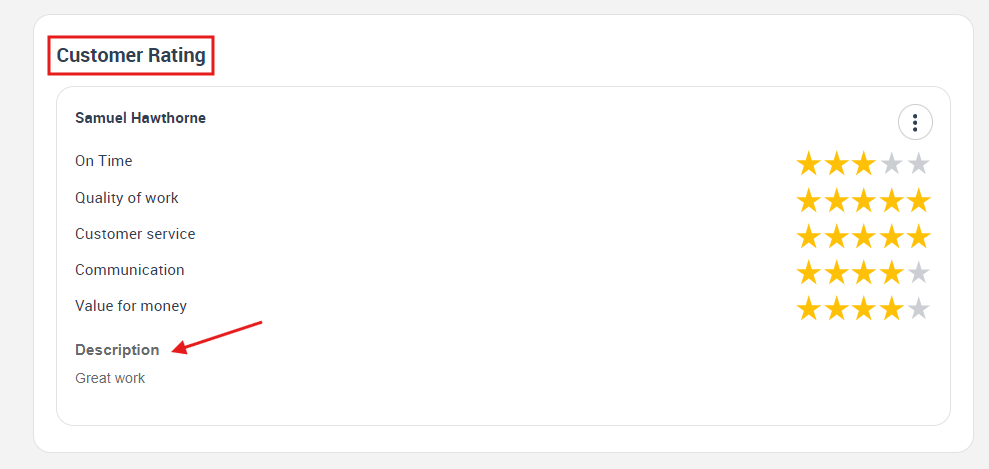
- Ratings & Reviews: A star rating (1–5) plus optional written comments, and optionally a breakdown by Rating Tags (criteria like Quality, Communication, Value for money).
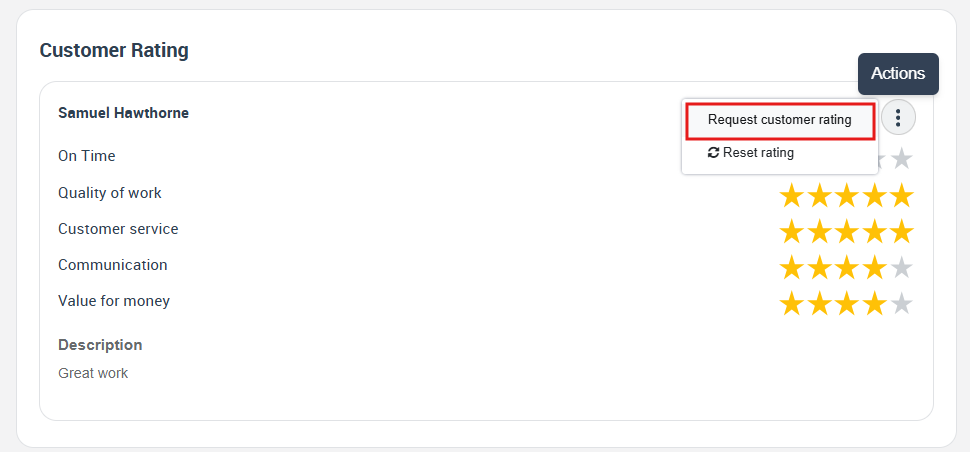
Example of a customer rating captured on a booking:
Customer experience: how customers submit feedback
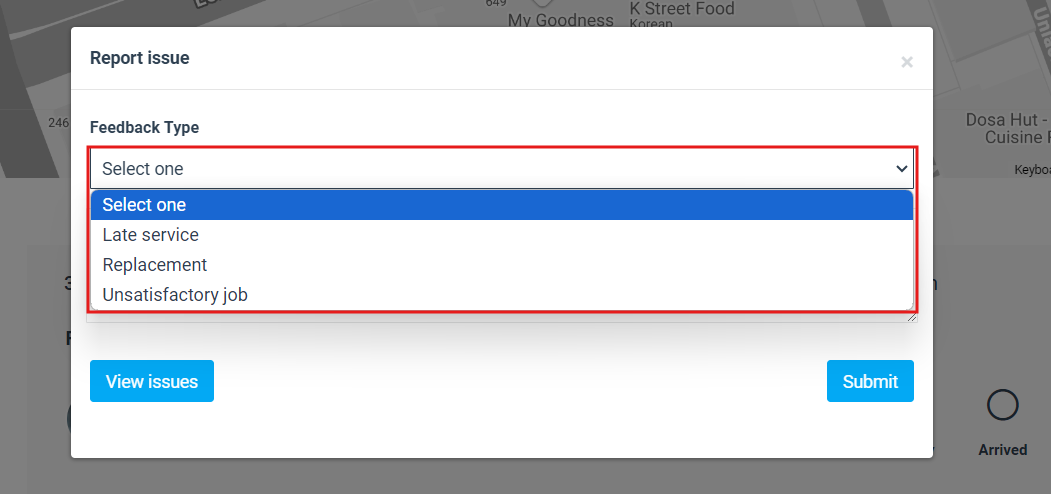
1) Customers can lodge an Issue (complaint/feedback)
When customers open the feedback link (typically sent after a completed booking), they can submit an Issue by selecting an Issue Type and entering details. This creates a trackable Issue in your OctopusPro account.
2) Customers can leave a star rating and review
Customers can also submit a star rating (and optionally rate specific criteria and leave a written comment). Rating Tags (criteria) are controlled by your business.
Configure feedback settings (Issue Types, Statuses, Rating Tags)
A) Add complaint/feedback types (Issue Types)
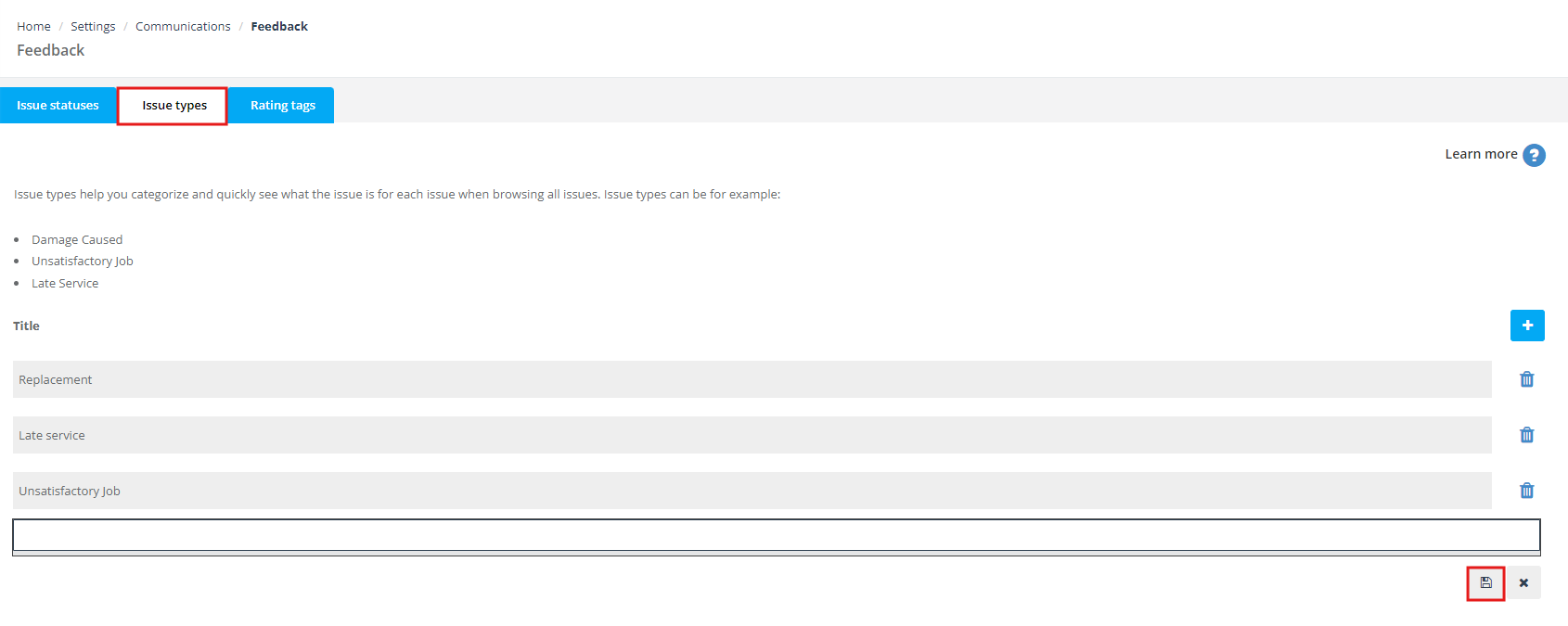
Issue Types help customers categorize their feedback (e.g., “Quality Issue”, “Billing Question”, “Technician/Fieldworker Conduct”, “Property Damage”). Clear Issue Types make your Issues list easier to filter, prioritize, and report on.
- Go to Settings > Communications > Feedback (or Feedback and Ratings depending on your account label).
- Open the Issue Types tab.
- Click the + icon, enter the type name, then click Save.
B) (Optional) Review your Issue Statuses
Issue statuses define your internal workflow (e.g., New, In Progress, Awaiting Approval, Reopened, Closed). Keep statuses simple so your team consistently uses them, and consider adding approval steps only if your business requires formal sign-off on resolutions.
Tip: If you use an approval workflow for resolutions, see: Closing & Approving Resolved Issues.
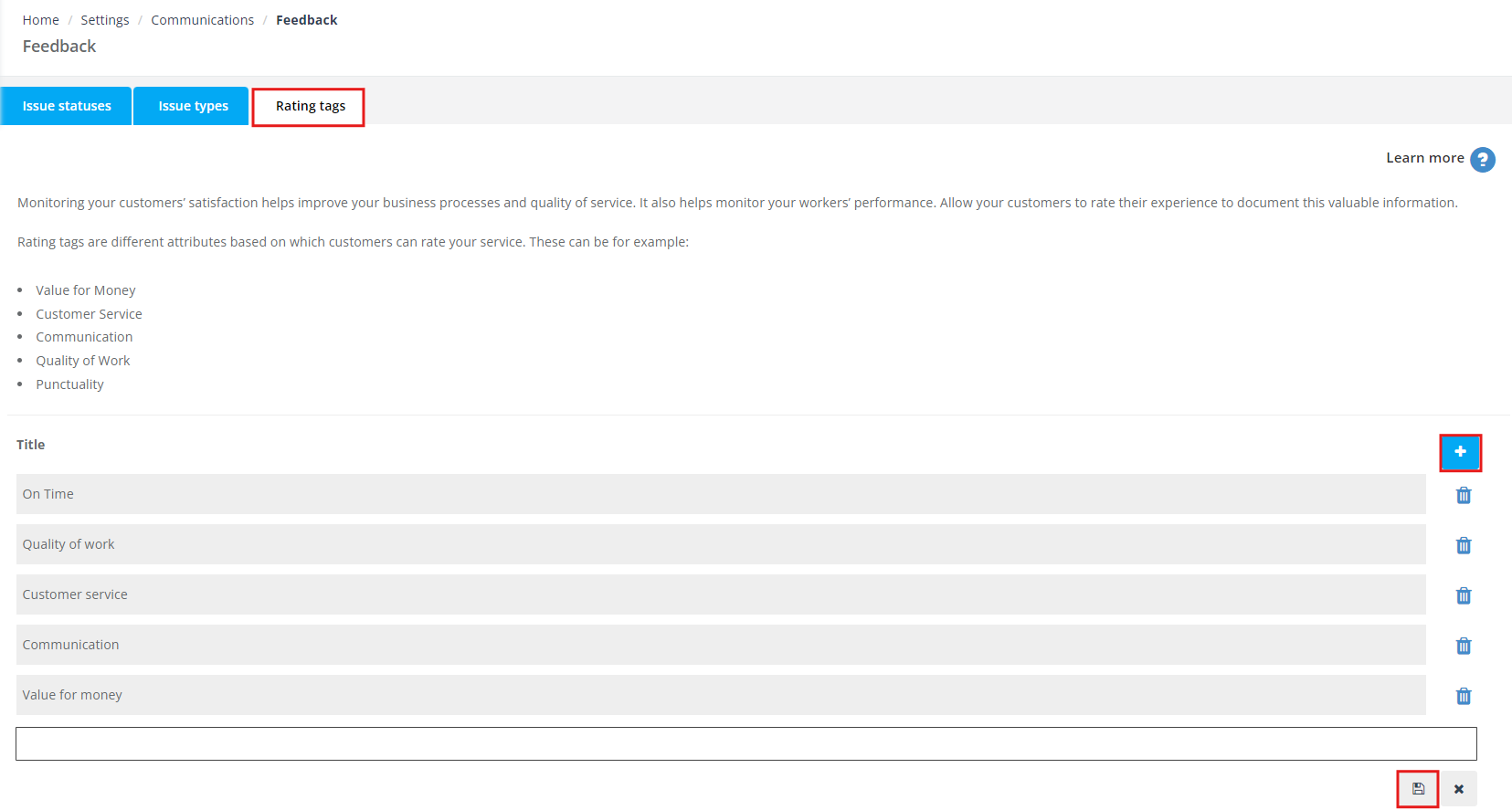
C) Add or edit rating criteria (Rating Tags)
Rating Tags are the criteria customers rate you on (e.g., Value for Money, Customer Service, Communication, Quality of Work, Punctuality). Keeping criteria short (usually 3–6 tags) increases completion rates and improves consistency.
- Go to Settings > Communications > Feedback (or Feedback and Ratings).
- Open the Rating Tags tab.
- Click the + icon to add a tag, enter the tag name, then click Save.
- To remove a tag, click the Delete icon next to it.
View and manage Issues (complaints/feedback)
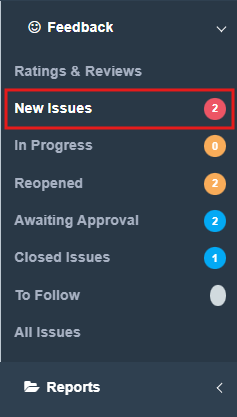
View new feedback
When a customer submits feedback as an Issue, it appears under the Feedback menu (e.g., New Issues) and can display a notification badge when new items arrive.
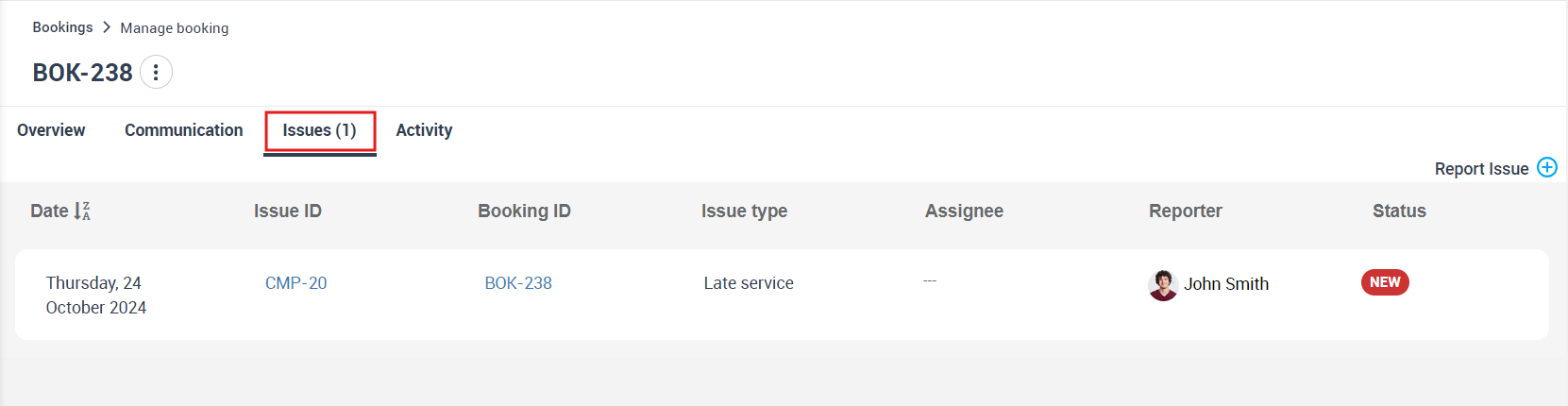
View feedback on a specific booking
- Go to Bookings > All Bookings.
- Open the booking (click View booking).
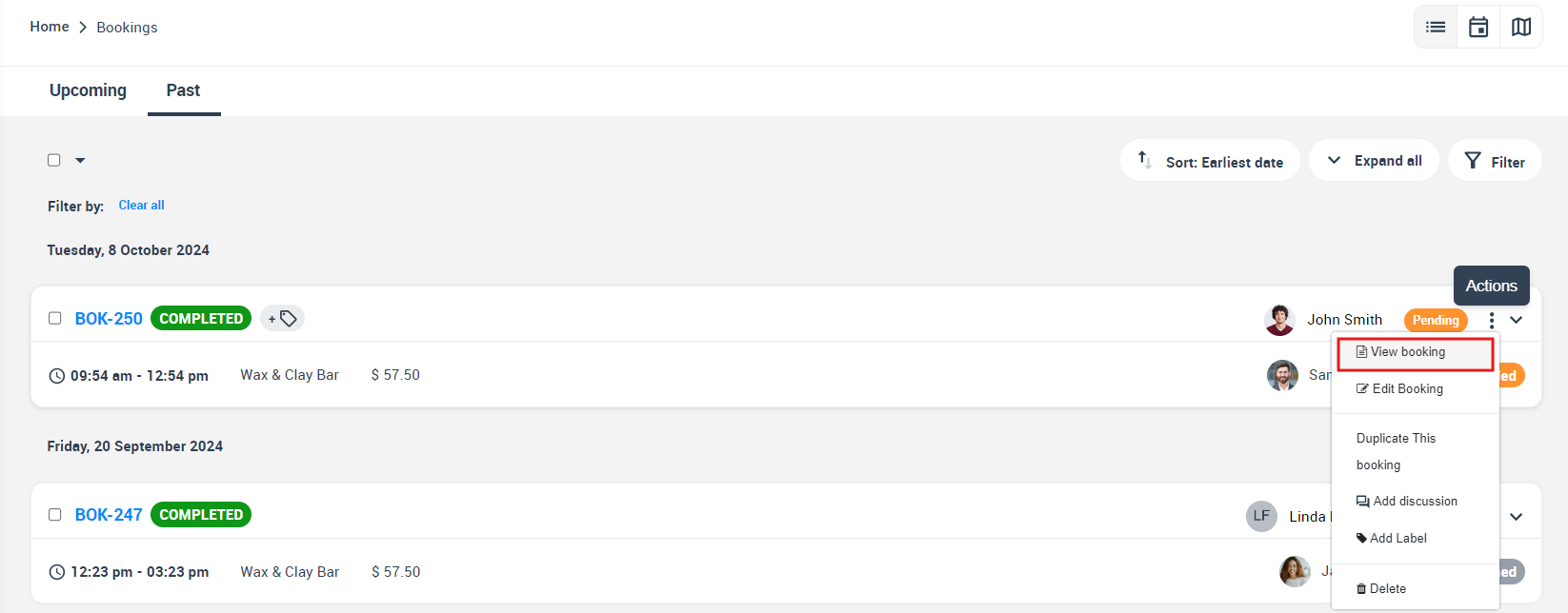
- Open the Issues section/tab to see all feedback linked to that booking.
View all Issues
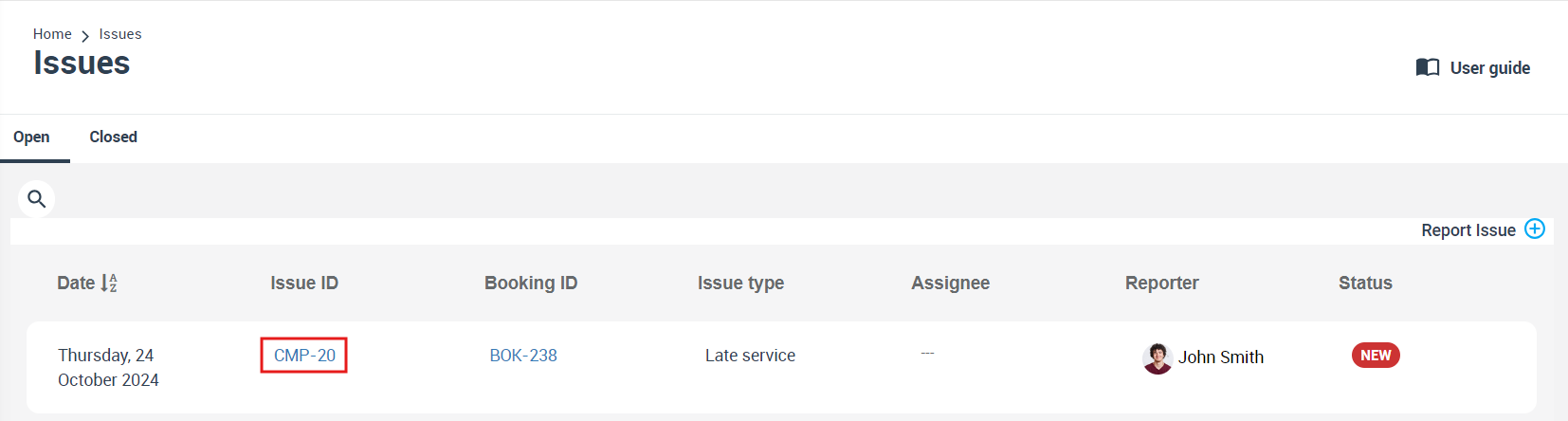
Go to Feedback > All Issues (or a similar list view depending on your menu), then click an Issue ID to open the details page.
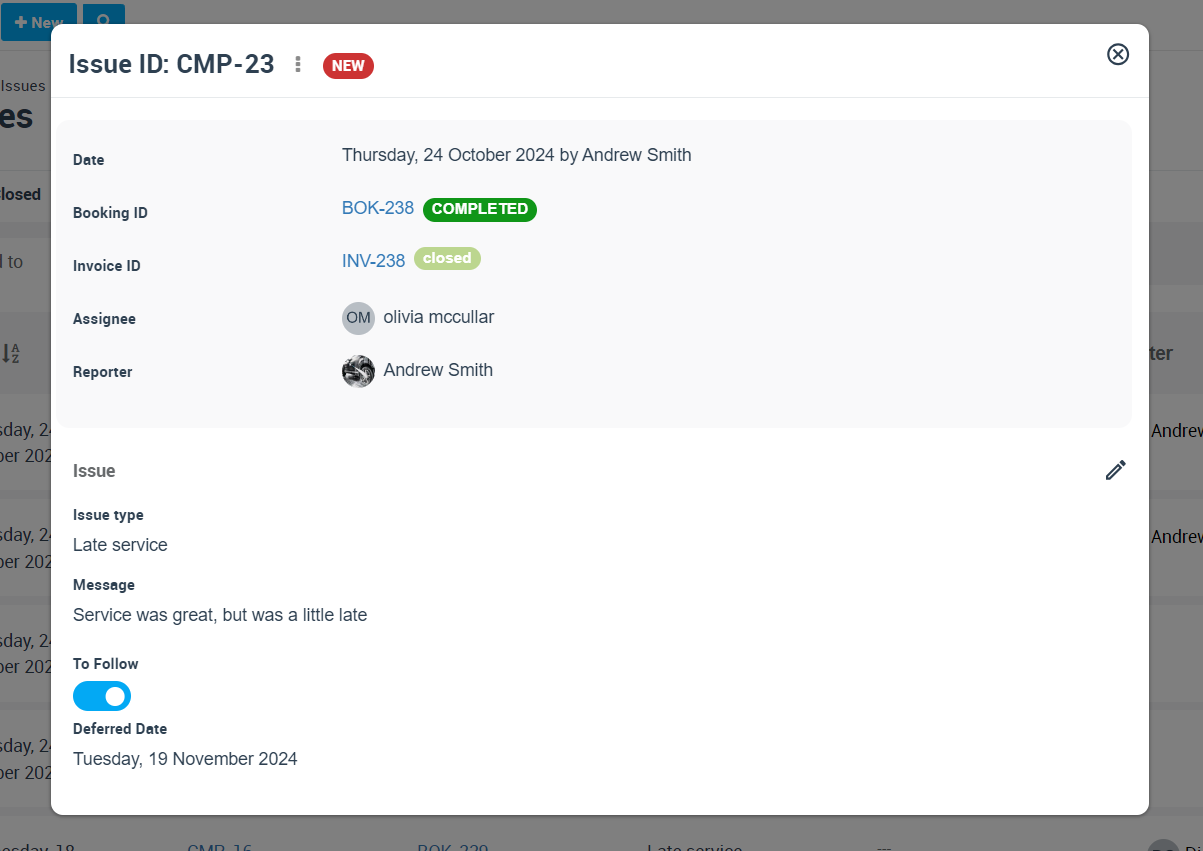
Issue details: key fields to understand
On the Issue details page, you can review:
- Booking link (and invoice link if applicable)
- Assignee (who is responsible for resolving it)
- Reporter (customer or staff user)
- Issue type and customer message
- To Follow toggle and Deferred Date (useful for scheduled follow-ups)
For a deeper end-to-end workflow (Bookings/Quotes/Invoices), see: Add & Manage Issues & Complaints on Quotes, Bookings, Invoices.

Convert Issue status (New → In Progress → Closed)
A consistent status workflow helps your team coordinate investigations, follow-ups, and resolution:
- New: received, not yet being handled
- In Progress: assigned and actively being investigated/resolved
- Closed: resolved (and optionally approved, if you use approval steps)
- Go to Feedback > All Issues.
- Open the Issue by clicking its Issue ID.
- Click Actions and choose Convert to In Progress.
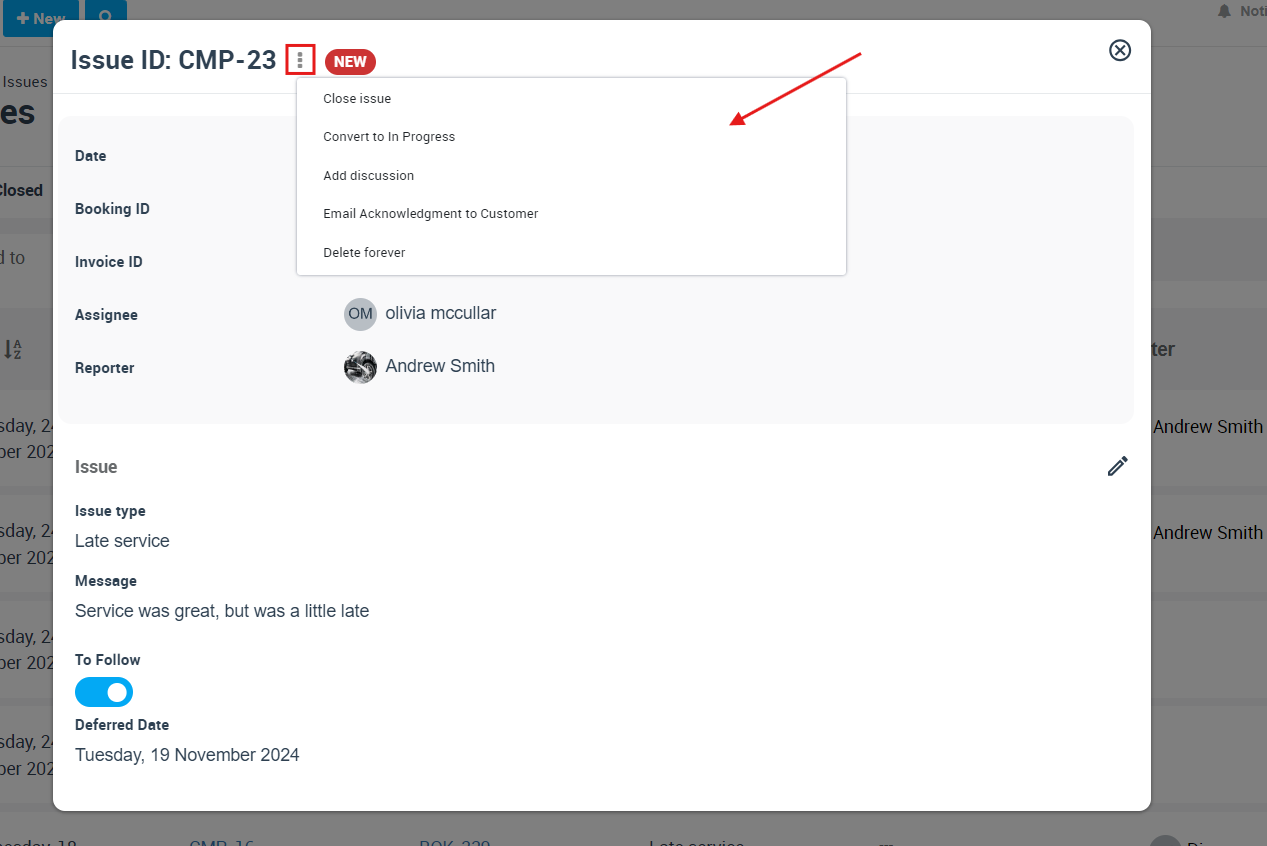
When resolved, click Actions and choose Close issue.
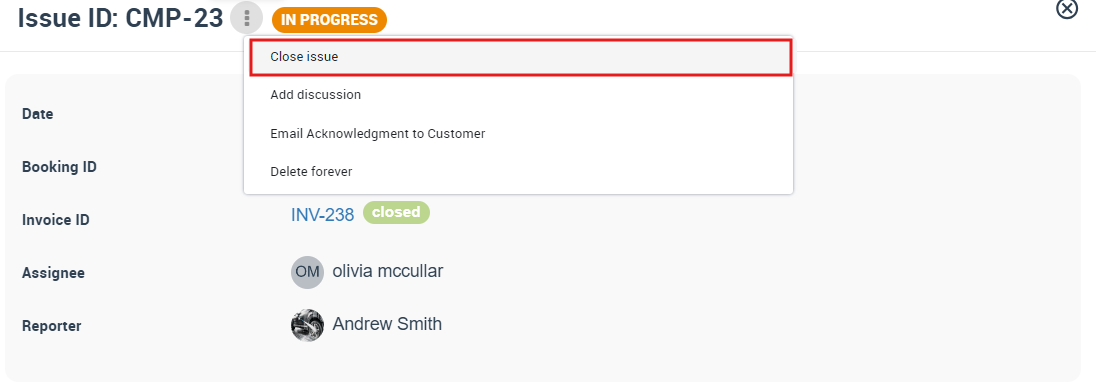
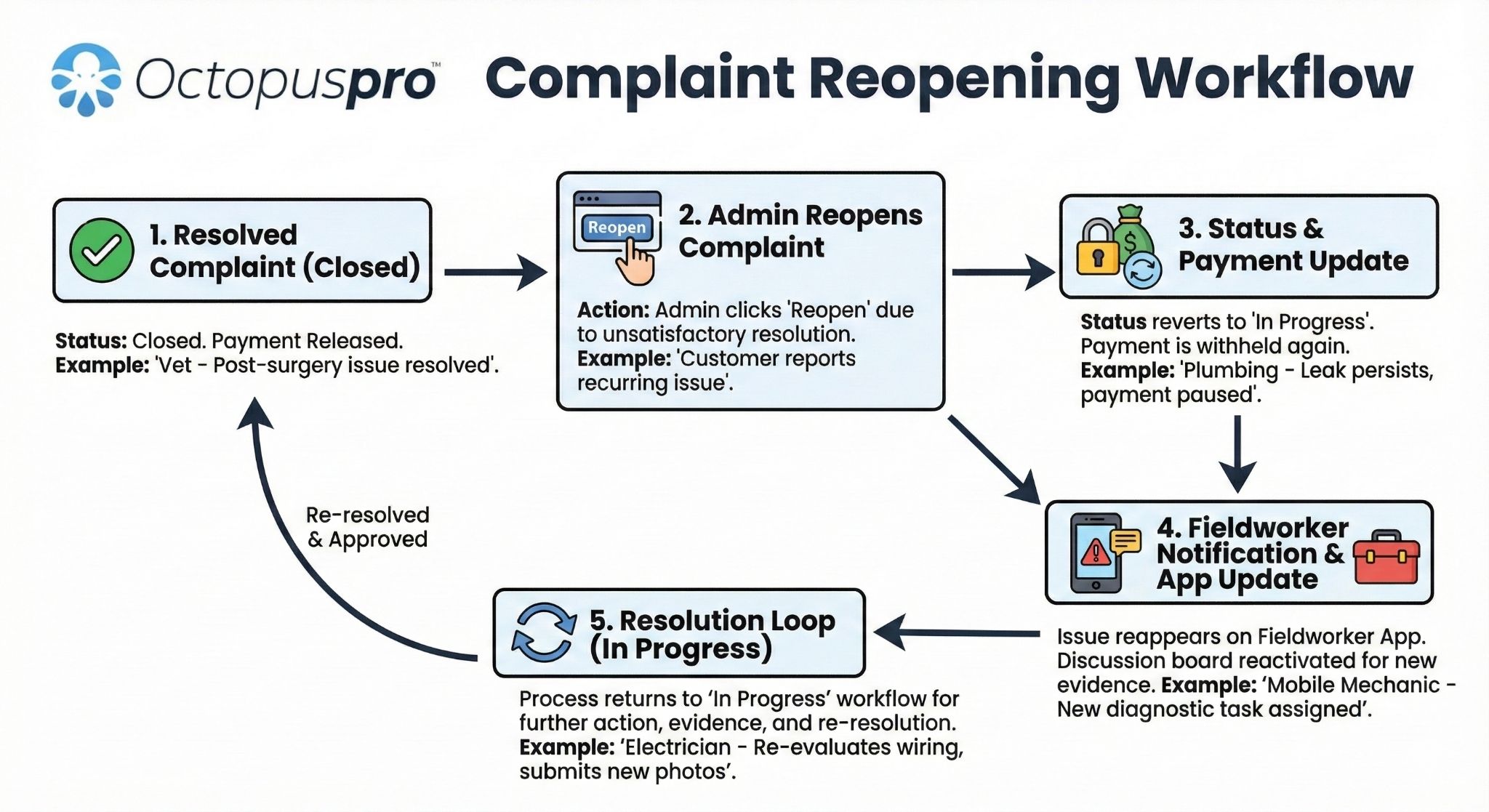
If you use approval before closing, see: Issue & Complaint Closure & Approval Workflow. If an Issue needs to be reopened, see: Reopen a Closed Issue or Complaint.
Request ratings & reviews (manual or automatic)
Manual request (per booking)
- Open the booking and scroll to the Customer Rating section.
- Click Actions and select Request customer rating.
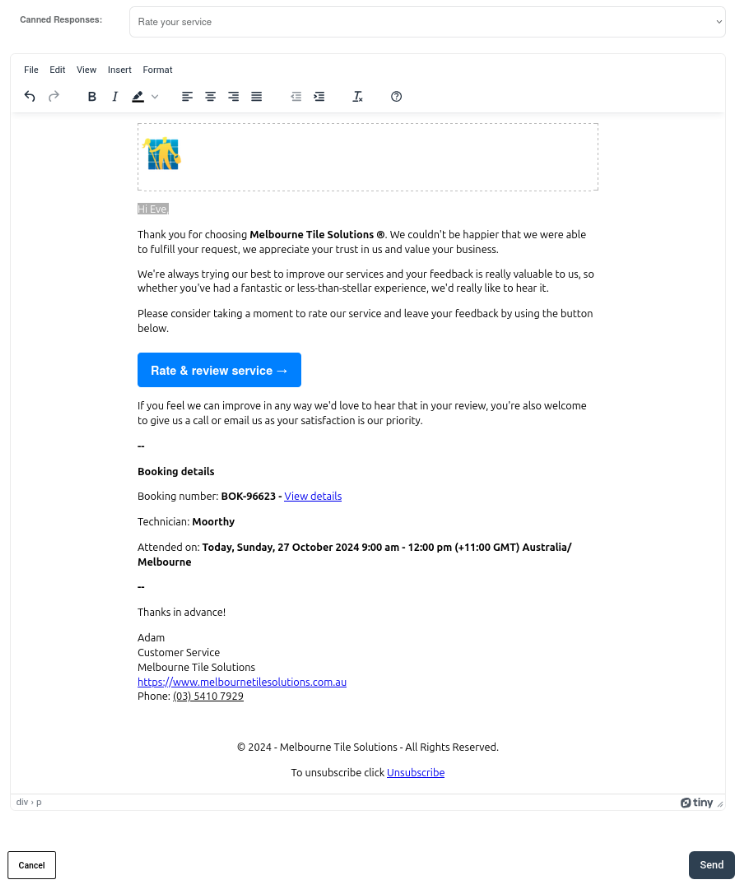
The customer receives an email containing a Review now link (branded/white-labeled based on your settings).
Automatic request (recommended)
OctopusPro can automatically send rating request emails after bookings are completed using an automated background process (automation/cron job). This ensures you consistently collect feedback without relying on staff to send requests manually.
- Automation setup guide: Automated Reminders & Confirmations (Workflow Automations)
- Monitor automation activity: Automations / Scheduled Tasks Log


Customize the email/SMS sent to customers
You can customize the rating request message to match your brand voice and improve response rates. Best practice is to keep it short, friendly, and action-focused.
- Edit email templates: Email Templates
- Edit SMS templates (if you request ratings by SMS): SMS Templates
- Personalize with merge fields: Template Placeholders
View ratings & reviews
Ratings & Reviews list
Go to Feedback > Rating & Reviews to view all submitted ratings tied to bookings.
View rating on a booking (details page)
Open a completed booking and scroll to the Customer Rating section to view the star rating and any written comments.
View ratings in the bookings list
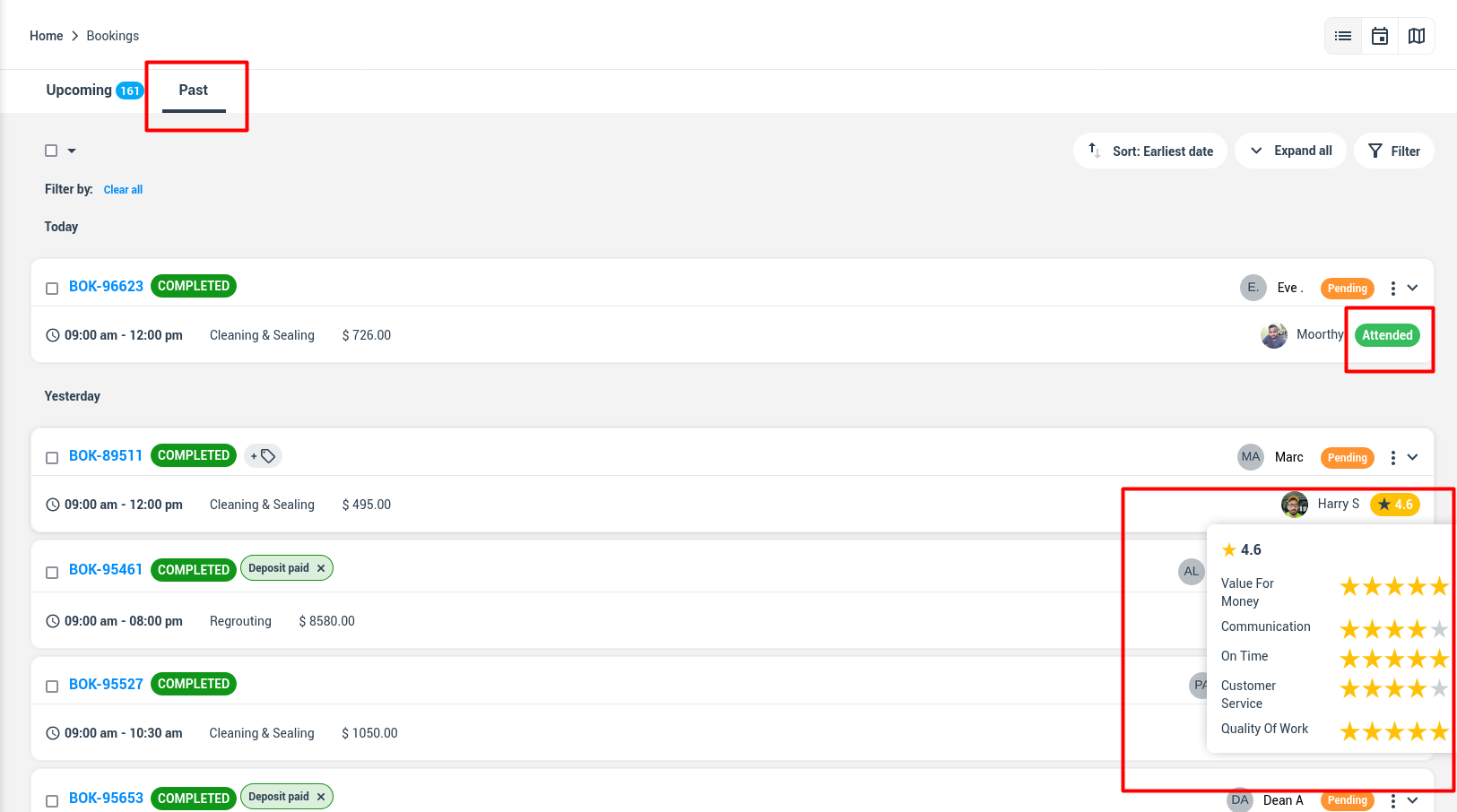
In some layouts, you can also see rating summaries directly from the bookings list (useful for quick scanning and triage).
How ratings affect the Fieldworker Matrix
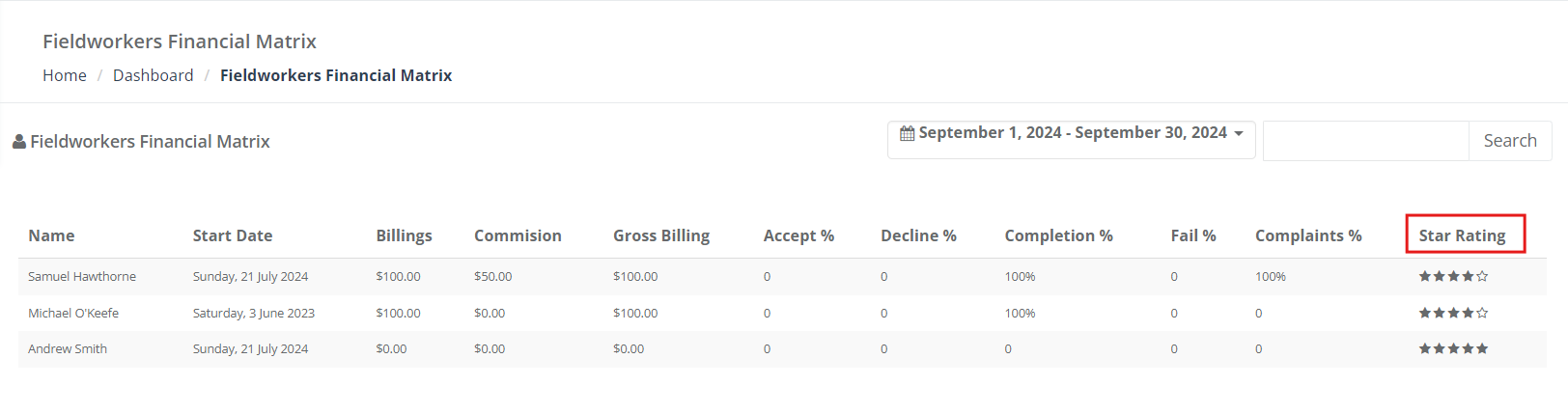
Fieldworker ratings are summarized in the Fieldworkers Matrix. Go to Statistics > Fieldworkers Matrix. The Rating column calculates the average fieldworker rating for the selected date range.
Fieldworkers can also view their ratings and rankings in the mobile app (if enabled). See: Fieldworker Ratings, Reviews & Rankings (App).

Edit or reset ratings
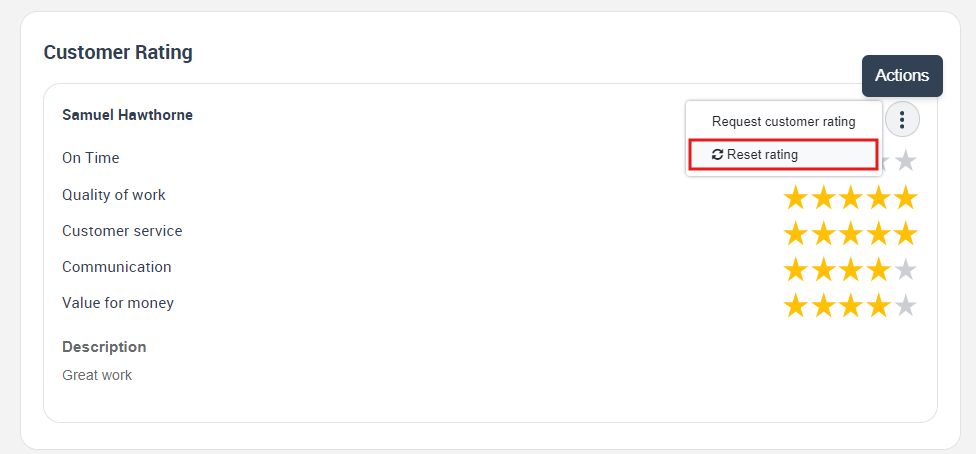
If you need to correct or remove a rating (for example: a mistaken submission, duplicate review, or a dispute), you can reset it from the booking.
- Open the rated booking.
- In the Customer Rating section, click Actions and select Reset rating.
Tip: Only reset/edit ratings when necessary. For most businesses, it’s best to treat ratings as customer-submitted records and use Issues for service recovery where needed.
Best practices & examples
- Ask at the right moment: send rating requests shortly after completion while the experience is fresh.
- Keep it simple: 3–6 Rating Tags usually produces the best response rate.
- Use Issues for service recovery: low ratings should trigger a follow-up call, rework, or manager review.
- Trend what matters: use Issue Types and Rating Tags to identify training needs (e.g., repeated “Communication” issues).
- Close the loop: use the To Follow toggle and deferred dates to ensure nothing falls through the cracks.
Industry examples
- Electrician: customer rates Punctuality + Work Quality; any “Safety Concern” Issue is routed to a supervisor.
- Plumber: a 2-star review triggers an internal callback; a 5-star review triggers a “Leave a Google Review” request.
- Mobile mechanic: Rating Tags include Communication, Value, Fix Quality; recurring low “Communication” scores highlight a coaching need.
Google/Facebook reviews (optional)
OctopusPro’s internal ratings are designed for private feedback and performance improvement. If you also want to grow your public reputation:
- Add your Google Reviews or Facebook Reviews link into the feedback email template so satisfied customers can leave a public review.
- Or create a dedicated “Google Review Request” email template and run it alongside the internal rating request.
Tip: Use the internal rating first to catch issues privately, then invite satisfied customers to post publicly.
If you want to display Google Reviews inside your Customer Portal, see: Google Reviews Integration.

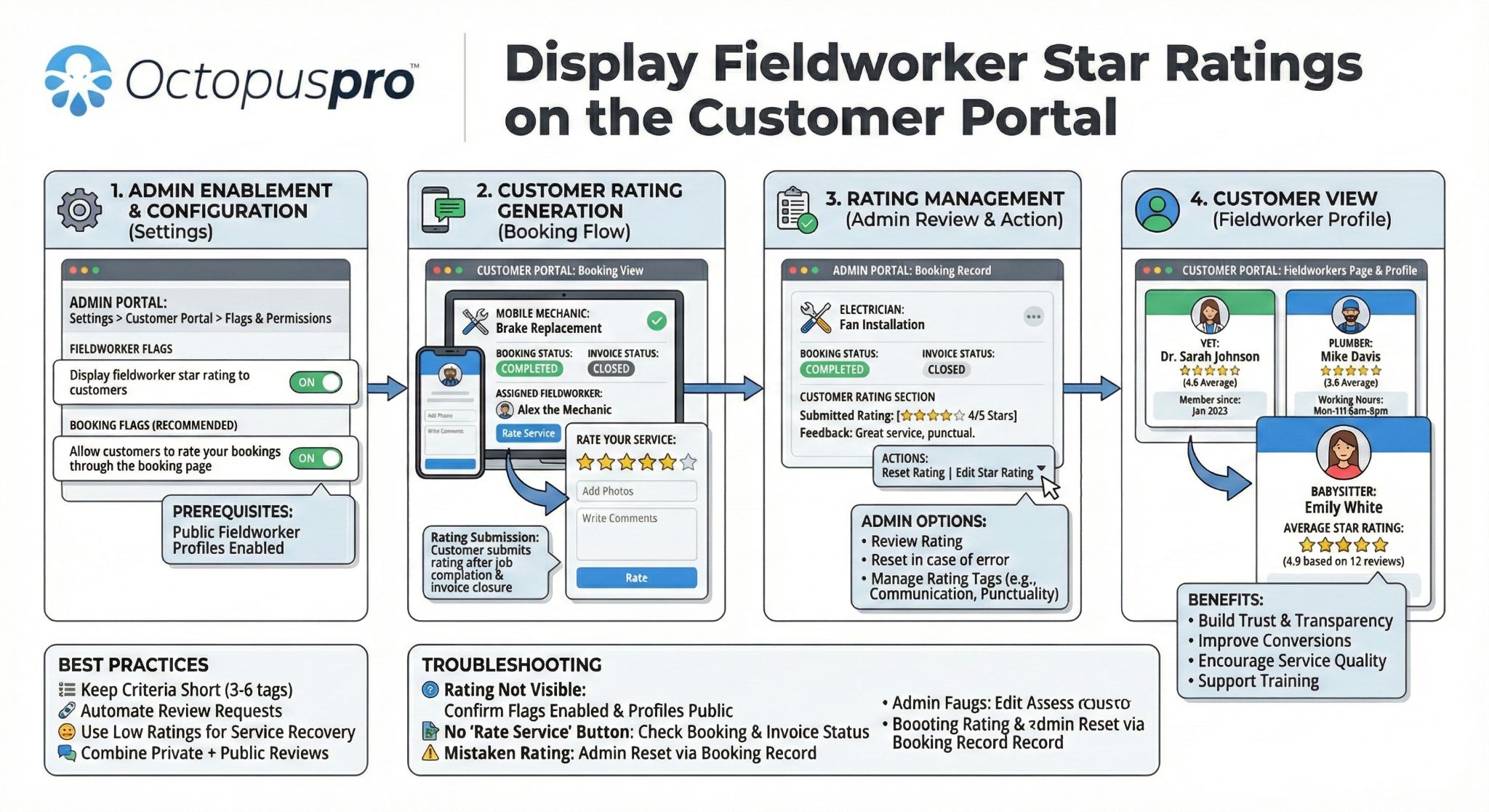
If you want to display internal star ratings in the Customer Portal, see: Display Fieldworker Star Ratings on the Customer Portal.
Open API & webhooks (advanced)
OctopusPro supports built-in integrations plus an Open REST API and webhooks, so you can connect your feedback and rating workflow to external systems (CRM, BI dashboards, helpdesk tools, or automation platforms such as Make/Zapier).
Examples:
- Sync Issues and ratings into your CRM/helpdesk as tickets.
- Trigger notifications when low ratings are received.
- Build dashboards for average rating over time, rating by service, and recurring Issue Types.
Learn more: OctopusPro API, Webhooks & Integrations.

Permissions & visibility
What users can see and do (view, create, edit, delete, close, reopen) depends on their role permissions. If you want tighter controls (e.g., only managers can close Issues or reset ratings), configure access using Role-Based Access Control (RBAC).
- RBAC guide: Configuring User Roles, Permissions & Access Control
- Fieldworker permissions: Fieldworker Permissions & Access Control
- Fieldworker workflow for complaints (app): Fieldworker Issue Resolution (Complaint Management App)
Troubleshooting
Customers aren’t receiving rating request emails
- Confirm the booking has reached the required status (typically Completed).
- If you’re using automatic requests, confirm the relevant automation is enabled and running. Check: Automations / Scheduled Tasks Log.
- Review your email template content and placeholders to ensure the review link is included. See: Email Templates and Template Placeholders.
Customers can’t find the option to lodge an Issue / choose a feedback type
- Make sure you have created at least one Issue Type in Settings.
- Use clear names (e.g., “Late Arrival”, “Quality Issue”, “Billing Question”).
Ratings breakdown (criteria) is missing
- Ensure Rating Tags have been added in Settings.
- Keep the list short and relevant to improve completion rate.
We want a full complaints workflow across bookings, quotes, and invoices
Start here: Add & Manage Issues & Complaints on Quotes, Bookings, Invoices and Issue & Complaint Management (Customer Issue Tracking).
To stay updated, please subscribe to our YouTube channel.